Also known as
MALCOLM
User Contributed Collection
Documents and descriptions supplied by archive contributors. All submissions are reviewed in accordance with our Terms and Conditions.
No user-contributed documents have been approved for this vessel yet. Use the forms below to contribute images or documents relating to this vessel.

Help complete the archive
Do you have a photo of this vessel you can share?
Contribute photographs of MALCOLM to the archive for editorial review. Submissions remain private and will only be published following approval by an administrator.
How your photograph will be credited
Exterior · 1940 · Copyright © Example Contributor
Source: Copyright ownership confirmed at submission by Example Contributor.
This example uses the photograph group, year and copyright-holder name supplied in the form. Your own details will replace the example above when an approved image is published.
Already have an account? Log in before uploading to link new photographs immediately.

Help complete the archive
Contribute a document
Share documents or images relating to MALCOLM for editorial review. Upload up to 12 PDF, JPG, PNG or WebP files per submission, with a maximum size of 20 MB each. Your submission remains private and will only be published following approval by an administrator.
How your document will be credited
Example Document Title · Contributed by Example Contributor
Source: Archive reference supplied by Example Contributor.
This example uses the document title, contributor name and source or archive reference supplied in the form. Your own details will replace the example above when an approved document is published.
Wikipedia vessel details
Secondary-source table data; verify against primary records where available.
- Name
- HMS Malcolm (D19)
- Pennant number
- D19
- Flag
- Royal Navy
- Description
- Destroyer
- Built
- 1919
- Tonnage
- 1,530
- Commanding officer
- Capt (D)[e] Thomas Halsey, RN
- Trips to Dunkirk
- 8
- Troops landed
- 5,991
- Notes
- Damaged by collisions with Dunkirk pier on 30 May and French trawler off Dover on 1 June; repaired after Dynamo
Dunkirk-related passages from the linked page
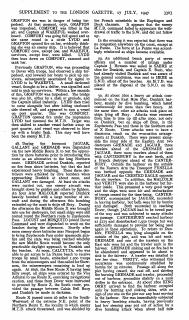
Dunkirk (1940) Although two more were ordered in 1918, they were both cancelled and Malcolm became the last of the class to be completed. By the time she was launched, on 29 May 1919, the war she was built for was over and one of her class, Scott, has been sunk. On 14 May 1940, she helped to transfer the Navy attaché Admiral Sir Gerald Charles Dickens and two Dutch radar researchers (J.L.C.W Von Weiler and M. Staal) from Scheveningen to the Hook, where they were transferred to HMS Wessex. On 15 May 1940, she was deployed as part of Operation Ordnance off the Hook in South Holland. From 26 May to 4 June she assisted in the evacuation of Dunkirk, making eight runs between Dunkirk and England. The ship's then commander, Sir Thomas Halsey, was appointed a Companion of the Distinguished Service Order on 7 June 1940 "for good services in the withdrawal of the Allied Armies from the beaches at Dunkirk". [2] In July, Malcolm was reassigned to anti-invasion patrol with HMS Cardiff. On 14 August 1940, Malcolm and HMS Verity were attacked by six Kriegsmarine trawlers and three E-boats. One E-boat and one trawler were sunk in the engagement. On 10 September 1940, she attacked invasion barges in Ostend with HMS Wild Swan and HMS Veteran. A few days later, the same three ships shelled Boulogne in a sweep along the French coast. At the end of the year, she was deployed to the Western Approaches Escort Force for Atlantic convoy defence. In this role Malcolm was engaged in all the duties performed by escort ships; protecting convoys, searching for and attacking U-boats which attacked ships in convoy and rescuing survivors. In twelve months service Malcolm escorted 29 Atlantic and 3 Gibraltar convoys, of which 10 were attacked and she was involved in two major convoy battles. In February 1941 Malcolm joined the newly formed 8th Escort Group as senior ship, her captain, Cdr C D Howard–Johnston, being Senior Officer Escort (SOE).[3] On 10 May, Malcolm rescued the eleven survivors from Empire Caribou, which had been torpedoed and sunk by U-556. They were later landed at Reykjavík.[4] Winser, John de S. (1999). B.E.F. Ships before, at and after Dunkirk. Gravesend, Kent: World Ship Society. ISBN 0-905617-91-6.
ORDE Registry
36 records36 potential matching records have been identified.
These records may contain vessel particulars, reported movements, participation assessments, named personnel and source references. A match does not by itself prove that the vessel participated in Operation Dynamo.
“Potential match” means a candidate returned by one or more indexing rules; it is not necessarily an exact identity match. Depending on the source, matching may use a normalised vessel name, a partial text or OCR hit, an alias, or related metadata. Roman-numeral suffixes such as I, II, III, IV and V may be absent, misread or separated from the base name, so records for similarly named vessels can be grouped incorrectly. Multi-word names can also produce candidates where only one significant word matches. Confirm the full name, numeral, vessel type, dimensions, builder, ownership, dates and source context before treating two records as the same vessel.
We are compiling and checking transcriptions, metadata, vessel-name matches, source references and reuse permissions before publishing further detail. This work helps prevent incomplete OCR, historic spelling variations or unverified associations from being presented as established fact.
Account registrations and access to these developing records are temporarily unavailable. Existing account holders may log in, and everyone can join the newsletter for publication updates.
Small Craft Service List
0 records0 potential matching records have currently been identified.
Further indexing may identify service-list entries, vessel metadata, source-page references and protected full-size document images. The absence of a current match does not establish that no relevant source exists.
We are compiling and checking transcriptions, metadata, vessel-name matches, source references and reuse permissions before publishing further detail. This work helps prevent incomplete OCR, historic spelling variations or unverified associations from being presented as established fact.
Account registrations and access to these developing records are temporarily unavailable. Existing account holders may log in, and everyone can join the newsletter for publication updates.
No Small Craft records.
Red List (1939–40) — OCR
0 records0 potential matching records have currently been identified.
Further indexing may identify OCR text matches, source files, page references and digitised page imagery. The absence of a current match does not establish that no relevant source exists.
We are compiling and checking transcriptions, metadata, vessel-name matches, source references and reuse permissions before publishing further detail. This work helps prevent incomplete OCR, historic spelling variations or unverified associations from being presented as established fact.
Account registrations and access to these developing records are temporarily unavailable. Existing account holders may log in, and everyone can join the newsletter for publication updates.
Ship Details
These details have been aggregated from multiple sources and may include contemporary records, later recollections, claims or assertions for which no corroborating evidence has been identified. Inclusion does not establish that any account or assertion is accurate. The information may be incomplete, out of date, disputed or incorrect and should be checked against the underlying source records and independent evidence before being relied upon.
No additional ship details available.
Lloyd’s Yacht Register (1939)
Source: Lloyd’s Register Foundation, Heritage & Education Centre, Lloyd’s Register of Yachts 1939, digitised via Internet Archive. Licensed under CC BY-NC-SA 4.0. Images have been converted, resized and watermarked for web display; machine-generated table OCR has been added.
No Lloyd’s records.
Document Collections — Tagged Pages
22 pagesImaged document collections containing pages whose OCR text or table data has been tagged with the name MALCOLM. Open a collection to view the page images and transcriptions.
Source: Lloyd’s Register Foundation, Heritage & Education Centre, Lloyd’s Register of Yachts 1939, digitised via Internet Archive. Licensed under CC BY-NC-SA 4.0. Images have been converted, resized and watermarked for web display; machine-generated table OCR has been added.

Details
| 472 | Astrea | Wood | GtrLug Slp Gowen.35 | - 6 | 267 310 200 | 7.5 45 | 425 5:0 500 | J.Hilditch A.Mylne | Carrick- fergus 1900 | Uls.StarO.D. | Maj. H. P. Malcolm, M.C. | Bangor |

Details
| 644 | Ben Wood | Sc | 5.86 | 39.5 | 80 | 45 | G.Malcolm | Helensburgh | Petrol Motor | Daniel McMorland | Greenock |

Details
| 765 | Blue Bird | Steel | TwnSc | 95.17 | 94.9 | 201 75 | GooleS.B.& | Goole | 2 Oil Engines | Sir Malcolm Campbell, | Goole |

Details
| 1257 | Clair | Wood | Sc | 5.87 | 284 | 8.9 3:6 | Malcolm | Helensbrgh | Petrol Motor | H. A. Pank | Lowestoft |

Details
| 1411 | Crean Tarigh Wood | TwnSc | 606 | 337 | 85 5.5 | British | Hythe, | 2 Petrol Motors | Malcolm Campbell | Southmptn |

Details
| 2208 | Faolinn | Wood | Sc | 3:89 | 262 | 7.2 3.6 | G.Malcolm& | Helens- | Paraffin Motor | W.T. Peterkin | Glasgow |

Details
| 5308 | Orissa | Wood | ScLch | 3.57 | 300 | 70 | 32 | M.Taylor& | Glasgow | Paraffin Motor | Malcolm C. McNie | Glasgow |

Details
| 7242 | Trix Wood | Sloop | --- | 242 | 70 — | A.Malcom | Port | John A. Malcolm | Gourock |

Details
| 3 | 25.0 | Geo.Malcolm | 1920 | Gleniffer,Gls.29 |

Details
| 7899 | Wolsey | Wood | Sc | 184 | 302 | 71 3:3 | Admiralty | Dartmouth | Petrol Motor | Archibald Malcolm | London |

Details
| 969 BERNERA. SLP. R. K. SHARP. | 970 G P HARPADO SCH M. J.E. GLYNNE PERCY. | 971 F FORTITER. CUT. ANKER | 972 M MORENA. CUT. COMD" SIR A.R.J. SOUTHBY RN M.P | 973 ASTREA SLP. MAJ. H.P.MALCOLM. M.C. | 974 MX MORWENNA SCH. H.J.E.SMITH. | 975 CASITA. KCH. E.S. HERBERT | 976 MIDGE YWL. C.T.LETTS. |

Details
| Alana | Slp. | Mrs. J. Paisley | 663 | Amanda | M.Kcb | W. W. Paisley | 664 | Astrea | Slp. | Maj. H. P. Malcolm, |

Details
| Caine, J. F. Kneale, Cranford, High Road, Finchley, London, N.12.-M.B.A.-Wcf. m. Ruby 10 | Calkin, K. Bernard, 1, Queen Victoria Street, London, E.C.A. L.S. a. Priscilla 9 | Calzavara, Dr. Giuseppe, San Trovaso 1075, Venice.-R.Y.C.I. a. Karama II 77 | Camoletti, Jean, 1, Rue de la Fontaine, Geneva. Gen. Isis II | Campbell, Sir Malcolm, M.B.E., 169, Piccadilly, London, W.1.-Tms. m. Blue Bird 161 |
| Cairns, Major James, The Glen, Feock, Truro, Cornwall. Alx.-Bom.-Crn. m. Juliette 19 | Callan, Norman, 27, Old Deer Park, Richmond, Su rrey. Ariel 5 | Cambridge, David W., Wootton Cottage, Branksea Avenue, Hamworthy, Poole, Dorset.-Pks. m. Dream 23 | Campbell, Lieut.-Comdr. Colin D., R.N.V.R., Winchester House, Old Broad Street, London, E.C.2.-Crz.-Nav.-Tms. S. Gelert 122 | Campbell, Malcolm B., 40, Ingram Street, Glasgow, C.1. S.M.Y.C. m. Crean Tarigh 10 |

Details
| Loomis, Alfred L., 14, Wall Street, New York, U.S.A. Northern Light - | Edward A. Deeds), 20, Exchange Place, New York. m. Lotosland - Lougee, J. Malcolm, | a. Ling 14 Lowcock, Arthur, Dundarroch, Colintraive, Argyll. Cly.-Nor.-S.M.Y.C. | Home Farm, Wentworth, Surrey. Ich.-Tms. Joy 3 a. White Owl 30 | Luboshez, Dr. B. E., 6, Great Russell Mansions, 60, Great Russell Street, London, W.C.1. |

Details
| McDonald, William D., 28, Fellows Road, Hampstead, London, N. W.3.-L.S.-Nrw. a. La Bonne 4 | McEwing, 1, Bank Street, Greenock. m. Rona 9 | Macfarlane-Barrow, James H. C., Erins, Fort Augustus, Inverness-shire. m. Good Cheer 18 | MacGregor, Dr. Malcolm, Ardchoille, Clynder, Dumbartonshire. Cor.-Nor. | Machris, George L., 2455, East 27th Street, Los Angeles, Cal., U.S.A. m. Caronia - |

Details
| McLeod, Kenneth, Carnmohr," Port Glasgow Road, Kilmacolm, Renfreushire.-Grk. | McMeekin, A., Raymead Cottage, Maidenhead, Berks. Bnm.-Cor. | M. A., R.N., c/o Admiralty, Whitehall, London, S.W.1.-Crz.-Nav.-Pts.S. | McNie, Malcolm C., 14, Greenhead Avenue, Dumbarton. | MacQueen, Andrew, Kirklee Cottage, Mossend, Lanark. C.Crz. |

Details
| McRoberts, W. Diack, 18, Torridon Avenue, Dumbreck, Glasgow. S.1.-C.Crz. a. Aline 11 | Magniac, Oswald Cecil, Grove Place, Nursling, Southampton. R.Y.S.-Srn. Collina 9 | Malcolm, Archibald, 2, Lower Teddington Road, Hampton Wick, Middr.-L.S.-Mtr.-Tms.C. m. Wolsey 6 | 150, Harley Street, London, W.1. L.S.-Tms. a. Sorata 11 Mallinson, Sir W.J., | Mandel, Leon, 1, North State Street, Chicago, Ill., U.S.A. m. Buccaneer |
| a. Mafalda 17 a. Tern 4 Macry, L., | Magyar Vitorlás Yachtszövetség, | Malcolm, Maj. H. P., M.C., 27, College Gardens, Belfast. N.Ir.-Uls. | Bart., Pine End, Reigate, Surrey. Hng.-N.&S.-Tms.-Yar.-Yre. Maidie 10 | Mangles, Lt.-Col. C.G., M.C., Park Farm, Berechurch, Colchester, Essex.-Msa. |
| Mac Vicar, N. M., 5, Lawrie Street, Glasgow, W.1. a. Flying Cloud (P.O.) 5 | Mahé, H.H. Prince de, Staple Hill House, Wellesbourne, Waruickshire.-Cam. Firefly 2 | Malcolm, John A., 65, Westcoats Road, Cambuslang, Glasgow. Trix I | Malmqvist, Nils, Skandinaviska Kredit A.B., Trälleborg, Sweden.-Mmo. Vanity | Mann, C., Mann's Motors, Ambrose Street, Cheltenham, Glos. m. Neotanic 10 |

Details
| Wood, H. Malcolm, Rozel, Beech Drive, North Ferriby, Yorks.-Hbr. Mollie 6 | Wooding, Harold, 44, Finchley Road, London, N. W.8. Nav.-Tms. a. Mæander 49 | Woods, Frank H., Lincoln, Neb., U.S.A. m. Nellwood II 238 | Woolley, G. S., Ollerenshaw Hall, Whaley Bridge, Derbyshire.-Mer.-N.W.-Ocn.-Tnm. a. Kathleen 19 | Workman, R. Elliot, Nottinghill, Malone Road, Belfast. N.Ir.-Uls. m. Melita 44 |
Details
SUPPLEMENT TO THE LONDON GAZETTE, 17 JULY, 1947                                            3303
GRAFTON she was in danger of being tor-               the French minefields hi the Ruytingen and
pedoed. At that moment, 0250, GRAFTON                 Dyck channels.       It appears that the enemy
was torpedoed, COMFORT was lifted in the              M.T.B. command failed to appreciate the with-
air, and Captain of WAKEFUL washed over-              drawal of traffic to the S.W. and did not follow
board. COMFORT was going full speed and as            up.
she came round in a circle "LYDD and                    In the evening it was reported that there was
GRAFTON opened fire on her, evidently think-          no congestion anywhere on the coast, except at
ing she was an enemy ship. It is believed that        La Panne. The force at La Panne was accord-
COMFORT crew, except one, and WAKEFUL                 ingly reinforced as ships became available.
survivors, except four, were killed.        LYDD
then bore down on COMFORT, rammed and                    29. An additional beach party of seven
sank her.                                             officers and a number of ratings under
   Previously GRAFTON, who was proceeding             Captain J. Howson was sailed in SABRE at
to Dover with troops, had observed a ship tor-        1600 for Dunkirk, and Captain E. Bush, who
pedoed, and lowered her boats to pick up sur-         had already visited Dunkirk and was aware of
vivors, subsequently ascertained by signal to         the general conditions, was sent to HEBE as
LYDD to be WAKEFUL. A small darkened                  S.N.O. afloat off the beaches. An M.T.B. was
vessel, thought to be a drifter, was signalled and    placed at the disposal of the S.N.O. on the
told to pick up survivors. Within a few seconds       coast.
of this, GRAFTON was torpedoed. The bridge               30. At about 1600 a heavy air attack com-
was also hit, either by a shell or grenade, and       menced on the East Mole Pier, Dunkirk har-
the Captain killed instantly. LYDD then tried         bour, mainly by dive bombing, which lasted
to come alongside but after hitting starboard         continuously for more than two hours. At
side sheered off, and appeared to ram a vessel        the same time, other air attacks took place on
on port quarter. This was COMFORT.                    ships lying off Bray. Attacks were renewed
GRAFTON opened fire under .the impression             from time to time up till after 2000, not only
LYDD had rammed the M.T.B. Target was                 on Dunkirk, but on ships off Bray, in the
then shifted to another vessel further away on        Zuydecoote Pass and those in the Southern end
port quarter, and vessel was observed to blow         of X Route. These attacks were to have a
up with a bright flash. This may well have            disastrous result on the evacuation arrange-
been the enemy M.T.B.                                 ments at Dunkirk. There were present along-
                                                      side the inner side of the Eastern Arm two
   28. During     the     forenoon     JAGUAR,        destroyers GRENADE and JAGUAR, three
GALLANT and GRENADE were dispatched                   trawlers ahead of the GRENADE and
via the new Middle Route X to test the opposi-        JAGUAR, three more trawlers ahead of them
tion by shore batteries prior to introducing this     with CANTERBURY in the next berth, and
route as an alternative to the long Northern          a French destroyer ahead of the CANTER-
route. GRENADE arrived Dunkirk, reported              BURY. Outside the harbour on the outside
no fire from shore batteries, but that she had        of the Eastern Arm the Transport FENELLA
experienced heavy bombing. These three des-           was berthed opposite the GRENADE and
troyers were attacked by dive bombers when            JAGUAR and the CRESTED EAGLE opposite
approaching Dunkirk at about noon, and                the six trawlers. In addition, the MALCOLM
GALLANT was damaged. At least six attacks             and VERITY were also in the harbour but fur-
were carried out, one enemy aircraft was              ther inside. This presented a very good target
brought down by gunfire and others by fighters.       and the ships were soon hit and embarkation
An hour .-later MALCOLM reported Dunkirk              of troops ceased for the time being. CANTER-
heavily bombed with a large number of air-            BURY, accompanied by JAGUAR, succeeded
craft and during the afternoon this bombing           in leaving harbour, but both were hit by bombs
extended up the coast to ships off Bray. During       and damaged. Both succeeded in reaching
the afternoon the Middle Route X was brought          Dover, though JAGUAR had to be towed part
into use for destroyers, but small ships were still   of the way and was subjected to many attacks
routed round the Northern route to Zuydecoote         on passage. CANTERBURY reached harbour
Pass. LOCUST and MOSQUITO joined Dover                at 2115 and disembarked 1,950 troops but was
Command and were dispatched to work on the            sufficiently damaged to prevent her being used
beaches during the afternoon. Shortly after           again in these operations. To return to Dun-
noon enemy shore batteries near Nieuport began        kirk, FENELLA was lying alongside on the
to bring Zuydecoote Pass under spasmodic gun-         outside of the pier,n and was hit and sunk.
fire and the state was being reached whereby           GRENADE and one of the trawlers on the
the new Middle Route would become the only            East side were hit and the trawler sank in the
practicable daylight approach to Dunkirk and          fairway. GRENADE sinking and on fire had to
the beaches. At noon, CALCUTTA, who was               be abandoned and appeared to be about to
able to get across to La Panne beach to receive        sink in the fairway. A trawler was detailed to
troops by small boats, embarked 1,200 troops          tow her clear. VERITY, who witnessed this
from the minesweepers and then sailed for Sheer-      occurrence • was continuously straddled by
ness, the minesweepers remaining to load up           bombs for 35 minutes. Passage all along the
again. At 1606, the New Route X having been            pier having ceased, she cast off, and skirting
fully swept, all ships were ordered by the Vice        the burning GRENADE and trawler, proceeded
Admiral to use Route X, exercising navigational        out of harbour, grounding: slightly on a sunk
 caution, and those from Dover were instructed         drifter in the entrance. At about 1800 KING
 to proceed by Route Z, the South route, pro-          ORRY arrived to find the harbour occupied
vided the passage between Calais Bell Buoy             only by burning and sinking ships, with no
 and Dunkirk be made in darkness.                      sign of any one on the pier nor any boat moving
   Route X passed some 26 miles to the South-          in the harbour. She was immediately subjected
 Westward of the extreme N.E. point of the             to heavy bombing attacks, having previously
 Northern Route Y, the locality in which enemy         had her steering gear put out of action by^ a
 M.T.B. attack threatened, and was shielded by         dive bombing attack when about half mile
Details
33^4          SUPPLEMENT TO THE LONDON GAZETTE, 17 JULY, 1947
unceasingly without relief or rest, exposed to         distinguishing between the uniforms of such
incessant air attacks, for seven days. The             officers as were present and those of other ranks.
work of these officers and men was of the              It was soon realised that it was vitally necessary
greatest value and contributed largely to the          to despatch Naval Officers in their unmistakable
success of the undertaking.                            uniform with armed Naval beach parties to take
                                                       charge of the soldiers on shore immediately
   113. As regards the bearing and behaviour           prior to embarkation. Great credit is due to
of the troops, British and French, prior to and        the Naval officers and Naval ratings for the
during the embarkation, it must be recorded            restoration of some semblance of order. Later
that the earlier parties were embarked off the         on when troops of fighting formations reached
beaches in a condition of complete disorganisa-        the beaches these difficulties disappeared.
tion. There appeared to be no Military officers
in charge of the troops, and this impression           Dover,
was undoubtedly enhanced by the difficulty in             18.6.40.


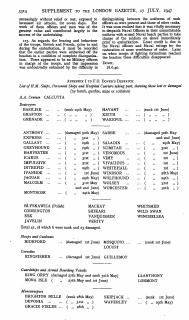
                             APPENDIX I TO F.O. DOVER'S DESPATCH
List of H.M. Ships, Personnel Ships and Hospital Carriers taking part, showing those lost or damaged
                               (by bomb, gunfire, mine or collision)
A.A. Cruiser CALCUTTA
Destroyers
  BASILISK                    (sunk 2gth May)          HAVANT                    (sunk ist June)
  GRAFTON                     ( „ „       „ )          KEITH                     ( „ „ „ )
  GRENADE                                              WAKEFUL


  ANTHONY ...                 (damaged soth May) SABRE                           (damaged 30th May
  EXPRESS ...                 (    >?   jISl    ,, )                                    and 2nd June)
  GALLANT ...                 (         29th   „ ) SALADIN ...                   (   „     29th May)
  GREYHOUND                   (    „    29th „ ) SCIMITAR ...                     (   „ 3ist „ )
  HARVESTER                   (         3ist „ ) VENOMOUS                         (   „     ist June)
  ICARUS                      (         3ist „ ) VIMY                             (   „     ist „ )
  IMPULSIVE                   (         3ist „ ) VIVACIOUS ...                    (   „     ist „ )
  INTREPID ...                (         29th „ ) WHITEHALL                        (   „     ist „ )
  IVANHOE ...                 (    „     ist June) WINDSOR ...                    (   „ 28th May)
  JAGUAR                      (    „    2gth May) WOLFHOUND                       (   „ 29th „ )
  MALCOLM ...                 (    „    3ist May WOLSEY     ...
                                    and 2nd June) WORCESTER                                 30th    „
   MONTROSE                    (   ,, 29th May)


   BLYSKAWICA (Polish)                  MACKAY                               WHITSHED
   CODRINGTON                           SHIKARI                              WILD SWAN
   ESK                                  VANQUISHER                           WINCHELSEA
   JAVELIN                               VERITY
 Total 41, of which 6 were sunk and 23 damaged.

 Sloops and Gunboats
   BIDEFORD             ...    (damaged ist June) MOSQUITO ..                     (sunk ist June)
                                                  LOCUST
 Corvettes
   KINGFISHER           ...    (damaged ist June) GUILLEMOT


 Guardships and Armed Boarding Vessels
   KING ORRY (damaged 27th May and sunk 30th May)                            LLANTHONY
   MONA ISLE (        „ 27th May and ist June)                               LORMONT

 Minesweepers
   BRIGHTON BELLE              (sunk 28th May)          SKIPJACK .                (sunk ist June)
  DEVONIA                      ( „ 3Ist „ )             WAVERLEY                  ( „ 29th May)
   GRACIE FIELDS ...           ( „ 28th „ )
Details
3304          SUPPLEMENT TO THE LONDON GAZETTE, 17 JULY, 1947
outside of the entrance. She remained in sole          35. Rear Admiral Wake-Walker proceeded
occupation of the harbour until shortly after       from Dover in ESK at about 1900 for passage
midnight 2Qth/30th, when her Captain rightly        to HEBE off the coast where he was to carry
decided to take the ship out of harbour before      out the duties of S.N.O. Dunkirk in charge
she also was sunk, thus freeing the berth and       of all embarkation arrangements, taking over
safeguarding the channel from 'being blocked.       from Captain Bush who had been working in
   Little information of these disasters filtered   HEBE under the orders of S.N.O., Dunkirk.
through to Dover, except that it was known          He expected to arrive at Dunkirk at 2330.
that Dunkirk was under heavy air bombard-              36. As a result of the heavy casualties and
ment and that the destroyers there were being       losses amongst the destroyer force, particularly
hit soon after 1600.                                the misfortunes which befell those of the larger
   31. At 1906 the Vice Admiral promulgated         and more modern types, a consultation was held
the plan for 'the night by signal as follows:       between the Admiralty and the Vice Admiral
                                                    which led to a decision to withdraw destroyers
" Evacuation of British troops to continue at       of the " H ", " I " and " J " Classes from
maximum speed during the night. If adequate          " Dynamo ". All destroyers of the " G " Class
supply of personnel vessels cannot be main-         were already out of action.
tained to Dunkirk East Pier, destroyers will
be sent there as well. All other craft except          There remained available for " Dynamo "
hospital carriers to embark from beach which        15 destroyers: —
is extended from one mile East of Dunkirk                 ESK                   WORCESTER
to one mile East of La Panne. Whole length               EXPRESS                WINDSOR
is divided into three equal parts referred to            ANTHONY                 VERITY
as La Panne, Bray, Malo, from East to West                KEITH                 VANQUISHER
with a mile gap between each part. La Panne               CODRINGTON            SABRE
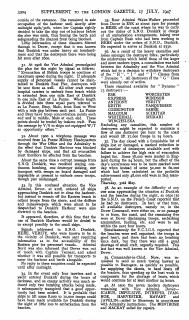
and Bray have troop concentration points each             MALCOLM                SCIMITAR
end and in middle, Malo at each end. These                WHITEHALL              SHIKARI
points should be tended by inshore craft. Pass            WINCHELSEA
the message by V/S to ships not equipped W/T        Excluding any casualties, this number of
as .opportunity offers."                             destroyers might be expected to maintain a
                                                    flow of one destroyer per hour to the coast
   32. About 1900 a telephone message was           and would lift 17,000 troops in 24 hours.
received from La Panne Military Headquarters           37. The day closed with a formidable list of
through the War Office and the Admiralty to         ships lost or damaged, a marked reduction in
the effect that Dunkirk Harbour was blocked         the number of destroyers available and with
by damaged ships, and that all evacuation           failure to achieve the high rate of evacuation
must therefore be effected from the beaches.        hoped for. Some 38,000 were landed in Eng-
   About the same time a corrupt message from       land during the 24 hours, but the effect of the
 S.N.G. Dunkirk;, was receded stating con-          day's occurrences was to be more marked next
tinuous bombing, one destroyer sinking, one         day when instead of some 50,000 to 60,000
transport with troops on board damaged and          which had been calculated as the probable
impossible at present to embark- more troops,       achievement only 48,000 odd were in fac^ trans-
though pier undamaged.                              ported.
                                                    Thursday, ^oth May.
   33. In this confused situation the Vice
Admiral, Dover, at 2128, ordered all ships             38. As an example of the difficulty of any
approaching Dunkirk not to close the harbour,       one man appreciating the situation at Dunkirk
but instead to remain off the Eastern beach to      and the beaches during the night, at 0300/30
collect troops from the shore, and 'the drifters    the S.N.O. on the French Coast reported that
and minesweepers which were about to be             he had no destroyers. In fact, at that time,
despatched to Dunkirk Harbour were also             all available destroyers, namely 10, in the
diverted to the beaches.                            Dover Command, were either on, or on passage
                                                    to or from, the coast, and the remaining five
   It appeared, therefore, at this time that the    were at Dover discharging troops, embarking
use of Dunkirk Harbour would be denied to           ammunition, fuelling, etc. and were to sail
us except possibly to the small ships.              within the next four hours.
   Signals addressed to S.N.O. Dunkirk,                Simultaneously the V.C.I.G.S. reported that
HEBE, VERITY, who were known to be in               the beaches were well organised, the troops in
the vicinity of Dunkirk, „ were sent requiring      good heart, and there had been no bombing
information as to the accessibility of the          since dark, but that there was still a great
Eastern pier for personnel vessels. Admiral         shortage of small craft, urgently required. This
Nord was also informed that Dover was out           last fact was well known to the Vice Admiral,
of touch with Captain Tennant, and asked            Dover.
whether it was still possible for transports to        39. Commander-in-Chief, • Nore, was re-
enter the harbour and berth alongside.               quested to send as much towing hawser as
   No reply to these enquiries could be expected    possible to Ramsgate, as quickly as possible,
until after midnight.                               for supplying the skopts, to haul boats off
   34. In the event only four trawlers and a        the beaches, thus speeding up the boat work to
yacht entered Dunkirk during the hours of           compensate for the shortage of boats, which
darkness, and as enemy activity was much re-        would continue for at least another 24 hours.
duced only two bombing attacks being made,             40. At 0500 the seven modern destroyers
it subsequently transpired that a good oppor-       remaining with Vice Admiral, Dover—
tunity had been missed. It is probable that         ICARUS, IMPULSIVE, INTREPID, IVAN-
ships to lift some 8,000 to 10,000 troops could     HOE,       HARVESTER,          HAVANT       and
have been made available for Dunkirk during         JAVELIN—sailed to Sheerness in accordance
the night at little loss to embarkation from the    with Admiralty instructions. The MONTROSE
beaches.                                            and MACKAY sailed for repairs.
Details
3306            SUPPLEMENT TO THE LONDON GAZETTE, 17 JULY, 1947
Friday, ^ist May.                                        final evacuation plan during the night of
  48. The Admiralty informed the Vice Admiral            31/5-1/6. Accordingly, instructions were
that the policy of H.M. Government was that              issued for the special tows to leave Ramsgate
both British and French troops be given an               at 1300/31 for Dunkirk via Route X, and the
equal opportunity of being evacuated in British          Commander-dn-Chief, Nore and Flag Officer in
ships and boats.                                         Charge, Harwich, were requested to provide
                                                         all available M.T.B.s to escort this convoy
   49. Personnel ships had been sailed the pre-          for as much of the outward passage as possible,
vious evening and throughout the night of the            which was timed to commence from Ramsgate
30th/3ist to provide for a continuous flow into          at 1300/31. Speed of advance—5 knots. A
Dunkirk harbour.        But at 0320 the S.N.O.           party of Naval officers had been assembled at
reported that once again the majority of these           Dover to embark in these tows and had been
personnel ships had failed to enter the harbour          given detailed instructions on the plan. Two
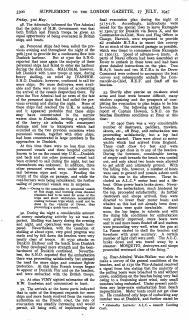
during the dark hours. MALCOLM, however,                 M.A/S. boats and two M.T.B.s in the Dover
left Dunkirk with 1,200 troops at 0300, during           Command were ordered to accompany the boat
heavy shelling, on relief by IVANHOE.                    convoy and subsequently embark the Com-
S.N.O. Dunkirk, however, continued to call for           mander-an-Chief, B.E.F. and Staff off the
more ships. 'No more destroyers were avail-              beaches.
able and there were no means of accelerating
the arrival of the vessels despatched there.1 By           53. Shortly after sunrise an on-shore wind
0700 the Vice Admiral had no news of the fate            arose and boat work became difficult, many
of the personnel ships that had sailed the pre-          whalers capsizing and the prospects of com-
vious evening and during the night. None of              pleting the evacuation to plan began to be less
these ships had reached the U.K. to unload,              favourable. The following extract from the
and it appeared probable that these ships                report of Captain Howson, S.N.O. on the
may thave concentrated in the narrow                     beaches illustrates conditions at Bray at this
waters close to Dunkirk, inviting a repetition           time:
of the heavy air attacks with consequent                       " At 0400 there was a very considerable
damage and loss to transports which had                    number of destroyers, paddlers, trawlers,
occurred on the two previous occasions when                skoots, etc., off Bray, and embarkation was
personnel vessels, together with other ships,              proceeding satisfactorily, but a lop had
had been concentrated in large numbers in the              already started. There were about 10 motor
approaches to Dunkirk.                                     yachts which had arrived from England.
   At this time there were no less than nine               These > craft drew 6-7 feet and were
personnel vessels and three hospital carriers              unable to get close in to any of the beaches.
known to be on the round trip U.K.—Dunkirk                 During the forenoon, considerable towing
and back and one other personnel vessel had                of empty craft towards the beach was carried
been ordered to sail during the night, but her             out, and only about two boats were allowed
whereabouts was unknown. In addition, three                to get adrift and ultimately ground. With
other personnel vessels were under orders to               the falling tide, however, a number of boats
sail between 0900 and 1030. Pending the                    were seen to ground and remain ashore until
return of the ships en passage, and while the              the tide rose in the afternoon. These in-
coal-burners were being rebunkered, the further             cluded an A.L.C.* motor boat and a life-
sailing of personnel vessels was in suspense.              boat. Other power boats broke down. Never-
   Note :—Owing to the casualties to personnel vessels     theless, the embarkation, much hindered by
           at this stage, coal burning cross channel       the lop, proceeded satisfactorily. ; As further
           steamers had to be used for some of the          destroyers and sloops arrived, they were
           trips and short endurance necessitated
           coaling between trips which could not be        directed to lower their motor boats and
            done in the vicinity of Dover, thus            whalers as this had not already been done;
           preventing a quick turn round.                  these boats were quite invaluable. About
   50. During the night a considerable amount              noon, the lop began to subside and with
of enemy mdnelaying activity by air was re-                the rising tide conditions for embarkation
ported. Shelling was heavy during the evening              very greatly improved, more boats were
and night, and operations were greatly ham-                sent in and more boats floated off and matters
pered. Nevertheless, with the cessation of                 were proceeding very well, when the gun at
shelling at about 0300, very good progress was             La Panne started to shell the beaches and
made and by full dawn the beaches were very                foreshore with great accuracy. A certain
nearly clear of troops. At 0530 attacks on                 number of light craft were sunk. The A.L.C.
Dunkirk Harbour and the beach from Dunkirk                 broke down and was towed away by a
to Bray developed more strength and the 'bom-              steamer. MOSQUITO, destroyers and sloops
bardment of Dunkirk continued. Neverthe-                   proceeded westward clear of the firing."
less, the S.N.O. reported that the embarkation              54. Rear-Admiral Wake-Walker was able to
there was proceeding satisfactorily but stressed         make a survey of the general conditions of the
the need for more ships and constant fighter             beaches, and at 1130 the Vice-Admiral received
protection. At this time French troops began
to appear at Dunkirk Pier and on the'beaches,            a signal from him stating that the majority of
and were embarked with the British troops.               the pulling boats were broached to and without
                                                         crews, conditions on the beaches .being very bad
   51. At 0600 VIMY sighted submarine off the            owing to a freshening shore wind, only small
N.W. Goodwins and commenced to hunt.                     numbers being embarked. Under present condi-
   52. The arrivals at the home ports indicated          tions any large-scale embarkation from beach
that in spite of the frequent requests for more          impracticable. Motor boats could not get close
ships and more boats received from the various           in. He considered only hope of embarking any
authorities on the French coast, the rate of             number was at Dunkirk, and further stated he
evacuation was steadily increasing and would               * Admiralty footnote: A.L.C. = Assault Landing
permit, all being well, of implementing the              Craft.
Operation Dynamo Map — Movement Logs
Movements recorded for MALCOLM during the evacuation period, as plotted on the Operation Dynamo map.
| Departed | Route | Arrived | Troops | Notes | Source |
|---|---|---|---|---|---|
| — | Dunkirk | — | — |
Stationary
HMS report explicitly names this location; a complete dated movement is unavailable
|
TNA ADM 116 4649, page 62 |
| — | Dover | — | — |
Stationary
HMS report explicitly names this location; a complete dated movement is unavailable
|
TNA ADM 116 4649, page 62 |
Log in to suggest an evidence-backed edit or a new movement log.