Also known as
No aliases recorded.
Success
User Contributed Collection
Documents and descriptions supplied by archive contributors. All submissions are reviewed in accordance with our Terms and Conditions.
No user-contributed documents have been approved for this vessel yet. Use the forms below to contribute images or documents relating to this vessel.

Help complete the archive
Do you have a photo of this vessel you can share?
Contribute photographs of Success to the archive for editorial review. Submissions remain private and will only be published following approval by an administrator.
How your photograph will be credited
Exterior · 1940 · Copyright © Example Contributor
Source: Copyright ownership confirmed at submission by Example Contributor.
This example uses the photograph group, year and copyright-holder name supplied in the form. Your own details will replace the example above when an approved image is published.
Already have an account? Log in before uploading to link new photographs immediately.

Help complete the archive
Contribute a document
Share documents or images relating to Success for editorial review. Upload up to 12 PDF, JPG, PNG or WebP files per submission, with a maximum size of 20 MB each. Your submission remains private and will only be published following approval by an administrator.
How your document will be credited
Example Document Title · Contributed by Example Contributor
Source: Archive reference supplied by Example Contributor.
This example uses the document title, contributor name and source or archive reference supplied in the form. Your own details will replace the example above when an approved document is published.
ORDE Registry
0 records0 potential matching records have currently been identified.
Further indexing may identify vessel particulars, reported movements, participation assessments, named personnel and source references. The absence of a current match does not establish that no relevant source exists.
We are compiling and checking transcriptions, metadata, vessel-name matches, source references and reuse permissions before publishing further detail. This work helps prevent incomplete OCR, historic spelling variations or unverified associations from being presented as established fact.
Account registrations and access to these developing records are temporarily unavailable. Existing account holders may log in, and everyone can join the newsletter for publication updates.
Small Craft Service List
0 records0 potential matching records have currently been identified.
Further indexing may identify service-list entries, vessel metadata, source-page references and protected full-size document images. The absence of a current match does not establish that no relevant source exists.
We are compiling and checking transcriptions, metadata, vessel-name matches, source references and reuse permissions before publishing further detail. This work helps prevent incomplete OCR, historic spelling variations or unverified associations from being presented as established fact.
Account registrations and access to these developing records are temporarily unavailable. Existing account holders may log in, and everyone can join the newsletter for publication updates.
No Small Craft records.
Red List (1939–40) — indexed references
These references come from the Red List index. Printed page numbers may differ from digitised image numbers; OCR may not reproduce the vessel name accurately.
- Success — ADM 208/3, printed page 17
Red List (1939–40) — OCR
6 records6 potential matching records have been identified.
These records may contain OCR text matches, source files, page references and digitised page imagery. A match does not by itself prove that the vessel participated in Operation Dynamo.
“Potential match” means a candidate returned by one or more indexing rules; it is not necessarily an exact identity match. Depending on the source, matching may use a normalised vessel name, a partial text or OCR hit, an alias, or related metadata. Roman-numeral suffixes such as I, II, III, IV and V may be absent, misread or separated from the base name, so records for similarly named vessels can be grouped incorrectly. Multi-word names can also produce candidates where only one significant word matches. Confirm the full name, numeral, vessel type, dimensions, builder, ownership, dates and source context before treating two records as the same vessel.
We are compiling and checking transcriptions, metadata, vessel-name matches, source references and reuse permissions before publishing further detail. This work helps prevent incomplete OCR, historic spelling variations or unverified associations from being presented as established fact.
Account registrations and access to these developing records are temporarily unavailable. Existing account holders may log in, and everyone can join the newsletter for publication updates.
Ship Details
These details have been aggregated from multiple sources and may include contemporary records, later recollections, claims or assertions for which no corroborating evidence has been identified. Inclusion does not establish that any account or assertion is accurate. The information may be incomplete, out of date, disputed or incorrect and should be checked against the underlying source records and independent evidence before being relied upon.
- Ship type: Whitby Fishing Vessel
Lloyd’s Yacht Register (1939)
Source: Lloyd’s Register Foundation, Heritage & Education Centre, Lloyd’s Register of Yachts 1939, digitised via Internet Archive. Licensed under CC BY-NC-SA 4.0. Images have been converted, resized and watermarked for web display; machine-generated table OCR has been added.
Details
Document Collections — Tagged Pages
168 pagesImaged document collections containing pages whose OCR text or table data has been tagged with the name Success. Open a collection to view the page images and transcriptions.
Source: Lloyd’s Register Foundation, Heritage & Education Centre, Lloyd’s Register of Yachts 1939, digitised via Internet Archive. Licensed under CC BY-NC-SA 4.0. Images have been converted, resized and watermarked for web display; machine-generated table OCR has been added.

Details
| 6805 | Success Wood | TwnSc | 1681 | 414 | 113 56 | Matthew | MenaiBridge | 2 Petrol Motors | Gordon W. Bell | London |

Details
| m. White Fox II 21 | m. Kootenay | 20 | m. Success | 20 | m. Heather Bloom | 19 | a. Tammy-Norie | 19 | a. Fiona 18 |

Details
| a. Joan | 6 | m. Success 20 | Foam 5 | m. Campeador V 213 | m. Kwaseekho 8 | m. Colleen - |

Details
| Belfast Harbour Commissioners, Belfast, N. Ireland. S. Iona 279 | Bell, Gordon W., St. Catherines, South Mimms, Herts. m. Success 20 | Bell-Irving, H. O., The Strands, 1210, Harwood Street, Vancouver, B.C.-Vcr. a. Emoh 21 | Bemberg, Otto E., 26, Cours Albert Ier., Paris, 8e; & Talcahuano 1234, Buenos Aires. Arg.-Y.C.F. m. Fair Maid 225 | Bendixen, Ths., Schous Bryggeri, Trondhjemsveien 2, Oslo, Norway.-Nsk. Tabu |
Contains public sector information licensed under the Open Government Licence v3.0.
Details
EDWARD z. DRESDEN
R.N.L.I.
(Clacton)
Lt. Cdr. R.W. Faulkner,
life boat
R.N.R.[?Reta.]
W.P. Trotter (Bank of
England), a Lieut. R.N.R.,
a Lieut. R.N.V.R. and the
Naval crew.
2nd June
p.m.
Left Ramsgate too late to get to
Dunkirk and had to return.
3rd June
Lt. Cdr. Faulkner joined on this day.
1730ca
Left Ramsgate with several other vessels
in company. Outside Ramsgate was
taken in tow by a London tug,
[the Tanga] bound for Dunkirk. Four
other vessels were on the tow, one
of them being the M/B Madame Sans-
Gene.
-
En route, the Sans Gene and another M/B
got rope round their propellers, and
the latter had to be cut adrift.
-
Sighted a floating mine. Unsuccessfully
tried to sink it by M/G fire.
2300ca
Off Dunkirk, the tug cast off the tow.
One of Edward Z. Dresden's propellers
became fouled.
-
Attempted to tow off a stranded skoot
[the Lena] without success. Ferried
French and other troops to ships
outside the harbour. Made several
such trips.
4th June
0300
Proceeded.
10 miles out picked up a ship's life
boat full of soldiers, and embarked
them.
0730ca
Arrived Ramsgate. Disembarked troops.
Estimated Total 50(1)
Authority - J.D.C.
(1) Ramsgate report states "Two life boats - 184 Allied troops."
272
Contains public sector information licensed under the Open Government Licence v3.0.
Details
LEDA (N.93)
5th M.S.F.
Lt. Cdr. H. Unwin, R.N.
1200
28th May
Proceeded to Dunkirk beaches, in
company with the 5th M.S.F. On
2120
receiving the order to act indepen-
dently, anchored off Braye-Dunes.
4 whalers, a skiff and a motor boat
were lowered and sent in 1/c of
S/Lt. Jamieson, R.N.
29th May
0320
Hoisted all boats and proceeded via
Dyck buoy.
0917
Arrived Margate. Disembarked 301
troops. (1)
1015
Sailed for Dunkirk.
1445
Anchored off Braye-Dunes. Lowered
boats and embarked troops, assisted
by a large number of Army self-
propelled boats [1.e. A.L.C's].
1545
Engaged enemy bombers; one probably
damaged. Proceeded to Margate with
525 troops. The 3 whalers and the
M/B were left inshore 1/c of
S/Lt. Jamieson, with orders to assist
other ships.
1630ca
After passing Middelkerke buoy enemy
bombers were seen attacking a
hospital ship [the St. Julien] and
the M/S's Kellett and Pangbourne,
all outward bound.
2044
Arrived Margate. Disembarked 500
troops. (2)
2155
Proceeded towards the French coast by
the Dyck buoy. No ships were sighted
during this passage, so when off
30th May
0130
the Dyck buoy, decided to return to
the North Goodwin L.V., and proceed
by X route.
-
Arrived off Braye-Dunes, anchored and
embarked troops. A search was made
for S/Lt. Jamieson's party, but
without success.
1220
Proceeded towards Margate with 650
troops.
1815
Arrived Margate. Disembarked 537
troops. (3)
s/Lt. Jamieson returned on board and
reported that he had embarked troops
in the P.M/S Gracie Fields and the
G/B Locust until 0200/30, when only
the M/B was left, the whalers having
been sunk during an air raid the
previous afternoon. The M/B was
later abandoned because of engine
trouble and lack of fuel.
1955
Proceeded towards Dunkirk.
3let May
0000ca
The enemy were now shelling Dunkirk
harbour. The Leda signalled
her arrival to the signal station
on Dunkirk east pier, and received
a general message to the effect that
(2) (1) Margate report. Leda gives 365.
(3) Margate Leda gives 525.
Margate report. report. Leda gives 650.
157
Details
9
LEDA - Continued
31st May
0000ca
(contd).
boats were urgently required for
(contd).
embarking troops from the beaches.
Lt. Cdr. Unwin decided to enter
All Leda's boats having been lost,
Dunkirk harbour.
0015
Secured alongside the east pier.
Embarked about 50 stretcher cases and
350 troops.
0135
Proceeded out of harbour. After
rounding FG buoy, was in collision
with an unknown skoot [
]
which attempted to cross Leda's
bow from port to starboard. Slight
damage to the Leda.
0535
Arrived Margate. Disembarked 380
troops. (1)
Proceeded to Sheerness for repairs.
1700
Repairs completed. Proceeded.
2200
Rendezvous with M.S.5 [i.e. S.O., 5th
M.S.F. off W buoy.
2359
The Leda anchored off La Panne.
1st June
0230
Few boats available for embarkation.
Permission obtained from M.S.5 to
search for boats, BO proceeded
towards Dunkirk.
0300
Acquired a M/B and 3 launches, and
embarked 630 troops from the beach
off Zuydcoote Sanatorium (4 miles
east of Dunkirk). Engaged fighter
planes which were carrying out
machine gun attacks.
0715
Proceeded towards Sheerness. When in
Dunkirk roads, a heavy concentration
of bombers attacked ships.
0737ca
The dr. Keith 4 cables ahead, was
seriously damaged and steamed round
at high speed out of control. A
collision was narrowly averted.
0800ca
While passing Dunkirk breakwater, the
dr. Ivanhoe was seen to be damaged
and to be disembarking troops to the
M/S Speedwell. (2) Bombers then
attacked the dr. Havant ahead of the
Leda. They then attacked the Leda
but without success.
0815
Bombing attacks ceased and Leda
1410
Arrived proceeded. Sheerness. Disembarked 630
troops. (3)
A number of ratings had to be
treated by the M.O. for complete
exhaustion and most ratings fell
asleep where they stood.
2nd June
1645
Proceeded towards Dunkirk.
2300
Arrived off Dunkirk harbour entrance. No
Secured alongside east pier.
were to be seen. The enemy
bombarded troops the harbour entrance with
shrapnel.
(1) (2) Margate Lt. Cdr. report. Unwin says it was the Skipjack, but this is
(3) D.R. incorrect. says 650.
158
Details
LENA (D.B.10)
Skoot
Lt. Cdr. R.P.C. Hawkins, R.N.
Lt. R. Morton, R.N.V.R., (Retd.) 1st
Lieut.
27th May
0430
Sailed from Sheerness for Deal, calling
1100
at Southend for orders.
Anchored off Deal.
1300
2130
Sailed for Zuydcoote beach.
Arrived troops. Zuydcoote beach. Embarked
28th May
a.m.
Transferred 120 troops to the dr.
Shikari.
p.m.
Embarked 350 B.E.F. and sailed for
Ramsgate.
2330
Anchored off Remsgate.
29th May
0700
Disembarked 353 troops. (1)
1600
Sailed for Dunkirk.
30th May
-
Arrived off the beaches and embarked 300
B.E.F., using ship's boats.
0800(2)
Sailed for Ramsgate.
p.m. (3)
Arrived Ramagate. Disembarked 230 B.E.F
67 wounded, and 7 dead.
1st June
0545
Proceeded to Dunkirk with 25 small
kedge anchors.
1300
Arrived off the beaches. Embarked 400
B.E.F. Air attacks. One minor
casualty, slight damage to the ship.
The enemy bombed the wrecks in
Dunkirk roads.
2145
Sailed for Ramsgate.
2nd June
0535
Disembarked 340 B.E.F. and 6 French
troops, (4) at Ramsgate
3rd June
1100
Ordered to disperse and call at
Southend for instructions.
1130
Proceeded.
1145
Recalled.
1400
Received orders for embarkation at
Dunkirk harbour.
1530
Sailed for Dunkirk in company with 3
other skoots [i.e. the Pascholl (s.o.)
Hondsrug and Bornrif]
2300ca
The Lena grounded when going alongside
the middle pier of Avant Port,
A Dunkirk. tug was asked for, but none was
available. The Bornrif and a
British drifter endeavoured to tow
the Lena off, but without success.
4th June
0145
Being 2 hours after high water, and it
been ordered that no further
daylight, it was decided to abandon
having embarkation could take place after
(1) D.R., second disembarkation incorrect. (of 500
(3) (2) Lt. Cdr. Hawkins on 29th states May. that his times 0635. are Lt. Cdr. Hawkins
troops) which also gives a This is clearly approximate.
(4) Ramsgate that report. he D.R. gives 400.
Ramsgate states report records disembarked the time the as troops in the afternoon.
160
Details
LOCUST
Gunboat
Lieutenant A.N.P. Costobadie, R.N.
29th May
1348
The G/B's Locust and Mosquito sailed
from Sheerness for La Panne and
1730
Braye-Dunes respectively.
1845
The Mosquito parted company.
The Locust arrived off La Panne beach.
Large numbers of British and French
1900
troops were waiting on the beach.
The Locust beached herself forward, to
facilitate embarkation, but this
method did not have much success;
she therefore got off and anchored.
Embarkation was then commenced using
the ship's 2 whalers.
1950 -
Engaged enemy aircraft which were
2130
bombing the beaches.
2200
Cdr. Cordeaux in the Sp. S/V Royal
Eagle having been reported as
incapacitated, the Locust became
S.N.O. La Panne.
2220
S.N.O. Afloat [Capt. E.W. Bush, D.S.C.,
R.N.] in the M/S Hebe approached,
and approved a proposal by Lieut.
Costobadie, that, in view of the
lack of power boats, he should land
and organise a ferry service of
pulling boats, manned by the troops
themselves.
2230
Lieut. Costobadie disembarked, and
found six R.N. cutters and 3 ship's
life boats stranded about 300 yards
from the water's edge. There were
about 1000 British troops, apparently
in charge of N.C.O's; they salved
the boats, got them down to the
water, and ferried troops to the
Locust and other ships.
M.T.B. 68 transferred some casualties
from the Hebe to the Locust. (1)
2400
Ships and beach bombed by aircraft.
30th May
0300
Lieut. Costobadie re-embarked in
Locust.
0310
With 620 British and French troops
on board, the Locust proceeded to the
assistance of the sl. Bideford at
Braye-Dunes; she had been bombed
aft [her stern was blown off] and was
A aground. tow was passed to the Bideford,
0330
Bideford came off, and both ships
(see also Kellett),
0425
proceeded.
0445
and
Tows parted.
0540
0605
Locust secured Bideford alongside water. and
towed her clear of shoal
tow astern again.
0930
2235
Stopped, Passed because the Bideford had a man
overboard. (2)
(1) The it was the "Lotus," included an error in which
no C.O. doubt of accounts M.T.B.68 for says the "Lotus" being
(2) A French D.R.'s soldier, list of ships. fully equipped, had jumped overboard.
179
Source: The National Archives, Kew, RED LIST INDEX 1939 40. Contains public sector information licensed under the Open Government Licence v3.0.

Details
| Success F - |

Details
| Pointz Castle | 24 |
| Polar V | 35 |
| Polar VI | 35 |
| Popinjay | 22 |
| Powis Castle | 27 |
| Preston North End | 25 |
| President Briand | 35B |
| Prince Leo | 36B |
| Princess Elizabeth | 15 |
| Princess Mary | 15 |
| Princessa | 9 |
| Principal | 27 |
| Progress | 17 |
| Proserpine | 28 |
| Prospect Ahead | 29 |
| Providence | 11 |
| Provider | 17 |
| Ptarmigan | 9A |
| Puffin | 31 |
| Punnet | 18 |
| Pyramus | 30 |
| Pyrope | 12A |
| Q. | |
| Queen Empress | 13 |
| Queen of Kent | 21 |
| Queen of Thanet | 21 |
| Queen of the Fleet | 11 |
| Queen of the South I | 12 |
| Queen of the South II | 12 |
| Queen Worth | 9 |
| Quest | 6 |
| Quiet Waters | 28 |
| R. | |
| Racer | 7 |
| Rachael Flett | 25 |
| Radiant | 8 |
| Radnor Castle | 2 |
| Raetia | 5 |
| Rambler Rose | 30 |
| Ratapiko | 35 |
| Raymont | 35 |
| Reaper | 7 |
| Reboundo | 8 |
| Rebuff | 29 |
| Receptive | 12 |
| Recoil | 36c |
| Recono | 16 |
| Red Gauntlet | 13 |
| Red Sky | 17 |
| Reed | 14A |
| Refraction | 24 |
| Refundo | 14 |
| Regal | 28 |
| Regardo | 8 |
| Regwa | |
| Reids | 14B |
| Reigate | 14A |
| Reighton Wyke | 9 |
| Relonzo | 21 |
| Remexo | 5 |
| Remillo | 16 |
| Renascent | 17 |
| Rennet | 14A |
| Renzo | 20 |
| Resolve | 21 |
| Resolvo | 9 |
| Resparko | 12A |
| Restore | 8 |
| Restrivo | 36B |
| Retako | 5 |
| Revello | 21 |
| Reverberation | 35 |
| Rezala | 10 |
| Rhodora | 18 |
| 3 |

Details
| Success F - - |

Details
| V. | Page |
| Vadne | 9 |
| Vailema | 9A |
| Valena | 9B |
| Valerier | 3 |
| Valesca | 35A |
| Valiant | 3B |
| Valmont | 21 |
| Valva | 23 |
| Vandyck | 30 |
| Van Oost | 36c |
| Varanga | 29 |
| Varanis | 35A |
| Vascama | 21 |
| Vedette | 14B |
| Velia | 14 |
| Ventsyssel | 18 |
| Venture | 22 |
| Venus | 3B |
| Venus (M.F.V.) | 24 |
| Verbena | 24 |
| Vernal | 14A |
| Vernon II | 8 |
| Vesterland | 26 |
| Victor | 3A |
| Victoria | 9B |
| Victorian | 32 |
| Victory (drifter) | 26 |
| Victory I, II and III | 8 |
| Victrix | 7 |
| Vidonia | 14 |
| Vierge de Jourdes | 35B |
| Vigilant | 27 |
| Viking Bank | 6 |
| Vilda | 17A |
| Vindelicia | 14A |
| Vine | 36B |
| Viola | 22 |
| Violet Flowers | 29 |
| Virginia | 5 |
| Visenda | 21 |
| Vivace | 11A |
| Viva II | 2,5 |
| Viviana | 13 |
| Vixen | 3B |
| Vixen (M.B.) | 9A |
| Vizalma | 36c |
| W. | |
| Wagtail | 5 |
| Wairakei | 3A |
| Wairakei II | 12A |
| Waldemar | 15 |
| Wallena | 21 |
| Walnut | 24 |
| Waltona | 23 |
| Page | |
| Walwyns Castle | 27 |
| Wanda | 9A, 11A |
| Wanderer II | 4 |
| Wanderhind | 11A |
| Wanderlust | 11A |
| Wanganui | 11A |
| Wardour | 12A |
| War Duke | 16 |
| Warland | 5 |
| Warrior | 9A |
| War Star | 5 |
| Warwick Deeping | 3 |
| War Wing | 14 |
| Wastwater | 25 |
| Watchful | 15 |
| Waterfly | 15 |
| Watergypsy | 11A |
| Watermeyer | 23 |
| Waveflower | 13 |
| Waverley | 3 |
| Wayfarer | 9A, 14B |
| Wee Cumbrae | 18 |
| Welbeck | 4 |
| Welcome Home | 35A |
| Wellard | 8,25 |
| Wellesley | 5 |
| Wellsbach | 16 |
| Welwyn | 36A |
| Wengan | 17 |
| Weno | 11A |
| West Breeze | 11A |
| Westcliffe Belle | 11A |
| West Haven | 28 |
| West Holme | 4 |
| West Neuk | 27 |
| Westlyn | 2 |
| Westward | 22 |
| Westward Ho | 21 |
| Westwind (M.B.) | 9A |
| Westwind | 6 |
| Westwood | 14A |
| Whirlpool | 28 |
| White Astor | 6 |
| White Fox | 14A |
| White Ghost II | 11A |
| White Lady | 3B |
| White Orchid | 9A |
| Whitethorn | 25 |
| Whittington | 10 |
| Widgeon | 31 |
| Widgeon II | 10 |
| Widgeon of Fearn | 28 |
| Wigan | 10 |
| Wildfire | 12A |
| Willa | 17 |
| William Bell | 4 |

Details
| Success AF- - |

Details
| Success | 17 |

Details
| Success | 17 |
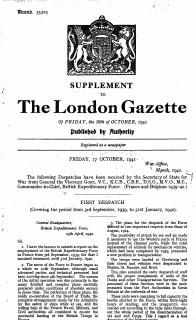
Details
IRumb. 35305


                                SUPPLEMENT
                                                    TO


The London Gazette
                        Of FRIDAY, the 10th of OCTOBER, 1941

                                                    by
                                      Registered as a newspaper


                               FRIDAY, 17 OCTOBER, 1941 .

                                                               March* 1941. -. .
   The following Despatches have been received by the Secretary of State for //
War from General the Viscount GORT, V.C., K.C.B., C.B.E./D.S.O., M.V.O., M.C., *
Commander-in-Chief, British Expeditionary Force. (France and Belgium 1939-40.)


                               FIRST DESPATCH
       (Covering the period from 3rd September, 1939, to 3ist January, 1940).

           General Headquarters,-                           3. The plans for the despatch of the Force
             British Expeditionary Force,                differed in two important respects from those of
                                                         August, 1914.
                             2$th April, 1940.              The possibility of attack by sea and air made
                                                         it necessary to use the Western ports of France
Sir,                                                     instead of the Channel ports, while the total
   1. I have the honour to submit a report on the        replacement of animals by mechanical vehicles,
employment of the British Expeditionary Force            which had been completed by 1939, presented
in France from 3rd September, 1939, the date I           a new problem in transportation.
assumed command, until 3ist January, 1940.                  The troops were landed at Cherbourg 'and
   2. The move of the Force to France began as           their stores and vehicles were despatched to
a whole on loth September, although small                Nantes, St. Nazaire, and Brest.
advanced parties and technical personnel had                This plan entailed the early despatch of staff
been arriving since 4th September. The success           with the proper complement of units of the
of the initial operation was due primarily to the        Docks and other Transportation Services. The
many detailed and complex plans carefully                personnel of these Services were in the main
prepared under conditions of absolute secrecy            recruited from the Port Authorities in Great
in peace time. The perfection of these plans, the        Britain at the outbreak of war.
ready co-operation of the Board of Trade, the               These units were operating to full capacity the
complete arrangements made by the Admiralty              berths allotted to the Force, within forty-eight
for the safety of ships while at sea, and the            hours of landing, and the programme w?.s
willing help of the French Naval, Military, and          carried out according to the time table through-
Civil authorities all combined to ensure the             out the whole period of the disembarkation of
successful landing of the British Troops in              ist and 2nd Corps. This I regard as a feat
France.
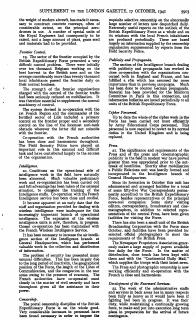
Details
SUPPLEMENT TO THE LONDON GAZETTE, 17 OCTOBER, 1941                                      5903
the weight of modern aircraft, has made it neces-       requisite selective censorship on the abnormally
sary to construct concrete runways, often of            large number of letters now despatched daily.
considerable extent, on the principal aero-             Extremely useful reports on the outlook of the
dromes in use. A number of special units of             British Expeditionary Force as a whole and on
the Royal Engineers had consequently to be              its relations with the local French inhabitants
raised, and a large amount of plant, grass seed         are produced periodically. These are based
and materials had to be provided.                       largely on information supplied by the censorship
                                                        organisation supplemented by reports from the
Frontier Control.                                       Field Security Police.
   19. The sector of the frontier occupied by the
British Expeditionary Force presented a very            Publicity and Propaganda.
difficult control problem. There were initially            The section of the Intelligence branch dealing
over ten thousand Belgians working on the               with publicity and propaganda has worked in
beet harvest in the British zone and on the             close co-operation with the organisations con-
average considerably more than twenty thousand          cerned both in England and France, and has
local inhabitants passed the frontier daily on          fulfilled a r61e which has assumed far more
their normal business.                                  importance than in previous campaigns. Much
   The strength of the frontier organisations           has been done to counter German propaganda.
charged with the control of the frontier traffic        Material has been provided for the Miniform
had been seriously reduced on mobilisation. It          Committee in Paris in this connection, and
was therefore essential to supplement the normal        information bulletins are issued periodically to all
machinery of control.                                   units of the British Expeditionary Force.
  The system devised in co-operation with the
ist French Region and the commander of the              Cipher Personnel.
fortified sector of Lille included a primary              Up to date the whole of the cipher work in the
control on the frontier proper and a secondary          Force has been carried out most efficiently
control on the line of the foremost anti-tank           by Army Educational Corps personnel. This
obstacle wherever the latter did not coincide           personnel is now required to revert to its normal
with the frontier.                                      duties in the United Kingdom and is being
   Co-operation with the French authorities             replaced.
has been close and harmonious throughout.
The Field Security Police have played an                Press.
important role in this unusual and difficult               21. The significance and requirements of the
task and have contributed largely to the success        Press and of the press and cinematographic
of the organisation.                                    publicity in the field in modern war have proved
                                                        greater than was appreciated prior to the out-
Intelligence.                                           break of hostilities. Shortly after mobilisation
   20. Conditions on the operational side of            a Public Relations unit was hastily formed and
intelligence work in the field have naturally           incorporated in the Intelligence branch of
been abnormal. Much valuable preliminary                General Headquarters.
work and re-organisation has been carried out              Since its formation in October this unit has
and full advantage has been taken of the unusual        administered and arranged facilities for a total
situation, to complete the training of the              of some fifty-five War Correspondents perma-
Intelligence staffs. Co-operation with the French       nently accredited to the British Expeditionary
Intelligence service has been close and cordial.        Force, besides representatives of the principal
   It became apparent at an early date that the         news-reel companies. Some sixty visiting
staff and organisation provided for dealing with        editors, correspondents, broadcasters and cine-
wireless intelligence were inadequate for this          matographers, in addition to selected repre-
increasingly important branch of operational            sentatives of the neutral Press, have been given
intelligence. The expansion of the wireless             facilities for visiting the Force.
intelligence units is now, therefore, in progress.         There has also been a small unit of the British
Closest co-operation has been maintained with           Broadcasting Corporation with the Force since
the French Wireless Intelligence Service.               October, and facilities have been provided for
   It has been necessary to increase the air intelli-   selected official photographers to meet the
gence section of the Intelligence branch at             requirements of the British Press.
General Headquarters, which has performed                  The Newspaper Proprietors Association gener-
valuable work in the collection and distribution        ously makes a large supply of papers available
of information.                                         free daily for the Force. In the matter of
   The problem of security has presented many           distribution, close touch has been kept with
unusual difficulties. This has been largely due         them and with the "Continental Daily Mail,"
to the long period of inactivity, the geographical      which supplies the troops with their latest news.
position of the Force, the length of the Lines of          The Press and photographic censorship is now
Communication, and the congestion in the rear           working efficiently and co-operation with the
areas owing to the presence of evacuees. The            French is close and harmonious.
French authorities have co-operated most
closely in the matter of civil security and have        Development of the Rearward Services.
throughout given all the assistance in their               22. The work of the administrative staffs
power.                                                  and services in back areas has in many respects
                                                        been fully as heavy as it would have been if
Censorship.                                             fighting had been in progress. It was their
  The postal censorship discipline of the British       duty, while maintaining a continually growing
Expeditionary Force is on the whole good.               force, to make and put into execution long term
Very considerable increases in personnel have           plans in preparation for the arrival of future
been found necessary in order to impose the             contingents.
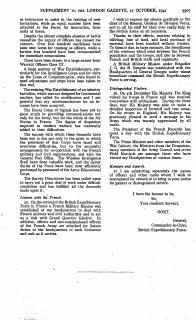
Details
SUPPLEMENT TO THE LONDON GAZETTE, 17 OCTOBER, 1941                                   59<>5
as instructors to assist in the training of new         I wish to express my sincere gratitude to the
formations, while an equal number have been          chief of the Mission, General de Division Voruz,
attached to the Force, for instruction, from         and to all his staff for their ever ready help to
units at home.                                       the-British Army on all occasions.
   Despite the almost complete absence of battle        Thanks to their efforts, matters relating to
casualties the supply of officers has caused me      billeting, hire of land, and local purchase of
concern. Over four hundred candidates have           material have been handled without friction.
been sent home for training as officers, while a     To them is due, in large measure, the friendliness
further four hundred have been recommended           of the relations which exist between the French
for immediate commissions.                           population and the troops, and also as between
   These have been drawn to a large extent from      French and British staffs and regiments.
Warrant Officers Class III.                             A British Military Mission under Brigadier
   A large number of War Establishments, par-        J. G. des R. Swayne was established with the
ticularly for the Intelligence Corps and for units   Headquarters of General Georges under whose
on the Lines of Communication, were found to         immediate command the British Expeditionary
need adjustment and steps have been taken to         Force is serving.
this end.
   The existing War Establishment of an infantry      Distinguished Visitors.
battalion, which was not designed for Continental       26. On 4th December His Majesty The King
warfare, has called for modification and I am         visited his troops in France and was received
grateful that my recommendations for an in-          -everywhere with enthusiasm. During the three
crease have been accepted.                            days tour His Majesty was able to make a
   The Royal Corps of Signals has been put to         detailed inspection of forward and rear areas.
great strain in providing communications not          On his return to England, His Majesty was
only for the Army, but for the whole of the Air       graciously pleased to send a message to his
Forces in France. The degree of dispersion            Army which was warmly appreciated by all
required in modern warfare has materially             ranks.
added to their difficulties.                             The President of the French Republic has
   The success with which these demands have          spent a day with the British Expeditionary
been met is due not only to the spirit in which       Force.
the personnel of that Corps have faced and               The Prime Minister and other members of the
overcome difficulties, but to the successful          War Cabinet, the Ministers from the Dominions,
arrangements for co-operation with the French         many members of the Army Council and seven
military and civil organisations, and with the        Field Marshals are amongst those who have
 General Post Office. The Wireless Intelligence       visited my Headquarters at various times.
Staff have done valuable work, and the cipher
duties of the Force have been most efficiently       Honours and Awards.
performed by personnel of the Army Educational          27. I am submitting separately the names
Corps.                                               of officers and other ranks whom I wish to
   The Survey Directorate has been called upon       recommend for reward or to bring to your notice
to carry out a great deal of work under difficult    for gallant or distinguished service.
conditions and has fulfilled all the demands
made upon it.
                                                                   I have the honour to be,
Liaison with the French.                                                      Sir,
  25. On the arrival of the British Expeditionary                      Your obedient Servant,
Force in France a French Military Mission was
established at my headquarters to deal with                                       GORT.
French military and civil authorities and to act
as a link with Grand Quartier General. In
addition, officers and non-commissioned officers                                           General,
of the French Army are attached for liaison                                   Commander-in-Chief,
duties to the headquarters of each formation                          British Expeditionary Force.
and unit as it arrives.
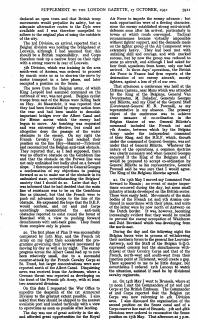
Details
SUPPLEMENT TO THE LONDON GAZETTE, 17 OCTOBER, 1941

declared an open town and that British troop         Air Force to impede the enemy advance; but
movements would prejudice its safety, but no         such opportunities were of a fleeting character,
adequate alternative routes to the Dyle were         since the enemy established strong anti-aircraft
available and I was therefore compelled to           defences soon after his arrival, particularly in
adhere to the original plan of using the outskirts   towns at which roads converged. Tactical
of the city.                                         reconnaissance became virtually impossible
    The 3rd Division, on arrival, reported that a    without fighter support, and the demands made
 Belgian division was holding the bridgehead at      on the fighter group of the Air Component were
 Louvain, although I had assumed that this           extremely heavy. They had been met with
 should be a British responsibility. 2nd Corps       unfailing skill and courage, and with marked
 therefore took up a narrow front on their right     success, but by now the group was reduced to
 with a strong reserve in rear of Louvain.           some 50 aircraft, and although I had asked for
    5th Division, which was training in the area     four fresh squadrons from home, only one had
 south-west of Amiens, was ordered to proceed        arrived. In three days' operations, the British
 by march route so as to shorten the move by         Air Force in France had firm reports of the
 motor transport in a later phase, and later         destruction of 101 enemy aircraft, mostly
 occupied a position on the Senne.                   fighters, against a loss of 78 of our own.
    The news from the Belgian army, of which            That afternoon a conference was held at the
 King Leopold had assumed command on the             Chateau Casteau, near Mons which was attended
 outbreak of war, was not good. Belgian cyclist      by the King of the Belgians, General Van
 troops from east of the Meuse were falling back     Overstraeten, M. Daladier, Generals Georges
 on Huy. At Maastricht, it was reported that         and Billotte, and my Chief of the General Staff
 they had been forestalled by enemy action from      (Lieutenant-General H. R. Pownall), as my
 the rear and had been unable to demolish            representative in my absence. The primary
 important bridges over the : Albert Canal and       object of the conference was to achieve
 the Meuse across which the enemy had                some measure of co-ordination in the
 begun to move. Air bombing was requested            Belgian theatre of war. General Billotte's
 and was extremely effective, but could not          command included the French ist and
 altogether deny the passage of the water            7th Armies, between which lay the Belgian
 obstacles to the enemy. On my right the             Army under the independent command
 French Cavalry Corps had reached their              of their King, and the B.fe.F. which, though
 position on the line Huy—Hannut—Tirlemont           under the command of General Georges, was not
 and reconnoitred the Belgian anti-tank obstacle.    under that of General Billotte. Whatever the
 They reported that, as I had supposed, there        nature of the operations, a common doctrine
 was no effective obstacle on the Gembloux line      was clearly necessary and when General Georges
 and that the obstacle on the Perwez line was        enquired if the King of the Belgians and I
 not only unfinished but badly sited on a forward    would be prepared to accept co-ordination by
 slope. I thereupon conveyed to General Georges      General Billotte as bis representative, General
 a confirmation of my objections to pushing          Pownall said he was sure that I would agree.
 forward so as to make use of the obstacle in its    The King of the Belgians likewise agreed.
 unfinished state, notwithstanding the Belgians'      . 21. On I3th May I moved my Command Post
 anxiety that I should do so. Later that day I       forward to Renaix; no event of major impor-
 was informed that he had decided that the main      tance occurred during the day, but some small
line of resistance was to be on the Gembloux         infantry attacks developed on the British sector.
 line as planned, but that the French were to        These were easily held. Movements of the main
 push out advanced troops to the line of the         bodies of the French ist and 7th Annies con-
obstacle. He expressed the hope that the B.E.F.      tinued in accordance with their plans, and units
would conform, and ist and 2nd Corps                 of the latter were by now north of Antwerp on
 accordingly      reconnoitred   the     anti-tank   the Dutch border. It was, however, becoming
obstacles reported to exist round the forest of      increasingly evident that they would be unable
Meerdael with a view to pushing forward              to prevent the enemy occupation of Walcheren
detachments with anti-tank guns. They found          and Zuid Beveland which was developing from
them complete only in places.                        the north-east.
    20. The first phase of Plan D was successfully      During the day and the following night the
completed by i2th May, and the French ist            Belgian forces were in process of withdrawing
Army on my right then accelerated the pro-           their northern forces to the general line Louvain-
gramme governing their forward movement by           Antwerp, and the Staff of the Belgian G.Q.G.
moving by day as well as by night. The enemy         expressed concern lest the simultaneous with-
progress across the Albert Canal had up to now       drawal of their Cavalry Corps and that of the
been relatively small, due to a successful           French, north-west and south-west from their
counter-attack by the French Cavalry Corps at        junction point at Tirlemont, would create a gap.
St. Trend, but larger concentrations were now        There appeared to me to be little danger, but
reported north of the Albert Canal. Disquieting      nevertheless I ordered I2th Lancers to watch
news was received from the Ardennes, where a         the situation, assisted if need be by divisional
German thrust was reported as developing on          cavalry regiments.
the front of the French gth Army, with at least         22. On I4th May I went to Brussels, where at
two armoured divisions.                              12 noon I met the Commanders of ist and 2nd
    On this date I requested the War Office to       Corps at the British Embassy. The Commander
expedite the despatch of the ist Armoured            of 2nd Corps reported that the Belgian ist
Division to the greatest extent possible. I also     Corps was now reforming in 4th Division
asked that they should be shipped to the nearest'    area. I also discussed the organisation of the
available port and loaded tactically with a view     second position on the Senne canal and of a
to operations as soon as possible after landing.     Corps reserve line east of Brussels. 5th and 48th
    The day was one of great activity in the air,    Divisions were ordered to reconnoitre the Senne
and afforded great opportunities for the Royal       position on I5th May. That afternoon at 3 p.m.
Details
SUPPLEMENT TO THE LONDON GAZETTE, 17 OCTOBER, 1941                                      59*3
vulnerable points, were ordered to relieve units           23rd Division moved to their positions during
of ist and 2nd Corps on protection and traffic         I7th May; they were provided with about forty
control of main routes in Belgium. Railheads,          field, anti-tank, and anti-aircraft guns from
which had been advanced on i3th May to the             ordnance reserves.
general line Enghien—Ninove, were now moved                The enemy break-through was now offering
back across the frontier.                              an imminent threat to rear G.H.Q., to the
   During the night i6/i7th May the withdrawal         communications over the Somme at Amiens
to the Senne positions began, and was success-         and Abbeville, and to the base areas. To meet
fully completed by the afternoon of the lyth.          this, every available man and weapon was
Some enemy tanks and motor cycle units had             collected and orders were issued to the
been reported on the right flank of ist Corps,         commander, Lines of Communication Area, for
west of the forest of Soignies, and as a precaution,   the remainder of I2th and 46th Divisions to be
part of the ist Army Tank Brigade, which had           despatched to the forward zone. One brigade
started to withdraw for entrainment, was                (36th Infantry Brigade of I2th Division)
turned about to meet the thrust.                       arrived during the day, and the leading
    By the time the tanks reached their entraining     battalion was despatched with four field guns
stations railway difficulties prevented the trucks     to cover the north-western exits from PeYonne,
being moved, and the remainder of the move             while engineer parties, organised by the
was carried out by road; this gave rise to             Commander, G.H.Q. Troops, were sent to
inevitable mechanical trouble later on. *              prepare for demolition the crossings over the
                                                        Canal du Nord between the river Somme and
    By.the early morning of iyth May the situation     the right of 23rd Division at Ruyalcourt.
in the south had become grave, and enemy                The remainder of 36th Infantry Brigade were
 armoured and mobile forces were reported to            moved forward to Albert, and the other two
 have crossed the Oise. At St. Quentin the              brigades of I2th Division ordered to the Abbe-
 situation was obscure, and though by this time         ville area. These latter, however, arrived too
 General Giraud, lately commanding the French           late to come under my effective command, and
 7th Army, had been ordered to take command             their operations on the Somme were carried
 of the forces in that region, it was clear from        out under the Commander Lines of Communi-
 reports and from visits of liaison officers that       cation Area.
 he had not yet succeeded in establishing effective        Elsewhere in the area between Corps rear
 control. A gap of at least twenty miles existed        boundaries and the Somme, local defence
 south of the Forest of Mormal in which there           schemes were put into operation under the
 appeared to be no organised resistance. Later          orders of the Commanders of G.H.Q. Troops
 in the day information was received from the           and of " X " Lines of Communication Sub-Area*.
 French that ten enemy armoured divisions were          Few if any of these units or their commanders
 engaged in the battle.                                 had any experience in fighting, but their
    During the whole of this period, communi-           determination was beyond all praise.
 cation with my liaison officer at General Georges'         A mobile bath unit, for example, took part
 Headquarters was maintained so as to keep in           in the defence of St. Pol, while, both now and
 touch with events as they developed. However,          later, the General Construction Companies of
 I received no infoimation thiough this channel         the Royal Engineers, and many units of the
 of any steps it was proposed to take to close the      Royal Army Service Corps, set to work to
 gap, which might have affected my own                  place their localities in a state of defence and
 command.                                               manned them until they were overwhelmed,
    It was not till later, on the night of iqth/zoth    relieved or ordered to withdraw. Wherever
 May, that General Billotte informed me of the          possible, transport was collected or requisitioned
 action which was being taken to this end by            to enable parachute detachments to be dealt
 the French Armies in the south.                        with.
                                                           These many small delaying actions all contri-
 The defence of rearward areas.                         buted to gain the time required for the.with-
   25. Rear G.H.Q. at Arras had intensified the         drawal of the main forces.
precautions already being taken against sabotage           The defence of the town of Arras itself was
and air landing units, but on the early morning         entrusted to the O.C. ist Bn. Welsh Guards
of I7th May a telegram was received from                who had under his command some units of the
General Georges ordering 23rd Division to move          Royal Engineers, an Overseas Defence battalion
at once to occupy the line of the Canal du Nord,         (gth West Yorks), and various details including
on a frontage of fifteen miles from Ruyalcourt          an improvised tank squadron.
(10 miles north of Pdronne) to Arleux (6 miles
south of Douai).                                            Orders were issued for all administrative troops
                                                        not required for defence to move forthwith north
   The division, which, like the I2th and 46th          of a line Orchies-Lens-Fre'vent.
Divisions had joined the B.E.F. for work in
rearward areas, consisted of eight battalions only         At the same time to guard against a more
with divisional engineers, but no artillery, and        immediate threat to my right flank a force was
signals and administrative units in no more than        organised consisting of I27th Infantry Brigade
skeleton form. Its armament and transport was           of 42nd Division, ist Army Tank Brigade,
on a much reduced scale and training was far            a Field Artillery Regiment and the Hopkinson
from complete.                                          Missionf, all under the command of Major-
                                                        General F. N. Mason-MacFarlane, my Director
   Nevertheless, troops of these three divisions
fought and marched continuously for a fortnight,         * This Sub-Area had been formed to deal with units
and proved, were proof needed, that they were          which, remained in the old G.H.Q. and Corps areas
composed of soldiers who, despite their                when the B.E.F. moved into Belgium.
inexperience and lack of equipment, could hold           f The Hopkinson Mission, under the Command oi
                                                       Lieut.-Colonel G. F. Hopkinson, had been formed to
their own with a better found and more numerous        secure certain information for the R.A.F. and for
enemy.                                                 G.H.Q. immediately on entry into Belgium.
Details
-SUPPLEMENT TO THE LONDON~GAZETTE; 17 OCTOBER, 1941

south-west was' entirely impossible until the              •covered" had -already far e'xceeded the estimated
situation had been retrieved on the front of the            life of the tracks which were now beginning to
French ist Army.                                            break through wear.
                                                               It v/as clear therefore that the attack of
   33. 5th Division was therefore "ordered .to              Frankforce would not maintain its momentum
join 5oth Division in the Vimy area, and its               .unless it was reinforced and supported by the
commander, Major-General Franklyn, was placed               French on its left. • During 22nd May, therefore,
in command of all the British troops operating              .General Franklyn held his ground, and pro-
in and around Arras. Frankforce, as it was to               longed his right flank westwards, while the
be known, consisted of 5th and 5oth .Divisions             -French Cavalry Corps took up a position at
(each of two brigades only), ist Army Tank                 •Mont St. Eloi. All day long pressure increased
Brigade* (previously with Macforce) together                round his right flank, and an observation post
with Petref orce. and the force under O.C. i2th             of i2th Lancers on Mont St. Eloi could see at
Lancers. Petreforce was by this time very tired             one moment as many as 48 enemy tanks.
and widely dispersed.                                      • Next day (23rd May) the enemy advanced
   My immediate instructions to General Franklyri           steadily north-eastwards from the high ground
were to. occupy the bridgeheads on the Scarpe,              of the Lorette ridge, and by evening they were
east of Arras and thus to relieve the remains of            reconnoitring the' southern outskirts of Bethune
23rd Division. He would then be suitably                    and the road from Lens to Carvin. It was clear
disposed to advance south and south-east of                 that Frankforce was becoming dangerously
Arras on the following day in conjunction with              hemmed in. Two roads were still available for
the French.                '                                their extrication and at about 7 p.m. I decided
   It will be convenient to conclude the story              that .there was no alternative but to withdraw
of Frankforce here.                                         Frankforce. This withdrawal had necessarily to
                                                            be in an easterly direction. 5th and 5oth
   During the evening of 20th May, General                 Divisions had been engaged with the enemy all
Franklyn completed his reconnaissances for an               day and had inflicted very severe losses ; they
attack on the following day to secure the line              were now ordered to withdraw to the area
of the rivers Scarpe and Cojeul: his intention              around Seclin, where they would be well placed
was to exploit success by moving on 22nd May                to take part in any further counter-attack to
to the Sensee and thence towards Bapaume                    the southward which might be staged. Petre-
and Cambrai. In these plans he had the full                 force was withdrawn to an area north of Seclin.
co-operation of General Prioux, Commander of
the French Cavalry Corps, but the light                        Thus concluded the defence of Arras, which
mechanised divisions were much" reduced in                  had been carried out by a small garrison, hastily
strength and probably had no more than one                  assembled but well commanded, and determined
quarter of their tanks fit for action.                      to fight. It had imposed a valuable delay on a
                                                            greatly superior enemy force against which it
   However, one of these divisions was ordered              had blocked a vital road centre.
to advance on each side of Frankfbrce, while
12th Lancers watched the right flank on the                2ist May — The Organisation of the Canal line.
Arras—St. Pol road. The hope was not realised,
however, that the French 5th Corps would also                 34. The time had now come to organise, as
attack southwards from Douai with two divisions            soon as possible, the further defence of the
in co-operation with Frankforce on the 2ist.               south-western flank of the force.
A conference had been arranged at 6 p.m. on                " The enemy advance beyond Arras had hitherto
the 20th at General Franklyn's headquarters but            been carried out almost entirely by armoured
no representative from that Corps attended.                forces, supported by motorised infantry which
Finally, at 12.30 p.m. on the 2ist I received a            was doubtless increasing in numbers every day.
letter from General Blanchard to say that the              The situation regarding the enemy's normal
Corps Commander, General Altmeyer, thought'he              infantry divisions was still uncertain. It was
could move on the 22nd or the following night.             therefore of first importance to reinforce the
   Tim;, however, was vital. General Franklyn              organisation of the line of the canals from the
adhered to his plans, and at 2 p.m. attacked with          Escaut to La Bassee, and to continue it to
ist Army Tank Brigade, I5ist Infantr,y Brigade             St. Omer and the sea. These canals offered the
of 5oth Division and I3th Infantry Brigade of              only anti-tank obstacle on this flank. They were,
5th Division all under General Martel. The                 however, crossed by numerous bridges, many of
French ist Light Mechanised Division co-                   which had already been prepared for demolition
operated, though its movements did not develop             by our own engineers under my Engineer-in-
so widely to the flanks as General Franklyn                Chief (Major-General R. P. Pakenham- Walsh),
had hoped.                                                 the Commander of Macforce, and the French
                                                           Commanders' of the fortified sectors of Lille and
   The opposition was stronger than had been               Flanders (Qene'raux de Brigade Bertschi and
expected. Objectives for the day were reached,             Barthdiemy).
and in the evening there were heavy dive-                     It had been proved that even weak garrisons
bombing attacks by the enemy. Enemy tanks                  holding important road centres, such as Arras
had been put to flight: over 400 prisoners had             and Doullens, were of much value in imposing
been captured: a number of enemy had been                  delay, for the initial advances of the enemy
killed and many transport vehicles destroyed.              always followed the main roads. It was therefore
   The tank brigade had, however, begun to                 decided to continue the policy of organising
suffer severely from mechanical trouble ; the              such " stops," not only along the canals but at
tanks had been on the road continuously since              all possible centres whether north or south of
 they detrained -at Brussels, and the mileage              the canal line.
                                                              Macforce, which had been formed on
   * At this time their strength was reduced to approxi-   May, had been augmented on i8th and igth by
mately 65 Mark I and 18 Mark II tanks. By the end of
the withdrawal from Arras there remained 26 Mark I          I38th Infantry Brigade (46th Division) which
and 2 luark II tanks.                                      went into line on the canal between Raches and
Details
SUPPLEMENT to THE LONDON GAZETTE, 17 OCTOBER, 1941                                        5919
   On return from the meeting, orders were issued           evacuation was carrie.d out under the orders of
 to implement these decisions, and that evening            the War Office, being completed on the night
 I moved my command post to the Chateau de                 of 23/24th May.
 Premesques, midway between Armenti&res and
 Lille.                                                     The Administrative Situation.
                                                               37. During the whole of this period I had
 The final severance of the L. of C. and the invest-        been kept in the closest touch with the adminis-
     ment of Boulogne.                                      trative situation by the Quarter-Master-General
      36. During the gist May the enemy penetra-            (Lieutenant-General W. G. Lindsell). Up to
   tion into the rearward areas increased and com-          i6th May the administrative arrangements
  munication across the Somme was finally                  which formed part of Plan D had worked well,
   severed. Since the I7th May the Commander                and although enemy air action steadily intensified
   of the Lines of Communication Area (Major-               during the period, there was no serious inter-
   General P. de Fonblanque) had been taking               ference with the maintenance of the force.
   energetic steps for its defence, in so far as it was        On i7th May, however, the Quarter-Master-
  possible with the few and scattered troops                General decided, in view of the situation south
   available.                                              of Arras, to discontinue the use of the railway
      These consisted, apart from Armoured                 from the regulating station at Abancourt via
  Division and 5ist Division now returning                 Amiens and Arras, and to switch all traffic via
  from the Saar, of those portions of I2th and             Eu and Abbeville to Bethune. He also ordered
  46th Divisions (some nine battalions in all)             forward every available trainload of ammunition
   which could not be despatched forward, three            to the Hazebrouck area.
  unbrigaded infantry battalions and the contents              On igth May, directly after the C.G.S. had
  of the reinforcement depdts, together with               spoken to the War Office as to the possibility
  troops of the Auxiliary Military Pioneer Corps           of enforced withdrawal, the Q.M.G. telephoned
   and of the administrative services.                     to the War Office to discuss the opening of new
      On '23rd May, however, the War Office                bases. On the same day, one of his staff officers
  appointed Lieutenant-General- Sir Henry                 .left for London to arrange an emergency ship-
  Karslake to command the defences on the Lines            ment programme for supplies and stores to
  of Communication and I was not concerned in              the ports of Boulogne, Calais and Dunkirk. It
  the operations which ensued. Nevertheless,               was to prove none too soon, for the railway
  I did not immediately abandon hope of the                at Abbeville was cut on 2ist May. A new plan
  Armoured Division breaking through, and I                had to be put into operation at once for the
  urged the War Office to use their best endeavours.       maintenance of the fcfrce north of the Somme,
  to this end and to prevent its being used piece-         estimated at 250,000 men and requiring a daily
  meal in local operations at the request of the           lift of ammunition, supplies and petrol, of some
  French Command.                                          2,000 tons.
      At about 3.30 p.m. on the 2ist May, I received          The petrol situation, fortunately, gave no cause
  information that an enemy column of all arms             for concern since, although the dumps forward
  was approaching Boulogne. The rear element               of the Somme had been destroyed on evacuation,
  of G.H.Q., consisting largely of the Adjutant-           together with a large civil storage plant near
  General's Branch and of headquarters of                  Douai, there still remained a large army bulk
  Services, which had been sent to that town on            filling station near Lille.
  I7th and i8th May, had been moved to Wimereux               The supply situation was however, bad, and
  on 20th May as a result of enemy bombing.                on 2ist May, Corps had only three days
  * All possible steps had been taken to put               R.A.S.C. supplies in the forward area. Matters
  Boulogne in a state of defence with the troops           might, at any time, have become serious had it
  available, consisting of labour units and the            not been for the success of the measures taken
  personnel of rest camps. On igth May, an                 between 23rd and 26th May, to organise the
  endeavour was made to bring up troops from               supplies in Lille belonging to the Expeditionary
  beyond the Somme, to hold the line of the Canche;        Force Institutes and to civilian firms.
  but the time for this was past and the troops               The decision to maintain the force through
  could not get beyond Abbeville. The hospitals            the northern ports was finally taken on 2ist
  in the Etaples area were now evacuated, and on           May and the headquarters of a Base Sub-Area
  2ist May a party of Engineers, supervised by             established at Dunkirk, together with a section
  my Director of Works, Brigadier W. Cave-                 of Q.M.G's staff, in close touch with the British
  Browne, demolished most of the bridges over              and French Naval authorities.
  the Canche.                                                 Rail communication in the area was by now
      As soon as the news of this new threat was           precarious, and plans were worked out on the
  received, the War Office was asked for bomber            basis of establishing dumps, one in each Corps
. support, which was at once forthcoming. Enemy            area, which could be wholly maintained by
  tanks were located and bombed at Hesdin and             road. The position was, by this time, greatly
  Fruges, but no good targets were obtained on            complicated by the numbers of improvised
  the coast road. The War Office was also asked           forces which the quickly changing situation
  to send a detachment of Royal Marines for the           had made necessary: most of these, like the
  defence of Boulogne but had already done                three divisions for pioneer duties, had no proper
  so. Early on the 22nd May, 2oth Guards                  administrative echelons. Some were within
 Brigade (Brigadier W. A. F.' L. Fox-Pitt) of             reach of Corps, but others were not and these
 two battalions with an anti-tank battery                 had to be dependent on fortuitous sources of
.landed, thus establishing the defence of the             supply, or else live for a time on the country.
 town and enabling those troops who were not                  The situation had" grown even worse by
  required for the defence to be evacuated in             22nd May, when the ports at both Boulogne
 good order.                                              and Calais were out of action, and the greater
     By the evening of 22nd May, the enemy                part of the Railhead Mechanical Transport
 armoured forces were within nine miles of Calais.        Companies had been captured. Furthermore
                                           if-g   final   a^ reconnaissance of Ostend had shewn that the
Details
SUPPLEMENT TO THE LONDON GAZETTE, 17 OCTOBER, 1941                                    5931
  SOME LESSONS OF THE CAMPAIGN                           Our anti-tank armament was more ample than
                                                      that of the French, but did not extend further
The importance oj equipment; the time factor;         back than the division. No guns were available
  liaison; dejence in depth; the employment           for the defence of Corps or rearward areas or for
  of air forces; river crossing and demolitions ;     the three " Pioneer " divisions, except by with-
  signal communications; traffic       control;       drawing weapons from the formations to which
  security; supply and transport; the behaviour       they had been allotted in War Establishments.
  of the troops.
                                                         These instances amongst many others which
   59. So ended a campaign of 22 days which           might be quoted serve-to indicate the vital
has proved that the offensive has once more           necessity for an expeditionary force, if it is to
gained ascendency in modern war when under-           be used in a first-class war, being equipped on a
taken with ah army equipped with greatty              scale commensurate with the task it is to be
superior material power in the shape of air           called upon to fulfil.
forces and armoured fighting vehicles.                   The days are past when armies can be hurriedly
   The British Expeditionary Force had advanced       raised, equipped and placed in the field, for
sixty-five miles from the frontier to the Dyle :      modern war demands the ever increasing use of
then the same distance back from the Dyle to          complicated material. Indeed the scientific side
the frontier : finally a further fifty miles to the   of warfare has been evolving at a very rapid rate
sea at Dunkirk. A frontal advance had become          even since the end of the war of 1914-18 and is
a flank defence ; a flank defence the defence of      continuing to do so. Modern equipment requires
a perimeter which at times exceeded one hundred       time to design and produce, and once it is pro-
miles, with my force of nine* divisions and parts     duced, further time is required- to train troops
of three semi-trained and partially equipped          in its technical and tactical uses. Improvised
divisions sent to France for labour duties.           arrangements, made at short notice, can only
Finally had come the witRdrawal to the sea            lead to the shortage of essential equipment, the
and the shrinkage of this wide front to the           production of inferior articles, and the unskilful
twenty-four miles of the Dunkirk bridgehead.          handling of weapons and vehicles on the battle-
   The series of situations which the B.E.F. had      field.
to face was not brought about by failure on their
part to withstand enemy attacks when holding           The Time Factor.
a position of their own choosing : it was caused.        61. The speed with which the enemy exploited
by the enemy breaking through completely on           his penetration of the French front, his willing-
a front many miles away from that held by the         ness to accept risks to further his aim, and his
B.E.F. Nevertheless this break through, once          exploitation of every success to the uttermost
it began, was destined to involve in its ill-fated    limits emphasised, even more fully than in the
consequences both the French ist Army and             campaigns of the past, the advantage which
the B.E.F. In the withdrawal which ensued              accrues to the commander who knows how best
both these armies lost the whole of their artillery   to use time to make time his servant and not
and transport.                                        his master.
   It would not be appropriate in -this Despatch         Again, the pace of operations has been so
to discuss questions affecting the higher com-        accelerated by the partnership between offensive
mand of the Allied forces : on these matters I        aircraft and modern mechanised forces that the
received orders from H.M. Government and              reserves available for the defence are of little
through the French commanders under whom              use unless they are fully mobile or already in
I was placed.                                         occupation of some reserve position.            For
   Nor is .this Despatch the place to deal at         instance, had it not been that eight Troop
length with the military lessons of the Cam-          Carrying Companies, R.A.S.C., weue available,
paign ; I have already conveyed my detailed           the attack south of Arras could never have been
views to the proper quarter.                          mounted, nor indeed could the flank defences on
   There are, however, certain matters which it       the canal have been organised in time to forestall
may be convenient to mention, in broad outline,       the enemy.
in this Despatch since they may serve in some            We had already foreseen, and taught at the
respects to amplify and to explain the narrative      Staff College, that the methods of staff duties
of events. They are dealt with in the paragraphs      in the past war would prove too slow for modern
which follow.                                         requirements.     Headquarters of formations
                                                      were so frequently on the move that confer-
 The paramount importance of equipment.               ences, supplemented by Operation Instructions
                                                      or messages, usually replaced the formal orders
  •60. It was clear from the outset that the ascen-   which had been the accepted procedure in past
dency in equipment which the enemy possessed          campaigns.
played" a great part in the operations. He was
able to place in the field and to concentrate no         Full use was also made of liaison officers of all
less than ten armoured divisions in the area          grades, who had been provided by the War
which he selected and later, to employ at least       Office on a generous scale. In the period before
five of these against the British rearward de-        active operations began, they were of real value
fences. On the other hand, the British armoured       in settling matters of detail and in reconciling
forces in the theatre of war amounted to seven        points of view which did not always at first
divisional cavalry regiments equipped with            coincide; during the fighting they were more
light tanks, one regiment of armoured cars of         often than not the actual bearers of Operation
an obsolete* pattern, and two battalions of           Instructions, and performed most valuable
infantry tanks, the latter, except for twenty-        service to their commanders in ascertaining the
three Mark II tanks, being armed each with one        exact state of affairs in forward or flank units.
machine-gun only.                                     The junior .liaison officers, known as Motor
                                                      Contact Officers, likewise showed determination
    * Excluding 51st Division on the Saar Front.      and resource in carrying out their duties.
Details
5932          SUPPLEMENT TO THE LONDON GAZETTE, 17 OCTOBER, 1941

   The liaison with flanking French formations          breaking up formations of enemy aircraft. But
was carried out by the exchange of bilingual            being purely defensive, it can never prove the
liaison officers. I was particularly fortunate in      complete antidote to 'enemy bombers and recon-
the French officers who were attached for these        naissance aircraft, even when available in
duties from neighbouring formations.                    sufficient strength. A commander must have at
                                                       his call sufficient fighters to intercept and attack
   I would also like to take this opportunity of       the enemy.
recording my thanks to General de Division
Voruz and the staif of his Mission with G.H.Q.            The commander must, likewise, dispose of a
for their unfailing helpfulness at all times.           sufficient bomber force to be able to engage
                                                        opportunity targets of. vital tactical importance.
                                                        Such targets were the enemy mechanised
Defence in Depth.                                      columns at Maastricht, Sedan and Boulogne.
  62. Closely allied to the question of the time       The machinery for their control must be efficient
factor is that of defence in depth. The speed at       enough to ensure that aircraft can be despatched
which armoured units can advance, once they            in time.
have, broken into a position, calls for a more
elastic conception of defence than would be            River Crossing and .Demolitions.
necessary were it designed solely to hold up a            64. The skill and speed of the enemy in
marching enemy. Consequently, frontages may,           crossing water' obstacles was very apparent as
in-the future, be considerably shorter than those      was also the excellence of his equipment for the
which the French High Command required the             purpose. On the other hand, the paramount
B.E.F. to hold in France.                              importance of demolitions on such obstacles
   In more rearward areas, schemes must be             as a means of imposing even a short delay, was
prepared for the manning, at short notice, of          established: during the operations the B.E.F.
centres of communication and other important           destroyed over 500 bridges, and there were few
denies. Therefore, all units, even those designed      failures. From the number of demolitions
for purely administrative purposes, must be            which it was found necessary to carry out, it is
prepared to take their part in the battle, and         clear that every engineer unit, no matter what
they must receive the necessary preliminary            its normal role, must receive the necessary
training.                                              training to execute such work.
   Anti-tank defence is a science as well as a         Signal Communications.
craft. It is a science in that it is necessary to         65. During the operations a very heavy strain
perfect armour-piercing weapons and anti-tank          was thrown upon the Royal Corps of Signals:
tactics. It is a craft in that troops must be          not least upon those responsible for the com-
trained to stalk tanks by day, to keep track of        munications of G.H.Q. The problem was two-
their movements, and to attack them in their           fold : first to provide the normal communica-
harbours at night.                                     tions within the force, secondly to provide the
                                                       long-distance communications required to enable
The Employment of Air Forces.                          G.H.Q. to remain in constant touch with French
   63. It was clear from the reports of the            G.Q.G., the War Office and the Royal Air Force.
Spanish war, confirmed by those of the Polish          The latter considerations made it necessary to
campaign, that the enemy would employ his              follow the buried cable, and thus dominated
air forces to further the offensive operations of      the moves of G.H.Q. Communications within
the army by the use of dive bombers and para-          the B.E.F. demanded mobility and rapidity of
chute troops. The latter, though effectively           construction combined with the need to deal
employed in Holland, were less used against the        with a heavy volume of traffic. The frequent
B.E.F.; however, the nuisance value of those           moves, and .the time lag which occurred when
which were employed, by their interference with        cipher had to be used, resulted in a heavy
railway, telephone and telegraph communica-            demand on despatch riders.
tions in rearward zones, Was altogether out of
proportion to their numbers. There were seldom          Traffic Control.
troops available to isolate and search the areas           66. The vital importance of controlling move-
where they landed, usually at dusk, and no              ment by road was emphasised over and over
French civil organization existed for the purpose.      again during the operations.
   The enemy bombers, both high level and low              The movements of mechanised columns
flying, were a more serious menace. Their               depend for their success on the proper recon-
control by the German command was most                  naissance and allotment of roads, the avoidance
efficient, capable of bringing the aircraft to their    of traffic blocks and the power to divert the flow
objective by wireless call at short notice.             of traffic quickly and without interruption
                                                        whenever an obstacle occurs. The danger of
   Attack by dive bombers was a new experience          interference by enemy bombing is always
for British troops. Even those who had grown            present, but it can be minunised by the employ-
accustomed to heavy shell fire in France during         ment of fighter aircraft, by an adequate layout
1914-18 found that this form of attack, when            of anti-aircraft guns, by the provision of facilities
first encountered, placed a strain on morale.           for clearing breakdowns and the repair of roads,
As had been anticipated, it was soon realised           and by the training of troops in a proper drill
that those who were properly entrenched and            .when attacked from the air.
had perfected the drill of taking cover when on
the move, suffered relatively little danger.               The movement of refugees, as has been
                                                        described above, laid a further burden on the
   Ground anti-aircraft defence, both gun and           Provost service. Though the greatest efforts
light automatic, improved in accuracy as time           were made by all ranks to cope with the task, it
went on and it accounted for the destruction of         was evident that our organisation required con-
over 500 aircraft in addition to its effect in          siderable expansion. Recommendations for the
Details
SUPPLEMENT TO THE LONDON GAZETTE, 17 JULY, 1947                                                        3297
the one thought to be present penetrated further   were subjected to a murderous hail of bombs
than the northern Route Y. It may well be          and machine gun bullets.
that this U-Boat laid moored mines, which are         Required by their duty to remain offshore
thought to have caused the loss of two A/S         waiting for the troops, who themselves were
trawlers.                                          unable to move down to the water for the
                                                   same reason, it required the greatest determina-
   8. AIR CO-OPERATION*                            tion and sense of duty, amounting in fact to
   It is unnecessary to stress the vital necessity crews, to on
                                                   heroism,      the part of the ships' and boats'
                                                              enable them to complete their mission.
for effective air co-operation in an operation of     In their reports, the Commanding Officers of
this nature.     Not only did German air effort many ships, while giving credit to the R.A.F.
interrupt and reduce seaborne traffic, but it personnel for gallantry in such combats as were
also prevented embarkation by suspending observed from the ships, at the same time ex-
troop movement. To both Naval and Military press their sense of' disappointment and sur-
observers on the coast, the situation at times prise at the seemingly puny efforts made to
was extremely disheartening.          Rightly or provide air protection during the height of this
wrongly, full air protection was expected, but operation, though the gallantry of our out-
instead, for hours on end the ships off shore numbered airmen was the admiration of all.
  9. No. ii GROUP FIGHTER PATROLS—DUNKIRK AREA HISTORY.


                  Date                            Patrols              Total flying          Enemy aircraft
                                                                       hours daily        assessed as destroyed
26th May ...                                            22                     480                   20
27th May ...                                            23                     •tt6                  08
                                                                                                     j°
28th May                                                II                     ^76
                                                                               o/ w                  2Q
                                                                                                     •*J
29th May ...                                             Q
                                                         y                     674
                                                                               Wr                    6<j
30th May ...                                             9                     7O4
                                                                               /"T-
3ist Mav                                                8                  .   /too
                                                                                f
                                                                                  ty*J
                                                                                                       u
                                                                                                     jog
 ist Tune ...                                           8                      s«8                   4.3
                                                                                                     TO
 2nd June                                               4                      231                   35
 3rd Tune ...                                           4                      33Q
 4th Tune ...                                            3                     234

                Totals                               101                    4,822                   262

  Notes :
     (1) It will be observed that the number of patrols decreased from 27th May onwards, whilst there was an
  increase in the daily flying hours. This is due to the fact that the fighters were employed in increasingly bigger
  patrols as the enemy air opposition increased.
     (2) Operation " Dynamo " suffered most from enemy air effort on 2Qth May and on ist June, after which
  latter date the combination of enemy air attack and shore artillery fire led to the suspension of the operation
  by day.

                                                                 10. The position of enemy batteries had been
   * Air Ministry footnote:                                   located by air reconnaissance by nightfall on
    It was not to <be expected that all air action would      3ist May, and additional batteries in the Grave-
be visible from .points on the coast; many enemy
raids were in fact intercepted and enemy aircraft             fines area on the ist June. Air Bombardment of
destroyed. Moreover, fighter patrols formed only one          these batteries during the ist and 2nd June un-
part of the air operations in connection with Dunkirk,        doubtedly reduced their fire during dusk and
as a considerable reconnaissance and bombing effort           dawn on each of the nights 2nd/3rd June and
directly connected with the operation was also being
made.                                                        3rd/4th June, when seaborne 'traffic was passing
   2. Air protection could not be complete for the           within range of the enemy batteries command-
following reasons: —                                         ing the south end of X Route, the Dunkirk
      (a) the enemy air force had the initiative and         Roads and Dunkirk Harbour. This was a valu-
   could choose the times of their attacks.                  able contribution by the R.A.F to the success-
      (6) the operations were outside the range of con-      ful outcome of the operation. A similar benefi-
  trolled interception provided by radar stations in         cial result was obtained by the bombing of the
  the United Kingdom. In consequence, all that               batteries which had Dunkirk Pier and roadstead
  could be done was to put up patrols and to trust           under fire.
   that these would intercept or generally discourage
  enemy air attacks.                                             11. CONTROL OF ALLIED TROOPS.
      (c) the demand for continuous fighter cover, with          In the earlier stages the large number of
  the limited size of our fighter force, meant that
  patrols were necessarily weak in numbers of aircraft,      British troops located in the dunes off the beach
   and our fighters were thus placed on disadvan-            were of rear formations with few officers. There
  tageous terms with the enemy. When evacuation              was little control over these mixed units, aggra-
  was eventually limited to the dusk and dawn hours          vated no doubt by the fact that Army Officers'
  it was possible to concentrate our fighters in much
  greater strength for these periods, with a corre-          uniform is indistinguishable from that of other
  sponding improvement in the cover provided.                ranks which makes the presence of an Army
  3. Only in conditions of complete air supremacy            Officer difficult to recognise by troops other than
could the Dunkirk evacuation have been completed             •those under their own Commands. The appear-
without interference from the enemy. Such air                ance of Naval Officers, in their unmistakable
supremacy could only have been attained by pro-              uniforms, helped to restore order and the troops
longed previous air operations or by the local con-
centration of a far greater force of fighters than the       responded to commands in a disciplined manner.
R.A.F. then had.                                             In the early stages, in the absence of any Army
                                                  A 2
Details
SUPPLEMENT TO THE LONDON GAZETTE, 17 JULY, 1947                                             33^3
keepers to swim or to wade out to the drifting            Throughout the operation all engines con-
boats which, had been cast away by the soldiers        tinued to give trouble. Many engines were old
on disembarkation.                                    and almost all were of different types. Several
     101. By -the night of the 30/3ist a consider-    boats could not be used as they had diesel
 able number of collapsible boats and pontoons        engines and no stokers or civilians trained in
 had been received from the Royal Engineers           .these were available. Each engine, especially
 of the B.E.F. These were of great assistance         the older ones, required careful nursing, and
 and paddled off about 10 men in each trip,            signs of distress from the engines were not
 but again, in spite of all efforts, in the vast      understood. These difficulties were partly over-
 majority of cases the soldiers left these craft      come by obtaining engine drivers from Chatham
 when they arrived at the offshore ship.              and by the provision of cadet ratings, and Sub-
                                                      Lieutenants, R.N.V.R. from KING ALFRED
     102. Much of the most meritorious work of        who claimed knowledge of I.C. engines, but
 lilting off the 'beaches was done ;by the offshore   many engines were of types unknown even to
 warships' own boats, who were tireless in their      these.
efforts. All small pulling boats and small power         108. Fresh water for the motor boats was
boats were lowered and were lent from ship to         difficult to supply in sufficient quantity, owing
ship when their own parent ship left the coast        to lack of water tanks in most boats, especially
to unload at a United Kingdom port. In addi-          those of the open type. Large supplies were
tion, H.M. Ships seized drifting and abandoned        required as the troops were reported to be
boats as opportunity offered and manned them          suffering severely from thirst. Both at Ramsgate
up with boat keepers. Owing to the physical           and Dover the Base Staff provided as many
exhaustion of these boats' crews after hours of       galvanised iron cylinders and tanks as could be
work, relief crews of stokers were frequently         found and made serviceable, and these proved
provided from amongst the many volunteers             most satisfactory.
that came forth.
    103. A typical example of dogged work by              109. On two occasions skoots and small boats
                                                       approaching the coast were turned back through
a ship's boat was afforded by the action of            false information. On the first occasion on the
JAVELIN'S 'and JAGUAR'S boats off Bray                 afternoon of 28th May, at least 6 skoots, who
beach in -the afternoon of 28 / 5. When their two      were without definite orders where to proceed,
motor cutters and two whalers first grounded off-      encountered a returning skoot when about 10
shore they were rushed and swamped by soldiers.        miles off the coast.     This skoot stated that
Order being restored the boats had to be baled         Dunkirk had already fallen into German hands
out and the wet engines -restarted, following          and that the evacuation had ceased. As a result
which 700 -troops were embarked by these few           of this ill-judged comment, the arrival of at
boats in a short time during continuous bombing        least 6 skoots was delayed at ovet 24 hours,
attacks.                                              until this situation had been cleared up.
  104. Of the power boats available by far                The second occasion occurred during the night
the most useful and suitable were the A.L.C.s,         of ist June, and has been referred to in para-
M.L.C.s* and .the small type of R.N.L.I. life-        graph 72 of the narrative. On this occasion
boat. The high speed service motor boats such          although the services of a -number of small
as DOLPHIN'S and EXCELLENT'S boats                     craft were lost to the coast, it transpired that
and the R.A.F. Seaplane tenders proved un-            sufficient were already there to cope with the
suitable for work in shallow waters on a lee          troops available.
shore owing to the vulnerability of their pro-
pellers and rudders and their poor manoeuvring            no. An important flotilla was formed by 40
powers at low speeds.                                 Dutch motor coasters, referred to in this report
                                                      as skoots, 21 of whom were commissioned at
   105. Of the civilian manned craft one of the       Tilbury and Sheerness, and 19 at Poole. All
best performances was that of the London Fire         these vessels ultimately made the Flanders coast
Brigade fire float MASSEY SHAW. All tihe              and operated with a varying degree of success,
volunteer crew were members of the London             usually governed by the reliability of their
Fire Brigade or Auxiliary Fire Service and suc-       strange engines when handled by Naval stoker
ceeded in doing 4 round .trips to the beaches in      ratings. Too large to be used as beaching craft
their well-found craft. Reference should also         except under the best conditions, they were
be made to the Royal National Lifeboat Institu-       mainly used as intermediaries between the small
tion crews of the Ramsgate and Margate life-          boats and the offshore warships to reduce the
boats who took their boats over to Dunkirk.           distance the pulling boats had to traverse and
                                                      periodically returned to U.K. themselves fully
  106. Locally, at both Ramsgate and Dover            loaded when beach work ceased, or the supply
a number of civilian volunteers came forward          of reception warships temporarily decreased.
to man the boats and to drive their engines.             Some of these skoots handled more than 1,000
These men did good work.                              troops during the course of the operation.
  107. At both Ramsgate and Dover when the
business of manning these civilian power boats           in. It is of interest to note that on the fina
was set about the same difficulties were              night after the last two destroyers had left at
experienced: —                                        0340 a number of the larger power boats con-
     (i) of obtaining drivers with knowledge of       tinued to work in Dunkirk Harbour and only-
  the very varied types of internal combustion        left when they came under small arms fire from
  engines;                                            German troops who had penetrated into
     (ii) of making the engines of these boats        Dunkirk at certain points.
  run, most of them having been laid up since            112. About 30 Naval Officers and 320 ratings
  the previous summer.                                were employed for varying periods in pier
  * Admiralty footnote: M.L.C. = Mechanised Vehicle   parties and at shore signal stations in Dunkirk
Landing Craft.                                        and as beach parties. A great number worked
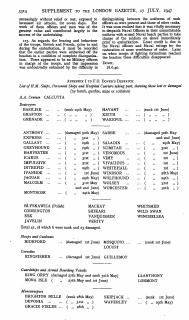
Details
33^4          SUPPLEMENT TO THE LONDON GAZETTE, 17 JULY, 1947
unceasingly without relief or rest, exposed to         distinguishing between the uniforms of such
incessant air attacks, for seven days. The             officers as were present and those of other ranks.
work of these officers and men was of the              It was soon realised that it was vitally necessary
greatest value and contributed largely to the          to despatch Naval Officers in their unmistakable
success of the undertaking.                            uniform with armed Naval beach parties to take
                                                       charge of the soldiers on shore immediately
   113. As regards the bearing and behaviour           prior to embarkation. Great credit is due to
of the troops, British and French, prior to and        the Naval officers and Naval ratings for the
during the embarkation, it must be recorded            restoration of some semblance of order. Later
that the earlier parties were embarked off the         on when troops of fighting formations reached
beaches in a condition of complete disorganisa-        the beaches these difficulties disappeared.
tion. There appeared to be no Military officers
in charge of the troops, and this impression           Dover,
was undoubtedly enhanced by the difficulty in             18.6.40.


                             APPENDIX I TO F.O. DOVER'S DESPATCH
List of H.M. Ships, Personnel Ships and Hospital Carriers taking part, showing those lost or damaged
                               (by bomb, gunfire, mine or collision)
A.A. Cruiser CALCUTTA
Destroyers
  BASILISK                    (sunk 2gth May)          HAVANT                    (sunk ist June)
  GRAFTON                     ( „ „       „ )          KEITH                     ( „ „ „ )
  GRENADE                                              WAKEFUL


  ANTHONY ...                 (damaged soth May) SABRE                           (damaged 30th May
  EXPRESS ...                 (    >?   jISl    ,, )                                    and 2nd June)
  GALLANT ...                 (         29th   „ ) SALADIN ...                   (   „     29th May)
  GREYHOUND                   (    „    29th „ ) SCIMITAR ...                     (   „ 3ist „ )
  HARVESTER                   (         3ist „ ) VENOMOUS                         (   „     ist June)
  ICARUS                      (         3ist „ ) VIMY                             (   „     ist „ )
  IMPULSIVE                   (         3ist „ ) VIVACIOUS ...                    (   „     ist „ )
  INTREPID ...                (         29th „ ) WHITEHALL                        (   „     ist „ )
  IVANHOE ...                 (    „     ist June) WINDSOR ...                    (   „ 28th May)
  JAGUAR                      (    „    2gth May) WOLFHOUND                       (   „ 29th „ )
  MALCOLM ...                 (    „    3ist May WOLSEY     ...
                                    and 2nd June) WORCESTER                                 30th    „
   MONTROSE                    (   ,, 29th May)


   BLYSKAWICA (Polish)                  MACKAY                               WHITSHED
   CODRINGTON                           SHIKARI                              WILD SWAN
   ESK                                  VANQUISHER                           WINCHELSEA
   JAVELIN                               VERITY
 Total 41, of which 6 were sunk and 23 damaged.

 Sloops and Gunboats
   BIDEFORD             ...    (damaged ist June) MOSQUITO ..                     (sunk ist June)
                                                  LOCUST
 Corvettes
   KINGFISHER           ...    (damaged ist June) GUILLEMOT


 Guardships and Armed Boarding Vessels
   KING ORRY (damaged 27th May and sunk 30th May)                            LLANTHONY
   MONA ISLE (        „ 27th May and ist June)                               LORMONT

 Minesweepers
   BRIGHTON BELLE              (sunk 28th May)          SKIPJACK .                (sunk ist June)
  DEVONIA                      ( „ 3Ist „ )             WAVERLEY                  ( „ 29th May)
   GRACIE FIELDS ...           ( „ 28th „ )
Details
3296           SUPPLEMENT TO THE LONDON GAZETTE, 17 JULY, 1947
 to drag on painfully, and finally to lose nights.               Not only were the Dunkirk Roads
 momentum and expire through the exhaustion mined, including the Zuydecoote Pass, but also
 of Naval personnel and the 'liquidation of Route X and the area round the Kwinte Buoy.
 shipping.                                           Folkestone and Dover Harbour entrances were
     It will be seen, therefore, that • the initial also mined* Considering the number of mines
 problem called for a maximum effort over a laid, it is interesting to note that only two
 limited period regardless of the future, and British ships are known for certain to have been
 accordingly all resources in the way of small mined, the personnel vessel MONA'S QUEEN
 boats were thrown on the beaches, before ade- and the F.A.A. Yacht GRIEVE. One Hospital
 quate provision had been made for their main- Carrier was damaged at anchor off Dover when
 tenance off the coast in such matters as relief a mine was blown up by a LL. Trawler sweep-
 of the personnel and the provision of large ing close at hand. Two A/S trawlers on patrol
 beach parties.                                      to the northward of the operational area were
  • It was only due to the foresight of the blown up by what was at first thought to be a
 Admiralty in making arrangements for a con- M.T.B., but later evidence suggests they were
 tinued flow in ever increasing numbers of small victims of moored mines. The impunity with
 power boats and beach craft, which became which degaussed ships were able to operate
 available on the fifth day onwards, that the in this heavily mined area alone made the opera-
 continued evacuation from the beaches remained tion possible and one reaches the conclusion
 a reasonable proposition after the initial 'crisis that if the enemy on this occasion had had at
 had passed.                                         hand the means of laying moored contact mines
     4. A perusal of the signals that passed by aircraft, instead of magnetic mines, the re-
 between Dover and the (French coast reveals sults would have been very different.
 the many occasions on which the responsible            (b) Air Attack. On the evening of the 29th,
 officers stationed on the coast considered so the first occasion on which a massed target of
 little had been achieved from the beadhes that ships was presented in Dunkirk Harbour, the
 they advocated restriction of evacuation to enemy seized the opportunity for air attack in
 Dunkirk Harbour. Many complaints of "no ' great strength, and it was only by good fortune
 boats," " no ships," might lead a detached that the vital Dunkirk Harbour channel was not
 observer to the conclusion that the great effort blocked by sinking ships at this early date.
 that was being made was proving abortive.           From then onwards the scale and vigour of the
     At Dover, where the whole operation could be air attack increased, and during the ist June
 viewed in truer perspective, the number and all ships in Dunkirk, off the beaches, or in .the
 origin of the troops being landed in England approach channels, were subjected every two
 being always to hand, it was clear that the hours to an unprecedented scale of air attack
  evacuation from the beaches required by the by aircraft in such numbers, that the R.A.F.
  military situation, was, in fact, achieving a con- were unable to deal with the situation. The scale
  siderable success, as the following figures will of enemy air attack on June ist, and the fact
  show. Of the 248,000 troops landed in the that the Germans could by now command the
  United Kingdom, between May 28th and June newly-swept central route at its exits into the
  ist inclusive—the period during which both Dunkirk Roads with gunfire from the shore,
  Dunkirk and the beaches eastward were avail- were responsible for the suspension of daylight
  able day and night except for enemy interfer- evacuation on June 2nd.
  ence—no fewer than 100,000 were lifted from
  the beaches.                                          (c) Attack by M.T.B.s.        These caused 4
                                                     casualties, namely two destroyers and two
     5. WEATHER CONDITIONS.                          trawlers, while the north Route Y* was in use.
      The operation was favoured by extremely When the middle Route X*, some 26 miles
  good weather. It was found, however, that any further to the South Westward, was brought
  northerly wind caused a considerable surf, into use the enemy M.T.B. units failed to follow
  which greatly reduced the rate of lifting from up, though the continuous stream of unescorted
   the beaches. It must be fully realised that a traffic during the dark hours and the ships lying
   wind of any strength in the northern sector in Dunkirk Roads provided a tempting target
   between South West and North East would to any enterprising Commander.                           *
  have made beach evacuation impossible. At             •(d) Shore Artillery. At the commencement
   no time did this happen.                          of the operation, the southern Route Z* was
      6. DISPOSAL OF TROOPS AFTER REACHING found to be under gunfire from batteries near
   ENGLAND.                                          Calais, and consequently could only be used by
                                                     night. The northern Route Y was usable only
      On arrival in England the despatch of troops by night when later the batteries near Nieuport
   from the points of disembarkation proceeded brought fire to bear on the Zuydecoote Pass,
   with great smoothness under the War Office which was too narrow to permit a reasonable
   movement control organisation.                     chance of ships running the gauntlet of fire. By
      7. ENEMY EFFORTS TO FRUSTRATE OPERATION. this time, however, Route X was available, and
      Attempts by the enemy to frustrate the opera- was free of gunfire until German batteries near
   tion consisted of the following: —                 Gravelines brought its exit into the Dunkirk
                                                     Roads under gunfire.         This occurred in the
         (a) Minelaying by aircraft.                 afternoon on Saturday, ist June, and in con-
         (6) Intensive air attack.                   junction with the result of enemy air attack,
         (c) Action by Motor Torpedo Boats.           led to the suspension of daylight traffic alto-
         (d) Gunfire by coast artillery.              gether.
         (e) Submarine operations.
      (a) Minelaying by aircraft.        Minelaying      (e) Submarines. U-Boats do not appear to
    during the dark hours probably "Commenced have caused any casualties. It is unlikely that
    during the night 28th-29th and was maintained       * Admiralty footnote: For Routes X, Y and Z see
' with great intensity during the following two Diagram.
Source: The National Archives, Kew, ADM 116 4649. Contains public sector information licensed under the Open Government Licence v3.0.

Details
Page 12
Operation "DYNAMO" - Recommendations of Personnel.
H.M.S. HAVANT - Lieutenant Commander Anthony Frank Burnell-Nugent,
D.S.C., R.N.
HAVANT made 3 trips including 2 to the beaches. On the
first 2 trips she brought home 1,500 troops in all. On the
3rd trip, while alongside Dunkirk pier waiting for troops
to embark during an intense aerial bombardment, she saw
IVANHOE struck amidships and on fire so steamed out to her
assistance. Having taken off all the troops (about 500
including many wounded) HAVANT proceeded for Dover, but was
soon subjected to intense dive bombing, high and low level
bombing and bombardment from shore batteries. She was hit
by 2 bombs in the engineroom, and then a large delay action
bomb, which fell about 50 yards ahead of ship, exploded
right underneath her,
Further bombing caused more underwater damage and
HAVANT finally rolled over and sank after the troops and
crew had transferred to AEGIR.
Recommendations.
OFFICER.
Lieutenant Commander Anthony Frank Burnell-Nugent, D.S.C., R.N.
Evacuated troops from the beaches and from Dunkirk
during heavy bombardment. When his ship had been heavily
damaged by bombs, made every endeavour to save her when
still subject to intense aerial attack, though without
success.
Recommended for mention.
RATINGS.
Chief Stoker M. Gallon, P/K.59221.
The Engineer Officer and 2 E.R.A.s having been killci
and all the other E.R.A.s having been wounded, this
rating became in charge of the engineroom department.
He showed great initiative and resource by letting the
steam out of the boilers at a critical time, thereby
saving the ship from running on to a sandbank opposite
Dunkirk. He subsequently showed great calmness and
presence of mind in doing all he could to save the ship
and to keep the Captain informed of the state of affairs
below. He was the last rating to leave the ship.
Recommended for decoration.
Sick Berth Attendant A. Keller D/X.6785.
When faced with a large number of wounded under
heavy fire, carried out his duties with the utmost calm,
deliberation and efficiency.
Recommended for mention.
Petty Officer Steward J. Lysaght, D/L.13388.
This rating showed great initiative and resource in
getting wounded men from HAVANT to AEGIR. He took charge
well and set a fine example.
Recommended for decoration.

Details
Page 73
Operation "DYNAMO" - Recommendations of Personnel.
H.M.S. KINGFISHER - Lieutenant Commander George Anthony Mayhew
Vaughan Harrison, R.N.
beaches, the Home notable for the quick turn rounds and at the
In 4 days completed 5 round trips to Dunkirk
spent on evacuation duties.
Ports, thus enabling the maximum time effected to be
Recommendations.
OFFICER.
Lieutenant Commander George Anthony Mayhew Vaughan Harrison, R.N.
Displayed determination and good judgment in
taking an important part in this operation, with
conspicuous success. Handled his ship under air
bombardment and when cut down in Dunkirk Harbour
by a French trawler.
Recommended for mention.
RATINGS.
Leading Seaman P. J. Ball, SSX. 15444.
Signalman S. Thompson. C/JX.133505.
Stoker, 1st. F. F. Beer, c/kx.86684.
Able Seaman A. B. Harkin, D/JX. 128450.
Able Seaman E. G. Webster. C/JX. 127168.
Able Seaman T. O. Pigg, 142167.
Able Seaman S. Collie, C/SSX. 21361.
These ratings are selected from the motor boats
and whalers, and the crews on two occasions were
employed for some 4 hours on end ferrying off troops
from Malo beach under surf conditions, transporting
some 280 Allied troops under bombardment from the
air and sporadic artillery fire.
Stoker Beer was also a Lewis gunner of the ship
and damaged one enemy aircraft. These ratings
displayed the greatest keenness, cheerfulness and
devotion to duty.
Recommend Stoker Beer to be decorated,
and the remainder mentioned.
Able Seaman R. G. H. Shipp, C/JX. 126720.
This rating displayed outstanding courage,
cheerfulness and devotion to duty during the
operation and has been especially selected from
those who remained on board.
Recommended for immediate advancement
to Leading Seaman.

Details
Page 81
Operation "DYNAMO" - Recommendations of Personnel.
FLARE-BURNING DRINTERS OF THE DOVER COMMAND.
Captain Eric Wheler Bush, D.S.C., R.N.
continuous service in connection with the Calais operation
These 19 drifters had been employed on 10 days'
and on patrol immediately prior to the commencement of
DYNAMO. Throughout DYNAMO, they worked with marked zeal
where the shelling was most severe. All did well in a
particularly at the post of honour in the inner harbour,
and conspicuous success, rainly at Dunkirk Harbour, and
varying degree and were responsible for lifting to safety
some 10,000 Allied troops.
The following officers and men have been selected
for special recognition of their gallant services.
OFFICERS:
Recommendations.
H.M.Drifter THE BOYS: - Skipper Andrew Buchan, R.N.R., W.S.3319.
Skipper A. Buchan, his own ship being under
repair, volunteered immediately for any service, with
the remark that he would do anything for his country.
He was given charge of a tow of Liege lake boats. He
subsequently took command of the drifter YORKSHIRE LASS
embarking soldiers under fire.
His endurance and determination when injured,
clad in rags and completely exhausted, were of the
highest order. He was finally ordered to the sick
list. It is considered that Skipper Buchan's
behaviour was exceptional.
Recommended for decoration.
H.M. Drifter MIDAS. - Skipper Herbert Holden, R.N.R., W.8.3432.
Skipper H. Holden is commended for service in
action when in command of MIDAS. This Officer's
conduct and leadership were of the highest order.
Recommended for decoration.
RATINGS:
H.M.Drifter BOY ROY:- Skipper Dettman. R.N.R. (Decorated for this
operation in London Gazette of 7th June, 40
Chief Engineman Harry B. Sharman, LT/KX.105182.
When BOY ROY was damaged and in a sinking
condition, he remained in the engine room regardless
of any danger to himself, until his ship was beached,
the water having risen in the meanwhile to the
furnace door. He sent the rest of his engine room
crew up to safety and remained alone at his post.
Recommended for decoration.
H.M.D. THE BOYS/

Details
Page 89
Operation "DYNAMO" - Recommendations of Personnel.
H.M. Drifter DORIENTA (Continued).
RATINGS.
Engineman W. Kennedy, R.N.R. ex 369.
Shell damaged and unseated the boiler, blew
the engine room with steam and hot water, flooding
steam pipe trunks, wrecked the feed pump, filling
the bilges, choking pumps with ashes. Engineman
Kennedy S devotion to duty and determination
ultimately enabled the ship to steam once more
with careful nursing. At all times his conduct
was exemplary in circumstances of great danger.
Recommended for decoration.
Engineman J. Smith, H.O.
Stoker J. J. Shone, H.O.
Stoker J. Pirie, R.N.R.
Initiative, skill and energy shown by these
ratings under the control of Engineman Kennedy,
and their devotion to duty at all times, contributed
largely to the ultimate safety of the ship, her
crew and the rescued troops. Their conduct was
exemplary when the ship was under fire.
Recommended for mention.
H.M. Danlayer GULZAR - Lieutenant Cedric Victor Brammell, R.N.R.
(Decorated for this operation in London
Gazette of 7th June, 1940).
This vessel completed 5 round trips to Dunkirk and the
beaches between 29/5 and 3/6 with conspicuous success.
Recommendations.
The Commanding Officer selected the following
ratings for constant and untiring devotion to duty
throughout the period and for conspicuous steadiness
under fire:-
Coxswain Edward S. Woodhead, T.124.
Seaman Charles H. Baldry, T.124.
Cook, George Cliefe, T.124.
Greaser, Peter Blake, T.124.
Signalman Arthur L. Shallis. OD/X.4505.
Recommended for mention.
H.M. Minesweeping/

Details
Page 120
Operation "DYNAMO" - Recommendations of Personnel.
Dutch Skoot H.M.S. BRANDARIS &c. (Continued).
In the majority of these voyages was under constant
bombing and machine gun attack, as also when in
Dunkirk harbour and lying off the beaches. This
officer worked unceasingly without rest throughout
the 9 days of the operation, with conspicuous
success.
Recommended for mention.
Dutch Skoot H.M.S. DOGGERSBANK - Lieutenant Donald Terry
McBarnet, R.N.
This vessel remained off the Flanders coast for a
greater period than the other skoots, and whilst under
incessant attack from the air succeeded in recovering
from the beach and from Dunkirk harbour more than
1,500 troops.
Recommendations.
OFFICER.
Lieutenant Donald Terry McBarnet, R.N.
Displayed exceptional initiative and pertinacity
in a variety of difficult circumstances off Bray
beach, in Dunkirk harbour and Dunkirk beach. When
necessary grounded his ship on the beach and devised
many ingenious and seamanlike methods of taking off
troops from the beach by means of life rafts,
abandoned life-boats and other craft which came to
hand, normal boat work being impossible with his
small crew. At all times undeterred and undismayed
by frequent air attacks to which his vessel and
boats were subjected.
Recommended for deocration.
RATING.
Engine Room Artificer, 4th Class, Eric Matthew Horne, MX.62572.
In charge of the engine room department of
DOGGERSBANK. Took over the engines from Dutch
engineer who spoke no English, and succeeded in
keeping the engines running perfectly throughout
the 10 days of the operations.
In addition to engine room duties, generally
assisted the Commanding Officer at all times in
work outside the department, assisting in the
operation. Behaviour under fire was exemplary.
Recommended for decoration.
Dutch

Details
Page 121
Operation "DYNAMO" list Recommendations of Personnel.
Dutch Skoot FREDANJA - Lieutenant-Commender Kenneth Warden
Stewart R.N.
beaches and also in evacuating troops. Bombing and
This skoot was employed in landing stores at the
machine-gun attacks were made on several occasions and
damage was caused by near misses. Casualties also
occurred due to machine gunning.
Recommendations.
OFFICER.
Lieutenant-Commander Kenneth Warden Stewart. R.N.
Showed great initiative, determination and
devotion to duty in ferrying off troops whilst
under bombing attacks, and also in the landing
of stores whilst off the beaches.
Recommended for mention.
RATINGS.
Petty Officer Thomas A. Willins, P/J.100988.
Showed great coolness, efficiency and devotion
to duty during the bombing and machine gun attacks,
and calm. by his leadership was able to keep the troops
Recommended for mention.
E.R.A. 4th Class. Jack S. Ambrose, P/MX. 65337.
By his efficiency and devotion to duty was able
1
to keep the engines running although damaged by
bombing attacks.
Recommended for mention.
Dutch Skoot H.M.S. HILDA - Lieutenant Archibald Gray, R.N.
The HILDA carried out 3 trips to the beaches and
Dunkirk, during the first 2 of which she operated more
than 48 hours continuously off the beaches, for long
periods under heavy air attack.
Recommendations.
OFFICERS.
Lieutenant Archibald Gray, R.N.
The seamanlike efforts to embark troops off the R.
beach at Bray Dunes marked with conspicuous success.
More than 1,000 troops were embarked, mainly trans-
ferred to other ships offshore. During this period
his ship was bombed. On the second trip, acting
under the orders of Captain R. P. Pim, R.N.V.R., he
convoyed a flotilla of motor boats and lifeboats Dunkirk to

Details
Page 135
Operation "DYNAMO" - Recommendations of Personnel.
BEACH PARTIES, PIER PARTIES, CONTROL OF EVACUATION
OFF THE COAST AND IN DUNKIRK HARBOUR.
About 35 Naval Officers and 330 Naval ratings
number worked unceasingly without relief or rest, exposed
employed for varying periods on these duties. A great were
to consistent air attacks, and periodical bombardments
from artillery, for up to 7 days. The work of these
Officers and men was of the greatest value, and contributed
largely to the success of the operation.
(of the above, 6 officers and 11 ratings were decorated
in the London Gazette of 7th June, 1940 for this operation).
Recommendations.
OFFICERS.
Captain Eric Wheler Bush, D.S.C., R.N.
Acted as Senior Naval Officer (afloat) off the
beaches until the arrival of Rear Admiral Wake-Walker,
thereafter continued as assistant in control of sea
traffic and distribution of evacuation craft.
Displayed exceptional energy, and devotion to duty
under fire.
Commander Edward Reginald Lewis, R.N.
Commander Michael Oliver Dundas Ellwood (R.N. Retired).
Commander Hector du Plessis Richardson, R.N.
These Officers performed outstanding work under
fire in charge of various sections of the beach
organisation, working unceasingly for 5 days.
Displayed conspicuous devotion to duty.
Recommended for decoration.
Commodore Gilbert Owen Stephenson, C.B., C.M.G. (Vice Admiral
Commodore Theodore John Hallett, R.N. (Vice Admiral Retired). Retired).
Captain John Montagu Howson, R.N.
Commander Harold Pitcairn Henderson, R.N.
Commander Robert Jocelyn Oliver Otway Ruthven, R.N.
Commander Harold Robson Conway. R.N.
Commander Herbert James Buchanan, R.A.N.
Lieutenant-Commander Bruce Balfour Junor, R.N.
Lieutenant-Commander James Whaley McClelland, R.N.
Lieutenant Viscount Kelburn. R.N.
Paymaster Lieutenant Frank Neil Brockett, R.N.R.
These officers were employed on various duties
in the Dunkirk area, and carried out their duties
with conspicuous success.
Recommended for mention.
RATINGS/

Details
Page 140
Operation "DYNAMO" - Recommendations of Personnel.
Ramsgate and Margate Base Organisation (Continued).
hours and this throughout. Chief Petty Officer remained on duty
branch The success of the communications long
throughout the operation is, in
measure, and efficiency. due to this Chief Petty Officer's no small keenness
Recommended for decoration.
Stoker Petty Officer Frederick George Charman, KX. 75070.
For outstanding zeal and devotion to duty while
receiving and despatching craft as they came
on East Pier, Ramsgate, throughout the operation,
alongside with troops. He remained on duty consist-
ently sleep. long hours with only odd hours for meals and
Recommended for decoration.
Petty Officer Alexander Hood Bruce Ireland, J.6530.
For outstanding zeal and devotion to duty
fulfilling the function of Gunner's Mate in MERRIE
ENGLAND throughout the operation. He kept up a
running supply of all necessary ammunition and
arms throughout, remaining on duty very long hours.
Recommended for decoration.
Chief Petty Officer Cook James McGilray, P/M. 364250.
For outstanding zeal and devotion to duty as
Chief Cook in MERRIE ENGLAND mess. He cheerfully
and successfully coped with a large number of meals
and produced them at any hour day or night - for
numbers very much in excess of those to which he
is accustomed.
Recommended for mention.
Leading Signalman James William Bown, C/J.102529.
For outstanding zeal and devotion to duty as
signalman in charge at Margate Pier. He remained
on duty throughout very long hours maintaining
communication with all craft arriving at Margate
to unload.
Recommended for mention.
Signalman Wilfred Tracy Burton, P/J. 35971.
For outstanding zeal and devotion to duty as
Signalman assisting the above at Margate Pier. He
remained on duty throughout very long hours main-
taining communications with all craft arriving at
Margate to unload, in very difficult circumstances.
Recommended for mention.
Chief/

Details
Page 143.
Operation "DYNAMO" - Recommendations of Personnel.
VICE ADMIRAL'S STAFF, DOVER.
Recommendations.
OFFICERS:
Captain John George Lawrence Dundas, R.N.
Appointed to LYNX for Dynamo. Performed
invaluable work in assisting the direction of the
operation throughout the whole period.
Recommended for mention.
Commander Frederick John Walker, R.N.
Throughout the operation Commander F. J. Walker,
as my Staff Officer (Operations) acted with outstanding
zeal, energy and devotion to duty. This officer's fore-
sight, good judgment, well-balanced mind and powers of
organisation were invaluable in controlling the
movements, fuelling and ammunitioning of some 38
Destroyers. His untiring efforts contributed largely
to the success of the operation.
Recommended for decoration.
Commander Lewes George Gardner. R.N. (Retired).
As Maintenance and Administrative Commander on my
Staff, this officer worked with tireless energy and
zeal day and night throughout the operation. Additional
calls for officers and men for beach parties, pier
parties, armed guards, and naval parties for personnel
ships were dealt with and met by him instantly. His
clear sighted organisation contributed materially to
the sucdess of the enterprise. His handling of the
many difficulties in connection with the wounded, and
casualties generally, left nothing to be desired.
Recommended for decoration.
Mr. William Pearce. Commissioned Signal Boatswain, R.N. (Retired).
As Officer in Charge of Port War Signal Station,
Dover Castle, this officer worked with tireless energy
both by day and night, and by his example and hard work
his station dealt with a large amount of signal traffic
efficiently and expeditiously, which contributed to the
success of the operation.
Recommended for mention.
RATINGS:
Chief Yeoman of Signals George Edward Files, C/JX. 146283.
As Chief Yeoman in Charge of Central Communications
Office throughout the operation, worked with energy and
zeal in dealing rapidly with the large amount of

Details
Page 144.
Operation "DYNAMO" form Recommendations of Personnel.
Vice Admiral's Staff,
(continued).
signal of traffic. A direct factor towards the success
the operation.
Recommended for decoration.
Chief Yeoman of Signals Francis George Ward, C/J.31094.
Ably assisted Chief Yeoman of Signals Files
throughout the operation.
Recommended for mention.
Chief Yeoman of Signals John William Baker. P. 29166.
As senior Chief Yeoman of Signals in the Port War
Signal Station, he set an excellent example to the
Junior ratings under him and carri-ed out his duties
in on efficient manner and when off duty was always
ready to assist in rush periods.
Recommended for mention.
Chief Petty Officer Telegraphist Alexander Arthur Lee, C/J.96386.
As Chief Petty Officer Telegraphist in Charge of
all W/T equipment at Dover W/T Station, he maintained
the equipment in an efficient state. He erected new
sets as necessary and worked throughout with outstanding
zeal and initiative, this having a direct bearing on the
success of the enterprise.
Recommended for decoration.
RECOMMENDED FOR MENTION IN DISPATCHES.
For outstanding zeal and devotion to duty
throughout the operation:-
Engineer Captain Percy Douglas Fulford, R.N. (Retd)
Commander Archibald Day, R.N.
Lieutenant Commander Edward Hale, R.N.
Temporary Lieutenant Julian Rogers Coltman, R.N.V.I
Jill Dixon, Women's Royal Naval Service, 2723.

Details
Page 145.
Operation "DYNAMO" - Recommendations of Personnel.
BASE STAFFS.
Recommendations
OFFICERS:
Captain Lionel George Dawson, R.N. (Retd.).
As Captain of H.M.S. LYNX, this officer was entirely
responsible for the organisation of the Base throughout
the operation. The handling of the vastly increased
number of officers and men, their accommodation,
victualling, and distribution to the many and various
units without any barrack facilities, reflects the
greatest credit upon him, and his tireless efforts,
determination and power of improvisation had a direct
bearing on the success of the enterprise.
Recommended for decoration.
Lieutenant Commander William Canning Eykyn, R.N. (Retd.).
As Executive Officer of H.M.S. LYNX, this officer
was responsible for the supervising of the vastly
increased personnel passing through the Base during the
operation. Officers and men for beach parties, pier
parties, spare destroyers' crews, Naval officers and men
for personnel ships, small craft, etc,, all had to be
handled and dealt with. This officer was also concerned
directly with the operational process of getting a number
of ships and boats to sea. His leadership and personality
were outstanding, and whilst eliminating sleep from his
programme, his sense of humour and determination played
an active part towards the success of the operation.
Recommended for mention.
Paymaster Commander Cecil John Leary, R.D., R.N.R.
For outstanding zeal, initiative and resource in
meeting the almost continuous demands made on him at all
hours of the day and night, with complete and unvarying
success.
Recommended for mention.
Commander Desmond Adair Stride, R.N. (Retd.).
In the absence of Captain Auxiliary Patrol at sea,
Commander Stride organised the entire A/S Patrols and
sailing of drifters and motor boats, working under
Captain A/P, for Dunkirk.
This officer worked continuously night and day
throughout the operation almost without rest, and his
cheerful determination was an inspiration to officers
and men, contributing largely to the success of the
operation.
Recommended for mention.
Captain/

Details
Page 146.
Operation "DYNAMO" - Recommendations of Personnel.
BASE STAFF (continued).
OFFICERS:
Captain William Vesey Hamilton Harris, M.V.O., D.S.C.,R.N. (Retd.)
This officer was solely responsible for the
organisation of the minesweeping vessels which took part
in the operation. These ships not only evacuated
troops from Dunkirk but also maintained routine sweeps
under most difficult circumstances. By his cheerful
leadership and tireless efforts, this officer was able
to maintain his entire force at my disposal, and thereby
contributed largely to the success of the enterprise.
Recommended for mention.
Commodore John Stewart Gordon Fraser, D.S.O., R.N. (Retd.).
For tireless zeal, energy and good judgment in
dealing with the largely increased demand for repair and
maintenance arrangements of the Port during the operation
With limited facilities, the organisation built up by
Commodore Fraser met all requirements, and the arrange-
ments for which this officer was responsible contributed
in a major degree to the success of the enterprise.
Recommended for decoration,
Commander Francis John Lambert, D.S.C., R.N. (Retd.).
For exceptional zeal and devotion to duty. This
officer, as King's Harbour Master, had to control and
berth large numbers of ships, transports, skoots, and
small vessela, and direct their movements for the
purposes of repairs, fuelling, coaling, etc. To do
this Commander Lambert was almost continuously on duty
day and night throughout the operation, and his untiring
efforts contributed materially to the success of the
enterprise.
Recommended for decoration.
Lieutenant Commander (E) Weston Smith. R.N.
This officer worked throughout the operation with
exceptional and tireless energy and enthusiasm when in
charge of repairs and making good damage caused to
ships and boats. His skill as an Engineer Officer and
intelligent improvisation and adaptability in all
respects proved of inestimable value. His cheerful
bearing and leadership during the long hours by day and
night were an inspiration to all with whom he came in
contact, and contributed largely to the success of the
operation.
Recommended for decoration.
Surgeon Captain Arthur Rowland Fisher, R.N. (Retd)
This officer was faced with the difficult problem those of
dealing with casualties out of all proportion to

Details
Page 148.
Operation "DYNAMO" - Recommendations of Personnel.
BASE STAFF (continued).
RATINGS:
Acting Master-at-Arms S. Welfare, C/M.36212.
Regulating Petty Officer F. J. Phillips, C/M.39981.
Regulating Petty Officer G. Stapley, C/M.39658.
throughout the operation. In dealing with the vast
These men worked ceaselessly and untiringly
increase in numbers passing through the Base, with
no barrack facilities behind them, they never failed
to get the right men to the right places in the
shortest possible time. They kept records of all
the men who poured into the Base from depots and
elsewhere with accuracy. Their services were quite
invaluable and a direct factor towards the success
of the operation.
Master=at-Arms Welfare is recommended for
decoration, and Regulating Petty Officers
Phillips and Stapley for mention.
Chief Shipwright Joseph William Heathcote, P/M.23064.
Chief Engine Room Artificer Reginald Francis Fox (Pensioner)
P.N.10826,P/M.5545
Chief Stoker Herbert John Baxter (Pensioner) C/K.2659, P.N.
26959.
For outstanding zeal, energy and devotion to
duty with base repair staff. These men never once
spared themselves by day or night throughout the
whole operation, and their cheerful disposition and
unbounded energy contributed in no small way to the
success of the enterprise.
Recommended for decoration.
Inspector of Shipwrights F. H. Harvey (ex Chatham Dockyard).
Skilled Labourer George Victor Bonnett (Chatham Dockyard 3828)
C. J. Hartfree, Storehouseman, Armament Supply Depot.
For zeal and devotion to duty in effecting
repairs to ships and boats. These men worked
ceaselessly throughout the whole operation, and their
unbounded energy and determination contributed in no
small way to the success of the operation.
Recommended for decoration.
Acting Engine Room Artificer 4th Class Hugh Duffie, 2957, E.A
Chief Electrical Artificer Edgar James Lovell (Pensioner),
P.N.11998,P/M.27540.
Leading Sick Berth Attendant Norman Clyde Martin,C/MX.49373.
DOCKYARD DEPARTMENT:
Mr. William Ferguson, Naval Store Officer.
Mr. R.W.W.Corbitt, Assistant Naval Store Officer.
Mr: Mr. D. A.A.Bakewell, J. Woods, Armament Victualling Supply Store Officer Officer.
For outstanding zeal, energy and devotion to
duty, both by day and night throughout the operation.
Recommended for mention.
Sick/

Details
Page 150
Operation "DYNAMO" - Recommendations of Personnel.
SEA TRANSPORT OFFICERS.
The work done by the Sea Transport Officers
throughout the Operation of Dynamo, entailed an
enormous amount of labour, which was carried out
in a highly efficient manner.
Commodore Jukes-Hughes was in charge at Dover,
and it was entirely due to his organisation and
smooth working that enabled nearly 181,000 to be
disembarked at Dover without any hitch whatsoever,
and at Folkestone, nearly 32,000.
Commodore Edward Glyn de Styrap Jukes-Hughes.,R.N. (Retd.)
As P.S.T.O. was responsible for the successful
disembarkation of troops, and the greatest credit
is due to the capable and efficient way in which
the troops were disembarked and able manner in
which he was able to arrange for the quick turn
rounds of the various transports that came into
harbour.
Recommended for decoration.
Lieutenant Allan Raymond MacKewn, R.N.R.
In addition to carrying out the ordinary duties
of Sea Transport Officer, Lieutenant MacKewn went
in command of an armed party to the ST. SEIRIOL,
where the Master had refused to sail, thereby
showing great devotion to duty.
Recommended for decoration.
Lieutenant-Commander Ralph William Soper, R.N.R.
In addition to carrying out his ordinary duties,
this officer volunteered to take over the duty of
Chief Officer of Transport, Canterbury, as there
was no relief available, thereby showing great
devotion to duty.
Recommended for decoration.
Major Lionel Steele Wilkinson, R.M.
During the period of the operation he was in
almost constant attendance at the office and was
only absent for very brief periods for sleep. His
local knowledge was of great assistance to the
P.S.T.O., and a great deal of the success of the
organisation is due to his great devotion to duty.
Recommended for decoration.
Lieutenant/

Details
Page 2.
B
Operation "DYNAMO".
Recommendations of Personnel.
LIST "B".
Recommendations for Officers and men supplementary
to those contained in List "A'.
In all cases the recommendations are for conspicuous
devotion to duty, unflinching determination in the face of
enemy action, or in the case of base staffs for continuous and
exceptionally valuable work contributing to the success of the
operation. All these individuals set an excellent example
to their ship-mates, and have been selected by their Commanding
Officers for recognition.
All these recommendations are for a "Mention".
VICE ADMIRAL
1 SEP 1941
*
IOA R E

Details
77) Wt. 26777/4432 50M 10/38 S.E.R. Ltd. Gp. 671.
Register No.
Minute Sheet No.
M.V.O., D.S.C., harder still, especially as some Officers
The case is of Captain Llewellyn Vaughan Morgan, C.B.E.,
have already been decorated for "Dynamo" Staff work at Dover;
the correct appointment for his services being C.B.E., which
he already is. Officers were added to the Staff at Dover for
the conduct of this operation and Captain Morgan as Chief
Staff Officer had to weld together these additional Officers
with the Naval Staff. This he succeeded in doing, so that
they became a team, working perfectly together without pause by
day and night throughout ten days. His energy, tact and
leadership were essential to success.
The Committee have no doubt therefore that he has
earned a further decoration. As his services were not in action,
he cannot be immediately appointed a C.B. or D.S.O.; he could,
however, be made a C.B. in the New Year's Honours List, and
it is submitted that Vice-Admiral, Dover should be informed
of the difficulties and invited to include Captain Morgan's
name in his next half yearly recommendations. It might then
be hoped that a C.B. at the New Year would be available for
him. In the meantime it is submitted that he be awarded a
Mention in Despatches
The third difficult case is that of Captain The
Honourable Lionel Oliver Lambart, D.S.O., Royal Navy, (Retired),
Captain Lambart was in command of H.M.S. GRIVE when between
1400/30 May and 1300/1 June she made three round journeys
between Dover and Dunkirk, bringing home 1,400 Troops and
wounded Sailors from the Beaches (in her own boats), Harbour
and Pier and HAVANT, who was on fire. She entered the Harbour
during a very severe air raid and was heavily bombed at the
Pier. On his third return to Dover, Captain Lambart put
Lieutenant West, an Officer of over sixty, ashore as he had
handled his ship so well and "had earned a rest. " He himself
was sixty-seven but would not rest. He told whomere his crew/that Equally he
would cross again at once; so, as soon as they had taken in
stores, they sailed a fourth time. She was near the further
shore when she was blown to bits and Captain Lambart lost his
life. The Committee had no doubt that for Captain Lambart's
gallantry a Posthumous Mention in Despatches would be a poor
S
award. But after scrupulous debate they reluctantly agreed that
this was not quite a case for the Victoria Cross, the only
posthumous decoration that might be correct. Captain Lambart's
courage, spirit and devotion to duty were exemplary; but, though
he would doubtless gladly have done so, he was not knowingly
incurring a risk of almost certain death. The Committee however
are anxious that some signal honour should be paid to the memory
of so gallant an Officer, and they therefore submit that, as in
the case of Captain Kennedy of "RAWALPINDI", a special letter
should be written to his widow. The draft of such a letter is
attached. It is, then, submitted that Captain Lambart be
awarded a
Mention in Despatches (Posthumous)
and that a letter of appreciation should be sent to his widow.
It is understood that V.A. Dover wared not propose a V.C. in This case.
The Committee, while satisfied that the names on List B
were put forward by Vice-Admiral Dover for very good reasons,
regret that they do not feel justified in submitting that these
Officers and Men should be Mentioned in Despatches, and they
have somewhat reduced the number of Mentions in List A; their
sole motive is the avoidance of what might appear to be an
excessive number of awards for this Operation.
For/

Details
Ref: XVII/B/292
Rex House,
Lower Regent Street,
London, S.W.1.
16th June, 1942.
Dear Mr. Rueff,
The questions reed 23rd in the May enclosures that have there
to your letter but it does not be appear done with
been is anything examined, which can usefully
regard to
them. cannot well
be reopened The matter of decorations evidence award of were it what is made impos- any- to
sible to get any be given
body the A.81 did. it not to who was for
only Skipper a member and of the crew.
pensation was THE for
any THE THE
THE THE apparently doss not ask com-
British there to whom sunk he to with be any
success.
Yours very sincerely,
Ath new
H.R. Rueff, Esq.'
37, Eaton Place,
S.W.1.

Details
Operation "DYNAMO" - Recommendations of Personnel - List "A".
RECOMMENDATIONS.
OFFICERS:
Captain Maurice Coppin, Master of the Belgian S.S. "JULIA".
This officer volunteered immediately to take the Belgi:
trawler "GEORGES EDOUARD" 0.86 to Dunkirk. With a
volunteer crew he made two successful trips to Dunkirk and an
embarked 1007 troops and landed them at Dover. He had to
:wo
wait in Dunkirk Harbour from 0800 to 2100 on the first
dt
trip. This officer's beading was exemplary and he did
everything possible to help in the enterprise, and had
dp
previously volunteered his services if required.
Recommended for decoration.
Captain Rene Lusyne, Commanding Belgian Trawler "GUIDO 0.225. GAZELLE
This officer made two trips to Dunkirk and embarked
403 troops and landed them at Dover.
Captain Rene Lusyne and Hector Annys made the round
ned
trip unaided, to Dover, twice to Dunkirk, and finally
returned to Dartmouth. Their untiring efforts undoubtedly
had a bearing on the success of the operation.
Recommended for decoration.
Captain Pierre Lusyne, Commanding Belgian Trawler "MARECHAL
FOCH" 0.274.
Decoster, alongside the to ground. weight This officer the to of Dover He quay the returned soldiers took at in Dunkirk, the his with trawler trawler, jumping his but 0.225, one onboard the the assistant, men tide "MARECHAL and caused then was returned embarked falling Ferdinand FOCH" his ship to and
Dunkirk H.M.S. 300 off probably troops the "LEDA". Goodwin the in following the Light He "MARECHAL and were day. Buoy, his picked second FOCH" their These up hand, but ship and two unfortunately was landed together run unceasingly at down Dover. with by when
150 troops was working to
is
get volunteers When at Dartmouth, for the operation Lusyne and to get the ships away.
Recommended for mention.
Albert Rooman, Engineer, Belgian Trawler "COR JESU" 0.227.
This officer volunteered Dunkirk and to succesded take the in Belgian embarking voluntary trawler 274
"COR JESU" 0.227 to at Dover. His ready the operation
service troops and was landing of considerable them value in bringing
to a successful conclusion.
Recommended for mention.

Details
Operation "DYNAMO" - Recommendatione of Personnel - List "A".
RATINGS
Victor Goes, Seaman, Belgian S.S. "JULIA".
Prosper Luca, Seaman, Belgian Trawler 0.87.
These men volunteered immediately to take the Belgian
trawler "GEORGES EDOUARD" 0.86 to Dunkirk. They made two
trips to Dunkirk and embarked 1007 troops, and had to wait
in Dunkirk Harbour from 0800 to 2100 on the first trip.
They did everything possible to help in getting their ship
away and had previously volunteered their services if
required.
Recommended for decoration.
Hector Annys, Seaman, Belgian Trawler "GUIDO GAZELLE" 0.225.
did the Together round to Dover, twice to Dunkirk, and returned only
with his Captain, Rene Lusyne, this seaman
finally to Dartmouth. trip He and his Skipper were the His
crew onboard and brought back 403 troops to Dover.
courage and determination were of a high order.
Recommended for mention.
CIVILIAN PERSONNEL.
Mr. P. Gooding, in charge of Motor Mr. C. Boat W. Mott "LADY of CABLE". Torquay)
Dunkirk Mr. and F. Gooding did 7 carrying (owned trips and by between two about Naval 560 the CABLE" ratings men, beach after herself. proceeded at Dunkirk which and The 40 to and men
were seamanship two transports, carried displayed to Ramsgate by direct Gooding by "LADY bearing was of on a high the success order of his
voluntary
service
had
a
the operation.
Recommended for mention.
Source: The National Archives, Kew, ADM 199 788 A. Contains public sector information licensed under the Open Government Licence v3.0.

Details
roin:- - Commanding Officer, H.M.S. 11 LORMONT ".
ate:- 19th June 1940.
Co:-
Vice Admiral Commanding Dover Forces.
41
7/640.
Your 1949/18.
Bood
Sir,
With reference to operation Dymamo, I should like
to draw your attention to the following members of the
Ship's Company:-
Sub. Lieutenant K.M.Cutler, R.N.R. who under
difficult circumstances and with unreliable compasses,
performed the navigation throughout with success. I should
like to recommend this. Officer for advancement to the
rank of Lieutenant.
Sub. Lieutenant A.Davidson R.N.R. who under fire
took away the motor launch in order to rescue a British
Airman in Dunkirk Roads.
Temp. Sub. Lieut. (E) H.Henshaw R.N.R. who
throughout the operation remained in the Engineroom in
order to maintain and even exceed the designed speed
of the Ship.
remainder of the Ship's Company were in
excellent The spirits throughout, remaining at their posts

Details
-330
303
probable that to as Motor boats would not and
On Sunday the small Ramsgate was buzzing with rumours it seemed 2/6
volunteered "Marlborough". go Lewis Gunner in the War department go out so I Speed boat
civilian who had only had River "THARK" a man by the name of very highly This
coxswain At this of juncture the I would like to recommend the
man and back experience succeeded Ambler.
go
over again saved. on night and it was sunk but I believe that the boat the
to Dunkirk Mohday with no ficer in the boat. intaking He took the boa t
crew was
from the We treasury four Leading Stokers and two Sergeants of the
The "MARLBOROUGH" had a crew of four Subs, two solicitors
R.A.F. "HAIG" put to sea on Sunday night in company with our sister 2/6
a jetty and off about 40 "poilus". One of our solicitors
ship the took and had a quiet voyage acress. We went alongside
spoke French which assisted the operation œnsiderably. While we
were alongside there was slight enemy air activity and much against
the wishes of the rest of the crew who said I was merely attracting
attention, I succeeded in firing several hundred rounds into the
mishap. air, unfortunately with no success. We returned to Ramsgate without
Treasury and so we signed on an army officer who had been invalided
The next day, Monday, our solicitors had to return to the 3/6
and a retired colonel who had a reputation for being a crack shot
with a Lewis.
We went out at 1930 and picked Admiral Taylor up half way
across the channel from the Motor Boat "MERMAIDEN". When we got to
Dunkirk we went inside the harbour and quite a long way up the canal
and secured. The Admiral went ashore accompanied by two of our
crew armed to the teeth. The test of us occupied our time looting
and trying to start up derelict cars. Sub. Lt. Poole found a very
nice motor cycle and rode it round the docks.
We went off onceto bring boats to the point of
embarkation and then secured again. Shortly afterwards machine
gunning started quite near and a shell landed in a warehouse about
150 yards away. Fortunately our job was done so we were able to
leave. On our way down the canal we came on a blockage of
shipping, and going too near the shore went aground on some rubble
knocked into the water by a shell. We had the badluck to lose both
our screws and our rudder. Three French tugs refused to tow us off
but fortunately a Motor A/S Vessel who took us out to the main
harbour where we secured to the Motor Yacht "GULZA" who towed us back
to Dover.
4/6
We returned to Ramsgate on Tuesday morning by lorry to find
Schoot "PATRIA" which broke down on the way and we were towed in by
the operation had been cancelled. I returned to Sheerness inthe
a Drifter.
The times in the above are only approximate.
I have the honour to be,
A
Sir,
17 JUN 1940
*
Your obedient servant
at E
(SD.) A. CAREW HUNT.
Sub. Lieutenant, Royal Navy.
Vice-Admiral, Dover.
Copy to: Commander-in-Chief, The Nore
Source: The National Archives, Kew, ADM 199 790. Contains public sector information licensed under the Open Government Licence v3.0.

Details
14
i
18
Friday 31st May. The following signals were mades-
0320. "Request more shipsto load Dunkirk."
0445. "Every available ship will be required at Dunkirk
during the next two hours to evacuate rest of
army.
0605. "Imbarkation proceeding satisfactorily in spite
of bonbardment. I would again stress the need
for more ships and constant fighter protection
0638. "Am now receiving a number of Frenchmen. I have
raised no objection to their embarking in British
ships and an allowing then to do 80.
0940. "Request you will inform me whether troops are
now being ordered to earch to Dunkirk from the
beaches.
0945. "Sun is now coming through and I have a big
target of ships in harbour. Request special air
protection for next two hours.
0957. "Lord Gort has agreed that 5,000 Frehe troops
should be embarked here this evening after dark
in British vessels. Request necessary ships may
be sent to arrive at dusk.
1044. "We have been continually heavily bonbarded and
they are gradually finding the range of our loading
berth. I would rather only enter ships as
necessary for the flow of troops.
Continuous and heavy shelling all the morning, but the
evacuation proceeded fairly speedily. At last ships were
arriving in large numbers and strong a 2. protection kept
bomeing attack away. The only thing necessary was tostop the
shelling. At 1200 B signal was received from the Air Linison
Officer at Dover asking for position of energy battery. This
was not known with any certainty as the battery was probably
mobile, but it was in the district of Loon Plage Brouge Kerk
Soch. A reply was made to this effect. The bombardment,
novertheless, become more intense and a great deal more accurate.
Very heavy attacks were delivered during the evening but were
concentrated chiefly upon derelict ships in the roads. Dive
bombing attacks were carried out on the ships loading but without
success. The embarkation proceeded smoothly.

Details
45
49
Friday 31st May. The following signals were made:-
0320. "Request more shipsto load Dunkirk."
0445. "Every available ship will be required at Dunkirk
during the next two hours to evacuate rest of
army.
0605. "Embarkation proceeding satisfactorily in spite
of bombardment. 1 would again stress the need
for more ships and constant fighter protection
0638. "Am now receiving a number of Frenchmen. I have
raised no objection to their embarking in British
ships and am allowing them to do so.
0940. "Request you will inform me whether troops are
now being ordered to march to Dunkirk from the
beaches.
0945. "Sun is now coming through and I have a big
target of ships in harbour. Request special air
protection for next two hours.
0957. "Lord Gort has agreed that 5,000 Freinh troops
should be ambarked here this evening after dark
in British vessels. Request necessary ships may
be sent to arrive at dusk.
1044. We have been continually heavily bombarded and
they are gradually finding the range of our loading
berth. I would rather only enter ships as
necessary for the flow of troops.
Continuous and heavy shelling all the morning, but the
evacuation proceeded fairly speedily. At last ships were
arriving in large numbers and strong a r protection kept
bomging attack away. The only thing necessary was tostop the
shelling. At 1200 a signal was received from the Air Liaison
Officer at Dover asking for position of enemy battery. This
was not known with any certainty as the battery was probably
mobile, but it was in the district of Loon Plage Brouge Kerk
Soch. A reply was made to this effect. The bombardment,
nevertheless, become more intense and a great deal more accurate.
Very heavy attacks were delivered during the evening but were
concentrated chiefly upon derelict ships in the roads. Dive
bombing attacks were carried out on the ships loading but without
success. The embarkation proceeded smoothly.

Details
198
213
7.
Finally when the helm jambed he continued to loong her under control.
avoiding action at high speed in very confined inters full of shipping.
Commodore
Did most valuable work off the beaches in a motor boat at
La Parme and Bray, organizing and controlling small craft and the
embarkation of Lord Gart. When La Farme because unternable ording to shell
fire he moved to Bray and only left the coast when driven off by the air
attack of 1st June.
Ideutenant R.C.H.G.Evre - K.A/S.B. 10
Handled his boat with the greatest coolness and skill inside
Dunicize in crowled waters, darkness, and under shell fire. His good
work greatly facilitated my task of control.
Lieutenant Commander
+
This officer assisted no throughout the operations and was
invaluable. Unspering of himself be net any call on In with the greatest
efficiency. On two occasions he carried out difficult tasks with complete
success, controlling small cruft and directing Herchant ships to beach
themselves so that they could be boarded at low tide.
Lieutement Viscount Kalburn
Acted as my Signal Officer and carried out Ida dirties with the
greatest efficiency under most trying conditions.
I have the honour to be,
Story
Your obstitum servent,
W.R. WAKE-WALKER.
VIO ADMIRAL
9-JUN 1940
Bear Admiral.
DOVER
The Vice Admiral Commiting
Dover.

Details
220
7.
Finally when the helm jambed he continued to keep her under centrol.
avoiding action at high speed in very confined waters full of shipping.
C
Commodore G. 0.Stephenson
Did most valuable work off the beaches in a noter boat at
La Panne and Bray, organising and controlling small craft and the
embarkation of Lord Gort. When La Parme because untenable owing to shell
fire he moved to Bray and only left the coast when driven off by the air
attack of 1st June.
Ideutenant - IL.A/S.B. 10
Handled his boat with the greatest coolness and skill inside
Dunicirk in crowded waters, darkness, and under shell fire. His good
work greatly facilitated my task of control.
Lieutenant Commander C.J.Vynna-Edwarts
This officer assisted no throughout the operations and vas
invaluable. Unsparing of himself he not any call on him with the greatest
efficiency. On two occasions he carried out difficult tasks with complete
success, controlling small craft and directing Merchant ships to beach
themselves so that they could be boarded at low tide.
Lieutenant Viscount Kelburn
Acted as my Signal Officer and carried out Ida duties with the
greatest efficiency under most trying conditions.
I have the honour to be,
Stiry
Your obsident servent,
W.F. WAKE-WALKER.
VICE AD MIRAL
Bear Admiral.
*
DOVER
The Vice Admiral Commanding,
Dover.

Details
225
240
SECRET
Page 3.
embarked.
ship in tow, but it was found that the vessel was held
17. At about 2130 H.M.Tug St.Clears endeavoured to tak
endoned the attempt.
aground aft, and at about 2215 the tow parted, and the tu &
18. At about 2300 H.M.S. Havavt endeavoured to take us
tow but without success.
19. During the night a further 350 French and 50
glish troops were embarked, and these were brought to England.
20. At 0300 on the 30th. H.M.S.Locust was ordered to
ke Locust. us in tow, and by 9400 the ship was waterborne and in tow
21. Between 9400 and 0700 the tow parted three times,
we had progressed only three miles. But after 0700 the tow
satisfactory and H.M.S. Locust towed us across to the
glish coast, arriving at the North Goodwin Light Vessel at
00. Speed made good since 0700 2.4 knots.
22. A single Junker bomber appeared for a moment above
fog near the North Goodwin, but made off eastwards.
23. Shaped course to pass eastward of the Goodwins.
2245 a French soldier, fully equipped, was seen to jump over
e sideby two of Bidefords shipscompany. The tow was stopped.
though a buoy was dropped and a boat lowered to search, it 1
regretted the nan was not recovered. The sea was calm and
ae visibility at that time was good. The nan's name is not
nown.
24. At 2315 we proceeded. The tow parted again at
330/31st, but after that no further trouble was experienced a
nd we arrived at Dover at 1130 on th31st May.
25. The casualties to personnel were :-
(a) H.M.S.Bideford's ships company
(i) Killed. Three officers and nine men.
(11) Missing, believed killed. Four nen.
(111) Dangerously wounded. Two nen.
(1v) Seriously wounded. Ten men.
(v) Slightly wounded. One officer & six nen.
Total ship's company casualties. Four officers
and thirty one men.
(b) Passengers.
(11) Nounded. Two officers (one dangerously).
(1) Killed. Two officers & ten other ranks.
Total passenger casualties. Four officers and
ten men.
I have the honour to be,
Your obedient Sir, servant,
TOE
ADMIRA
10JUN 1940
Lieutenant Commander in Command.

Details
225
240
SECRET
Page 3.
had embarked.
17. At about 2130 H.M.Tug St. Clears endeavoured to tak
the ship in tow, but it was found that the vessel was held
fast aground aft, and at about 2215 the tow parted, and the tu 5
abandoned the attempt.
18. At about 2300 H.M.S. Havavt endeavoured to take us
in tow but without success.
19. During the night a further 350 French and 50
English troops were embarked, and these were brought to England.
20. At 0300 on the 30th. S.Locust was ordered to
take us in tow, and by 9400 the ship was waterborne and in tow
of Locust.
21. Between 9400 and 0700 the tow parted three times,
and we had progressed only three miles. But after 0700 the tow
was satisfactory and H.M.S. Locust towed as across to the
English coast, arriving at the North Goodwin Light Vessel at
2100. Speed made good since 0700 2.4 knots.
22. A single Junker bomber appeared for a moment above
the fog near the North Goodwin, but made off eastwards.
23. Shaped course to pass eastward of the Goodwins.
At 2245 a French soldier, fully equipped, was seen to jump over
the sideby two of Bidefords shipscompany. The tow was stopped.
Although a bucy was dropped and a boat lowered to search, it 1
is regretted the nan was not recovered. The sea was calm and
the visibility at that time was good. The man's name is not
known.
24. At 2315 we proceeded. The tow parted again at
0330/31st, but after that no further trouble was experienced a
and we arrived at Dover at 1130 on th31st May.
25. The casualties to personnel were :-
(a) H.M.S.Bideford's ships company
(i) Killed. Three officers and nine nen.
(11) Missing, believed killed. Four nen.
(111) Dangerously wounded. Two men.
Total ship's company casualties. Four officers
(v) Slightly wounded. One officer & six men.
(1v) Seriously wounded. Ten men.
and thirty one men.
(b) Passengers. (1) Killed. Bwo officers & ten other ranks.
Total passenger casualties. Four officers and
(11) Wounded. Two officers (one dangerously).
ten men.
I have the honour to be,
Your obedient Sir, servant,
VICE ADMIRA
10JUN 1940
Lieutemant Commander in Command.

Details
-359
365
PAGE III
ARKS.
Traffic on the route at night was somewhat
exciting,and the constant meeting of all sorts and conditions of
raft
similarly engaged, and to the number of wrecks that were
encountered, It was fortunate that the wind remained from the
North East towards the end, thereby shielding the approach
from the fire from Gravelines Batteries.
During the bombing attack on Dunkirk
p.m. Wednesday 29th May, the ships A.A. fire was most effective.
An H.E. from "X" Gun and a burst from the starboard 0.5"
Machine Gun were seen to envelop enemy aircraft and it is
considered that these two were either destroyed or hit. This
was confirmed by the soldiers who were subsequently embarked
and who stated that they were much impressed by the whole
performance. I have reason to believe therefore that
"Express's" fire met with the above measure of success.
The performance of all Officers and Men
under my command was of the highest order, and to my complete
satisfaction during the whole of this operation. Under severe
strain all hands remained alert ,boats crews while very weary
made incessant boat trips, and the constant manning of the
armament and its effective employment on all suitable occasions
was extremely creditable.
The large numbers of troops onboard
constantly expressed their appreciation of what was done for
in providing such comforts as food drink,and clothing as
them by the sailors, who I know did their utmost for them
was possible.
The Hospital party rendered particularly,
constant and valuable assistance to the wounded on board.
I have much oride in submitting the
attached list of personnel whom I consider worthy of special
mention.
I have the Honour to be,
Sir,
Your Obedient Servant,
VICE ADMIRAL
CAPTAIN.
Royal Navy.
11 JUN 1940

Details
54
53
As far as I could see the beach I had left (opposite the
Sanatorium) was the only one which was properly organised and
where the troops could consequently beembarked much quicker
than elsewhere, so I boarded H.M.S. Codrington and explained
the situation asking if a Destroyer could be sent down with
me. The Codrington came down herself and ordered another
Destroyer to join her. After this the Sanatorium beach was
well attended by larger craft.
7.
Whilst I was reporting to Codrington I sent my boats
inshore to bring off some of the Frenchmen who were assembled
there. They immediately mobbed and capsized the boats,
threatening my sailors with revolvers when they tried to evict
some. I sent in another boat with an armed party and rescued
three of my four seamen the other being taken off by a lixe:
Destroyer's motor boat. Later in the day I saw the French
soldiers still crowded in my boat which was then high and dry.
8
I transferred another load of soldiers to Destroyers
during the day and was much assisted by Codrington leaving à
her boats behind with me. During the night at IS hours
before low water I ran the ship aground as by this time my
crew who had all worked continuously since our arrival wer
almost on the point of collapse and could no longer work
the boats. The soldiers were able to walk out to the ship
for about 1/21 an hour either side of low water and during
this time I collected a full load of between 300 & 350 men.
About 2 hours after low water I managed to float offf and as
by this time there were plenty of pulling boats and motor
boats to tow them I decided to take my load to Margate where
they were disembarked at about noon on Thursday 30th.
On arrival all gear left behind by the evacuees was cleared
out of the ship and quantities of stores placed onboard. I
was very much impressed by the efficient organisation of the
Pier staff.
9.
After refuelling and filling my fresh water tank
I sailed for Dunkirk where I arrived that night and embarke
another load with which I sailed next morning. On arrival at
31°
Margate P.M. on Friday I was told to remain there till
further orders. At about noon on Sunday the second Iwas told
2th
to tow & four motor boats to Dunkirk. On the way across we
were waved back by some ship whose name I could not see but
decided to go on in fulfillment of my orders. I found a
number of Frenchmen on the beach but very few would embark
as they said we would be bombed, this was probably due to the
fact that we were the only ship working on the beach and
thereforethe only target for aircraft who came our way, most
of them however dropped their bombs on a French gunboat
which had been grounded opposite the harbour. I tried two or
three places along the beach but without much
success, I did however manage to collect some British soldiers
from boats which they had salvaged. I then proceeded towards
Dunkirk but when I saw there was a paddle steamer secured 3
alongside and only a few men coming down to her at considerble
intervals I decided to return with what men I had. There was
were no other ships moving in the channel on the way back
so we received the undivided attention of I8 german aircraft
who carried out high level bombing attacks on us in groups
of 3 for fourty minutes without getting any salvos very close.
They were driven off by 7 British fighters. I can only
surmise that the Germans were amusing themselves at our
expense as they were dive-bombers and did not once carry ouT
a dive-bombing attack despite the absence of A.A. fire.

Details
Dynami but
105
SUBJECT: REPORT ON PROCEEDINGS DURING EVACUATION.
FROM:
LIEUTENANT T. JOHNSTON, R.N.
COMMANDING OFFICER, H.M.S. PASCHOLL.
DATE:
6th June 1940.
TO:
VICE ADMIRAL, DOVER.
I have the honour to report that I sailed
from Portsmouth at approximately 3200 27th May 1940,
in command of the Dutch skoot PASCHOLL, arriving at
Dover about 0900 28th May 1940.
2. I left Dover at 1400 28th May, for the beach
off Le Panne via route Y with orders to arrive about
2200 to take off troops from the beaches and transfer
them to Destroyers, endeavouring to return to the Downs
by dawn.
3. As the PASCHOLL was SO much slower than other
ships in the Convoy, I was obliged to leave the route
given and proceed across the Banks, by SO doing arriving
of Ia Panne at 2230, 28th May.
4. Approximately 300 troops were embarked and
transferred to the WOLSEY(?), by this time it was 0400
29th May, so I returned as ordered to the Downs. On
arrival at the Downs I was ordered by an examination
steamer to proceed to Deal where I arrived about 1200
29th May.
5. Having received no further orders I proceeded
to Dover where after storing ship I was ordered to
return to Le Panne.
6. I sailed from Dover at 1900 29th May, and
proceeded to IQ Panne arriving about 0230 30th May
where I embarked 400 British and French troops and
sailed for Ramsgate at 1030 30th May. During the
embarkation only two enemy aircraft were sighted and
they did not bomb in the vicinity of the PASCHOLL.
7. On entering the main channel of Le Panne,
I was shelled for half an hour by shore batteries at
Nieuport, and was obliged to steam across the sendbanks
to get out of range. About 1400 I was attacked by a
Dornier bomber which bombed and machine-gunned without
more success than two slight casualties. I arrived at
Ramsgate about 2000 30th May.
8. At approximately 2200 30th May, the whole crew
of the PASCHOLL were relieved and Lieutenant Donaldson,
R.N.R., took command.
9. At 0700 on 1st June, I took command of Drifter
JACKEVE and proceeded to Dunkirk. During the outward
passage, I was bombed several times and on arrival off
the entrance to Dunkirk harbour at about 1250 1st June,
was attacked heavily by dive bombers. The MOSQUITO
who was quite close at the time was hit and abandoned,
80 I proceeded to pick up survivors.

Details
124
1st May.
1300 Arrived Sheerness.
*
118
st. June.
1100 Sailed from Sheerness to Dunkirk
During the passage from V buoy to W buoy, we were attacked by three
ememy bombers who dropped two patterns of three bombs from a height
of about 6000 ft, the nearest of these fell about 100 yards from
the starboard quarter but did no damage, they also fired machine
guns without success.
2130 Arrived Dunkirk, On entering harbour I saw two Channel
Steamers alongside the jetty, one half full the other empty, and no
other troops in sight. I turned with the intention of proceeding
to the beaches, when I sighted a large party of French soldiers near
the small jetty in Nouveau Avant Port. I proceeded alongside and
loaded about 330 French artillery.
2215 Sailed from Dunkirk.
Whilst in Dunkirk similar conditions to the previous visit
were experienced. The German Battery appeared to be situated
want
to the southern of No 12 bucy.
On passage through the Roads we encountered a W/D launch
which had broked down and took her in tow. Off No 12 bucy I was
hailed by an M.T.B. who was overloaded and appeared to have engine
trouble, I took on board nine of HS him passengers and took her in tow
2nd June.
0600 Off North Goodwin Lt. Ves. cast off M.T.B. and W/D launch,
M.T.B. towing W/D launch to Ramagate. Proceeded to Sheerness,
0930 Arrived Sheerness.
1600 Sailed for Ramsgate.
2300 Anchored off Ramsgate breakwater.
3rd June.
1560 Weighed and proceeded to North Goodwin
1530 Grounded in Que prn Bank
1830 Refloated, unable to start engines owing to defect in
clutch.
2000 Dredged clear of Queern Bank. Anchored.
On receiving orders from"Pascall" to proceed to North Goodwin
I set a course from Que Jrn buoy with F'buoy on the starboard bow. The
buoy I actually put on the starboard bow was E buoy, both these buoys
are black and white checkered.
This grounding and consequent engine movements probably caused
the clutch to seize active thus preventing "Reiger" from taking part in the
(final effort)

Details
127
-2-
This method was found successful and two trips were
carried out in same manner. For the third endeavour,
"VANQUISHER" and"FITZROY" having left for England, and no other
larger craft being in the vicinity, my intentions were to
close again, fill to capacity and proceed towards La Panne, to
transfer troops if requested, or return to England.
It is regretted that this effort failed in that
"SURSUM"CORDA" was beached too securely and no efforts ot my part
were successful in re-floating.
Thiswwas due to an error in judgement on my part in
allowing too many men on board at the time and my incorrect
appreciation of the time of the tide turning, no tide tables being
carried.
H.M.S. "HEBE" came to my assistance, but unfortunately
though a tow was passed, her lack of power and manoeuvreability
were strong handicaps, and she herself grounded two cables to
Eastward.
At 0800/30 it was realised there was no chance of the
ship moving until the following High Water.
During the period of waiting until High Water that
evening, I assisted where possible on the Beach in the vicinity
of the Ship, and during periods where there were no small craft
operating, took aboard soldiers for shelter and distributed
what food remained aboard "SURSUM-CORDA".
All members of my crew worked magnificently under
somewhat strained conditions, and with no consideration for
themselves.
Further endeavours to re-float were made between 1800
and 2030 using kedge anchor with soldiers onboard assisting.
At 1840 a shell from an enemy shore battery burst & few yards ahead
of the ship and four soldiers were hit by splinters. I ordered
these and one officer hit whilst on the beach to be placed below
and with the assistance of a stretcher bearer my First
Lieutenant, Lieutenant Brooks rendered first aid and made them as
comfortable as conditions allowed.
I then cleared the ship of soldiers and continued my
efforts to re-float, but with no success, delay being caused by
an influx of soldiers somewhat naturally seeking shelter after
the shell fire, whom L'ordered to stand by to board "HEBE" who
I could see appeared to shew hopeful signs of clearing the
beach. The majority of them carried out these orders and
"HEBE" was re-floated at approximately 1945. On receiving
report of my engines being temporarily out of action and on
point of "seizing-up") decided further efforts were fruitless,
and retaining only wounded and completely exhausted men onboard
for shelter, until small craft or ambulances could be commandeered
to take them off, decided to land and assist on beach where
possible.
(continued
ty
d,
that
too
Cing.

Details
MOTOR CONVOY.
6/6/40.
Dynamo 188.
Motor Barge Sherfield
#
18
Ex-idghter Y.O. 63.
Ex-Lighter X.95.
Sub It. J.D.F. Kealy, R.N.
Motor Launch Nanette II.
On arriving at Sheerness Motor Boat Dook on Friday, Sist May, 1940, we
received command of the above convoy with instructions to pick up British Troops
from the shores round Dunkirk as soon as possible. This was at 2 p.m; by 2.15 9.
we were under way heading out to sea.
Good progress was made until later that night we lost contact with lighter X.9
although we spent some time in trying to locate her without success.
At 11 a.m. 1st June land was sighted, peniot Where were we? The one and
decidedly irregular compass, the Deviation of which we never knew, which perhaps
was Just as well. brought us to a buny round which was painted -"Ostend". This
Dyroms 188 - 181
REPORT.
SUB LIEUT. P. SNOW. R,N.
Motor Boat "REDA" - 12 ton - speed 8 knots.
Left Sheerness at approx. 1900 on Tuesday
28th. Made first crossing to Dunkirk on Wednesday 29th
leaving Ramsgate at 1000. Arrived in company with five
other small boats at 1700. Whilst proceeding up Dunkirk
roads towards the beaches we were machine-gunned by low
flying aircraft. Bullet stuck in deck-head having failed
to penetrate. Embarked soldiers on destroyers and sloops
for 3 hours under continual bombardment from the air.
Headed for Ramsgate at 2200 with a party of 21 English
soldiers on board. Whilst leaving were deliberately
bombed one salvo falling within 30 yards of the boat.
Loosened several planks but no material damage sustained.
Arrived Ramsgate approx. 0600 Thursday.
Left on second trip at 1100 on Friday 31st,
arriving at Dunkirk at 1730. Took off about 50 Frenchmen
to waiting ships and left for Ramsgate with 23 Frenchmen
on board. Heavy bombers were bombing the beaches when we
left at 2015.
Anchored off N. Goodwin for the night and
proceeded into harbour at 0530.
Crew for 1st trip :-
R.W. Rawlings (P.O Motorman)
1 Civilian Volunteer
Crew for 2nd trip :-
R.W. Rawlings
1. Leading Seaman
1. A.B.
All times are approximate.
(Signed) P.Snow
Sub. Lieut, R,N.

Details
MOTOR CONVOY.
6/6/40. Dynamo 188.
Notor Barge Sherfield
1
# 185
Ex-Lighter Y.O. 63.
Ex-Lighter X.95.
Sub Lt. J.D.F. Kealy, R.N.
Motor Launch Nanette II.
On arriving at Sheerness Motor Boat Dook on Friday, 31st May, 1940, we
received command of the above convoy with instructions to pick up British Troops
from the shores round Dunkirk as soon as possible. This was at 2 p.m; by 2.15 p.m.
we were under way heading out to sea.
Good progress was made until later that night we lost contact with lighter X.95
although we spent some time in trying to locate her without success.
At 11 a.m. 1st June land was sighted, paniol Where were we? The one and
decidedly irregular compass, the Deviation of which we never knew, which perhaps
was tust as well. brought us to a buoy round which was painted -"Ostend". This
*
182
19t.
REPORT OF "SKYLARK" - S/Lee MARES R.N.V.R.
Abandoned in Mid Channel and crew taken on board
1ty
"Strathelliott". S/L Mares was left behind at Dunkirk.
2
(Crew came back on Trawler).

Details
MOTOR CONVOY.
6/6/40. Dynamo 188.
Motor Barge Sherfield
1 - 185
Ex-Lighter Y.O. 63.
Ex-Lighter X.95.
Motor Launch Nanette II.
Sub Lt. J.D.F. Kealy, R.N.
On arriving at Sheerness Motor Boat Dook on Friday, Sist May, 1940, we
received command of the above convoy with instructions to pick up British Troops
we were under way heading out to sea.
from the shores round Dunkirk as soon as possible. This was at 2 p.m; by 2.15 p.m.
Good progress was made until later that night we lost contact with lighter X.95
although we spent some time in trying to locate her without success.
At 11 a.m. 1st June land was sighted, peniol Where were we? The one and
decidedly irregular compass, the Deviation of which we never know, which perhaps
was just as well, brought us to a buny round which was painted - -"Ostend". This
Dynam 193 " 183 196
REPORT OF "MARY ROSE" - S/I H. Mc.Clelland R.N.V.B.
Ity
Engines failed on way over. Ship taken in cow, began
2
making water fast and became unmanageable and was
abandoned in Mid Channel where she sank. Crew taken on
board the Trawler "Strathelliott" where they helped to
take off troops from the beach at Dunkirk.
Journey back made in trawler. No injuries to anyone.
8
on
dng
18
#

Details
MOTOR CONVOY.
6/6/40. Dynams 188.
Notor Barge Sherfield
1
#
Ex-Lighter Y.O. 63.
185
Ex-Lighter X.95.
Motor Launch Nanette II.
Sub Lt. J.D.F. Kealy, R.N.
On arriving at Sheerness Motor Boat Dook on Friday, Sist May, 1940, we
received command of the above convoy with instructions to pick up British Troops
we were under way heading out to sea.
from the shores round Dunkirk as soon as possible. This was at 2 p.m; by 2.15 p.m.
Good progress was made until later that night we lost contact with lighter X.95
although we spent some time in trying to locate her without success.
At 11 a.m. 1st June land was sighted, peniot Where were we? The one and
decidedly irregular compass, the Deviation of which we never knew, which perhaps
was just as well, brought us to a busy round which was painted - -"Ostend". This
Dynamotique
197
184
*
s
7
REPORT OF "SINGAPORE" R.N.V.R.
Ity
No personal injury to self or crew. Engine failed
in North Sea and return had to take tow, Owing to heavy
swell sudden strain WAB put on to tow and the winch was torn
taking with it part of the fore deck, the anchor, cable
and all ropes.
Managed to repair ngine temporarily and returned to
Ramagate.
too

Details
OR CONVOY.
6/6/40. Dynamo 188.
or Barge Sherfield
#
185
Lighter Y.O. 63.
Lighter X.95.
Sub Dr. J.D.F. Kealy, R.N.
or Launch Nanette II.
On arriving at Sheerness Motor Boat Dook on Friday, 31st May, 1940, we
ceived. command of the above convoy with instructions to pick up British Troops
om the shores round Dunkirk as soon as possible. This was at 2 p.m; by 2.15 p.m.
were under way heading out to sea.
Good progress was made until later that night we lost contact with lighter X.95
though we spent some time in trying to locate her without success.
At 11 a.m. 1st June land was sighted, peniot Where were we? The one and
cidedly irregular compass, the Deviation of which we never knew, which perhaps
B just as well, brought us to a buny round which was painted -"Ostend". This
a a most salutary effect on us and putting the wheel to starboard we headed for
e battle. The succession of sunken ships with the oil saturated water covered.
th junk and garbage of all sorts began to have a dampening effect on everybody.
wever, we fortified ourselves with large helpings of Mr. Machonicie's Irish Stew.
Continuing on passed Nieuport we found ourselves between two destroyers and
shore battery in action;during this one of the destroyers was hit and the super-
tructure burst into flames. On closing in it was obvious that there was no one
board and we drew away a magazine explosion. Shells then began to drop round us
rom the remaining destroyer and to further our consternation at this moment at
orpedo passed under the "Sherfield", disappearing up the beach; whether fired by
submarine or the other destroyer is not known.
Next thing on the programs was the finding of a whole lot of chaps who had
een in the oil-covered water for a considerable time and we experienced difficulty
n getting them aboard as there were several wounded amongst them. These - were
ostly off destroyers sunk during the day. During this interlule soldiers were
een gathering on the foreshore, and owing to ebbing tide it was impossible to
each the lighters and the motor boat. commenced to collect the soldiers and take
chem to the lighters at twenty at a time. One young Army officer to whom great
redit is due came along with a motor boat full of wounded, and after putting them
aboard helped with the embarkation.
In the meantime one lighter continued to fish people out of the water and the
ther went alongside the wrecked "Clan MacAlister" and took off 15 wounded
survivors of the "Keith" and other ships.
All was going well when a number of enemy planes started to machine gun the
beach and bombard the vicinity. It would be as well to mention that there were
no other British ships or planes in sight, and being completely unarmed except for
one Boer War rifle, we couldn't do much against them. As the last load was being
gathered it appeared that the enemy were using Trench Mortars and machine guns from
begind the Dunes.
During a lull the second lighter and motor boat made for the open sea; while
the motor barge was receiving her last load of wounded enemy planes started paying
further attention to her. She stopped all movement and drifted about for the next
three quarters of an hour, hoping to be taken for a derelect, which thank God she
wast At length the planes eased off and she made a dash (at 6 knots) for the open
the familiar whine of a power bomber was heard, followed by a pattern of bombe
sea, large quantities of tea being consumed. Peace reigned, but not for long;
exploding round the barge and a nice little machine gun attack followed.
The remainder of the trip was quite uneventful, entering Dover at 7 a.m. on
Sunday morning.
volunteers and the youngest being 17. A fine example was set by the fortitude
Too much praise cannot be given to the Civilian members of the crews, all being of
the Troops waiting on the shore and in the water. All Naval members of the orews
acted as expected.
missed On during the first night, had managed to get to Dunkirk and had had her full
returning to Sheerness we found the third member of our convoy, whan - had
share of excitement.

Details
REPORT
539
522
ON THE OPPERATIONS OF THE MOTOR LAUNCHES "YSER" AND
"MALBOROUGH DURING THE EVAQUATION OF THE BRITISH &
509
7
FRENCH FORCES.
Yug Vincia
The Hopper no.95, which I had been ordered to take
h
round to Ramsgate, anchored early last Wednesday evening,
and Commander Duffet gave me the Belgian ferry boat "Yser".
We started in 8 convoy of eighteen other small
motor craft at about 0100 on Thursday. Shortly after daylight
512
the escorting drifter had to turn back with two of the small
512
boats, and with our much greater speed we soon left the
remainder of the launches well astern.
VI940
Owing to the fact that the "Yser" was not fitted
with a compass we deviated from our course, making a landfall
8 few miles to the westward of the town. We arrived off the
beaches at about 0900, and ran aground in our attempts to
approach close enough to the sands for the men to wade out to
us. There was no anchor in the boat, but we salvaged two of
the plowshare type from other abandoned boats, and laid them
out at low tide in order to kedge her off.
During the afternoon and dog-watches we were able to
be of some use by acting as a liason link between the boats
and the officers of the embarking troops. The Frenchmen were
very reluctant to wade in deeper than their waists, and
Petty Officer Clarke (Chatham Division) spent approximately
five hours, with water up to his neck, helping the soldiers
ief
into the small boats.
agret
I should like to take this oppotunity to recommend
Petty Officer Clarke for his cheerfulness, vigour, and valuable
advice offered on this occasion and later in the WD boat
"Malborough". I understand that Captain Lord Louis Mount-
batten mentioned Petty Officer Clarke in his despatches
following the torpedoing and bombing of HMS "Kelly".
Our efforts to refloat the "yser" were without
success, and having waited for high tide we took passage home
G. Gabbett- Mulhallen.
Sub.Lieutenant Royal Navy.
The Captain's Secretary.
H.M.S. FERVENT.
RAMSGATE.
Source: The National Archives, Kew, ADM 199 792. Contains public sector information licensed under the Open Government Licence v3.0.

Details
CONFIDENTIAL
113
Report OR Operation "DYNAMO".
Page 2. 111
as to any termination of the operation which threatened to
drag on painfully, and finally to lose momentum and expire
through the exhaustion of Naval personnel and the liquidation
of shipping.
It will be seen, therefore, that the initial problem
called for a maximum effort over a limited period regardless
of the future, and accordingly all resources in the way of
small boats were thrown on the beaches, before adequate
provision had been made for their maintenance off the coast
in such matters as relief of the personnel and the provision
of large beach parties.
It was only due to the foresight of the Admiralty
in making arrangements for a continued flow in ever increasing
numbers of small power boats and beach craft, which became
available on the fifth day onwards, that the continued
evacuation from the beaches remained a reasonable proposition
after the initial crisis had passed.
4. A perusal of the signals that passed between Dover
and the French coast reveals the many occasions on which the
responsible officers stationed on the coast considered so
little had been achieved from the beaches that they advocated
restriction of evacuation to Dunkirk Harbour. Many compaints
of "no boats", "no ships", might lead a detached observer to
the conclusion that the great effort that was being made was
proving abortive.
At Dover, where the whole operation could be viewed
in truer perspective, the number and origin of the troops being
landed in England being always to hand, it was clear that the
evacuation from the beaches required by the military situation,
was, in fact, achieving a considerable success, as the
following figures will show. Of the 226,000 troops landed in
the United Kingdom, between May 28th and June 1st inclusive -
the period during which both Dunkirk and the beaches eastward
were available day and night except for enemy interference -
49,000 were landed by personnel vessels and hospital carriers
direct from Dunkirk Harbour, 95,000 were lifted from the
beaches, leaving 82,000 as having been lifted from Dunkirk
Harbour by vessels other than troop transports.
5. WEATHER CONDITIONS.
The operation was favoured by extremely good weather.
It was found, however, that any northerly wind caused a surf,
which greatly reduced the rate of lifting from the beaches.
It must be fully realised that a wind of any strength in the
northern sector between South West and North East would have
made beach evacuation impossible. At no time did this happen.
6. DISPOSAL OF TROOPS AFTER REACHING ENGLAND.
On arrival in England the despatch of troops from the
points of disembarkation proceeded with great smoothness under
the War Office movement control organisation.
7./

Details
158
CONFIDENTIAL.
R
Page 37
156
Operation "DYNAMO" - Narrative of Events.
Inshore Flotillas and Naval Shore Parties (continued).
115. An important flotilla was formed by 40 Dutch
motor coasters - referred to in this report as skoots - 21
of whom were commissioned at Tilbury and Sheerness, and 19
at Poole. All these vessels ultimately made the Flanders
coast and operated with a varying degree of success,
usually governed by the reliability of their strange
engines when handled by Naval stoker ratings. Too large
to be used as beaching craft except under the best
conditions, they were mainly used as intermediaries between
the small boats and the offshore warships to reduce the
distance the pulling boats had to traverse and periodically
returned to U.K. themselves fully loaded when beach work
ceased, decreased. or the supply of reception warships temporarily
Some of these skoots handled more than 1,000 troops
during the course of the operation.
116. It is of interest to note that on the final night
after the last two destroyers had left at 0340 a number of
the larger power boats continued to work in Dunkirk Harbour
and only left when they came under small arms fire from
German troops who had penetrated into Dunkirk at certain
points.
117. About 30 naval officers and 320 ratings were
employed for varying periods in pier parties and at shore
signal stations in Dunkirk, and as beach parties. A
great number worked unceasingly without relief or rest,
exposed to incessant air attacks, for seven days. The
work of these officers and men was of the greatest value
and contributed largely to the success of the undertaking.
118. As regards the bearing and behaviour of the troops,
British and French, prior to and during the embarkation,
it must be recorded that the earlier parties were embarked
off the beaches in a condition of complete disorganisation.
There appeared to be no military officers in charge of the
troops, and it was soon realised that it was vitally
necessary to despatch naval officers in their unmistakable
uniform with armed naval beach parties to take charge of
the soldiers on shore immediately prior to embarkation.
Great credit is due to the Naval officers and naval
ratings for the restoration of some semblance of order.
119. The following are extracts from reports by naval
officers working on the beaches and in inshore boats,
which illustrate this aspect of the operation:-
Bray Beach, 2100/27/

Details
M.011883/40.
180
5
DRAFT I.
182
All Flag Officers.
I am to forward herewith for your information
a copy of the report of the V.A. DOVER on operation
"Dynamo" (Evacuation of the B.E.F.)
This report and in particular those sections
dealing with the inter-service co-operation are under
consideration between the Admiralty, War Office and
Air Ministry. Their Lordships desire to place you
in full possession of the facts concerning this
operation and have not omitted those sections of the
report in which criticisms of other Services are
stated or implied. Their Lordships are of the opinion
that a great deal of valuable work which was vital to
af
the success of the operation was being carried out in areas
not under the immediate observation of the C.Os. of
H.M. Ships and Naval Authorities concerned. Consequently
nd
the reports may in some cases necessarily be based on
incomplete knowledge of the whole situation and of the
R.A.F. operations which were proceeding concurrently
with the evacuation.
BY COMMAND OF THEIR LORDSHIPS.
is
3
S
r.
e
is
>p
11

Details
Dyname 343.
220
218
38
From THE COMMANDING OFFICER, R.M.S. "KEI H"
KEITH
Date ... 15th June, 1940.
No.4/32.
To
... THE FLAG OFFICER COM ANDING DOVER.
(Copy to: The Captain (D), 19th Destroyer
Flotilla, H.L.S. "Sandhurst".)
OPERATION "DYNAMO" - PRELIMINARY REPORT OF PROCERDINGS FOR
PERIOD 30TH MAY - 1ST JUNE, 1940.
(A full report with recommendations of personnel etc. will
follow when information has been collected. Certain items
in this report may have to be changed and added to.)
30/5
At 1455 on 30th May, II.IN.S. "Keith" entered Dover
harbour after completing a short refit at Chatham and secured
to No. 3 buoy.
2. At 1732, after the Captain had reported to Flag Officer
Commanding Dover, "Keith" sailed to Dunkirk by 'X' route at high
speed with order to report to Rear Admiral V.F. Wake-Walker,
O.B.E., who was commanding the sea forces there.
3. At 1959, being unable to sight the Admiral and in order
to gain information H.H.S. "Keith" entered Dunkirk harbour and
secured to the East breakwater. A wireless set and two officers,
who had boarded the ship at Dover, were landed in accordance
with instructions from Flag Officer Commanding Dover.
4. A Commander, R.V., in charge of embarkation at Dunkirk,
reported that Rear Admiral Dover was afloat in an M.T.B.
5. At 2020, "Keith" slipped from the breakwater and
proceeded East in search of the Admiral but without success.
It was decided that in the circumstances it would be better to
continue the embarkation of troops and report the fact.
6. At 2050, "Keith" re-entered Dunkirk harbour and
embarked about 1400 troops at the Eastern breakwater. At this
time, the West side of the breakwater was being shealed fairly
regularly and obviously by map from the West.
7. At 2119, II.I.S. "Keith" slipped with a full load of
troops and returned at high speed to Dover. The orderly and
rapid arrival of troops at the ship was noted and was due to the
efficient marshalling by the naval embarkation personnel on the
re
breakwater.
Speed was reduced to pass through the Downs.
31/5
8. At 0045/31 May, H.M.S. "Keith" entered Dover harbour
and proceeded to Admiralty pier to disembark troops.
9. At 0305, "Keith" elipped Admiralty pior and proceeded
hi
to Dunkirk at high speed with orders to report to Rear Admiral
or
Dover.
ar
10. At 0552, the ship passed Dunkirk harbour and reduced
qu
speed to 20 knots. Rear Admiral Dover was in "Express" and
a
"Keith" was ordered to follow. Dritish fighter aircraft were
O
observed patrolling.
si
11. At 0608, the ship was stopped off Braye and Rear

Details
A14/0/1742
221
SECRET
FINAL
226
SUBJECT:
H.M.S. "KEITH"/REPORT OF PROCEEDINGS. 30th MAY -
1st JUNE, 1940, WITH HER EVENTUAL DESTRUCTION
FROM
CAPTAIN E.L. BERTHON, D.S.C., ROYAL NAVY,
LATE CAPTAIN (D), 19th DESTROYER FLOTILLA,
H.M.S. "KEITH"
44
1
DATE
1st JULY, 1940
No.31
TO
THE VICE ADMIRAL, DOVER
1
e
At 1455 on 30th May, H.M.S. "Keith" entered Dover
i
harbour after completing a short refit at Chatham, and secured
to No.3 buoy.
d.
30/5
2.
At 1732, after the Commanding Officer had reported
to the Vice Admiral Dover, "Keith" sailed for Dunkirk by 'X'
Route at high speed, with orders to report to Rear Admiral
d
W.F. Wake-Walker, O.B.E., who was commanding the sea forces
there with the title of Rear Admiral, Dover.
3.
Being unable to sight the Admiral and in order to
gain information, H.M.S. "Keith" entered Dunkirk harbour at
1959 and secured to the Eastern breakwater. Two officers
and some ratings who had boarded the ship at Dover, and a
wireless set, were landed in accordance with instructions
from Vice Admiral Dover.
4.
Commander G.O.Maund, Royal Navy (Ret'd), in charge
of embarkation from the pier at Dunkirk, reported that Rear-
Admiral Dover was afloat in an M.T.B. At 2020 "Keith" slipped
from the breakwater and proceeded East in search of the Admiral
but without success. It was decided that in the circumstances
it would be best to continue the embarkation of troops and re-
port the fact.
1
5.
"Keith" re-entered Dunkirk harbour at 2050 and embark-
ed about 1400 troops at the Eastern breakwater. At this time
the west side of the harbour was being shelled at regular inter-
vals and obviously by map from the west. The orderly and rapid
arrival of troops at the ship was noted and was due to the
efficient marshalling be the naval embarkation personnel on the
breakwater and to the high standard of discipline among the
troops.
6.
At 2119 "Keith" slipped with a full load of troops
and returned at high speed to Dover. Speed was reduced to
pass through the Downs. The ship entered Dover harbour at
0045 on 31st May and went alongside Admiralty Pier to disembark
troops.
b
hit
Pier 7. and proceeded to Dunkirk at high speed with orders to
At 0305 on 31st May "Keith" slipped from Admiralty
31/5
report to Rear Admiral Dover. The ship passed Dunkirk harbour
at0552 and reduced speed to 20 knots. Rear Admiral Dover was
al
in "Express" and "Keith" was ordered to follow. British
0
fighter aircraft were observed patrolling.
si
Admiral 8. Dover and his staff were transferred to "Keith" by
The ship was stopped off Braye at 0608 and Rear-
rage
whaler at 0635.
.....9. At 0655 the ship

Details
- 2 -
12
she if she was spared further direct attack it seemed tug likely
By now H.M.S. "IVANHOE" was in tow with a and
261
who had earlier taken troops and survivors off H.M.S. "IVANHOE",
would make home, in the meantime H.M.S. "HAVANT,"
264
was hit and on fire and did not look likely to last, she was
half-hull down and listing badly to port. "GRIVE" got
alongside and took off all the troops and "IVANHOE" survivors
together with wounded and her medical officer, another vessel
had "HAVANT" in tow. "GRIVE" then proceeded to Dover having
1300. about 700 on board including many wounded, she arrived about
At this stage Captain Lambart put Lt. C.E. est R.N.R.
of the ship at the beach and in harbour and alongside
ashore, his work had been tremendous and his skilful manouevring
H.M.S. "HAVANT" contributed enormously to "GRIVE" 8" success,
but he had done his share, and as a man of over sixty had
earned a rest.
Nevertheless Captain Lambart himself would not rest
and having called the crew together, who had been simply
magnificent, told them of his intention to start off again
1/6
immediately and take part in the operation at 2200. that night.
They were all as determined as he, and "GRIVE" sailed about 160
having first taken on provisions and ammunition.
Before sailing we were reinforced by S/Lt. Meyer.
R.N.V.R. from Dover, and also we put ashore the 4th Engineer
Officer (T.124), Mr. Terry, whose nerves were not standing
the strain, incidentally he had already lost his ship once in
this war, the H.M.Y. "PRINCESS".
Lt. Branwell was throughout a tremendous value and
showed great energy and efficiency. "GRIVE" proceeded slowly
to the rendezvous and whilst proceeding along the South side
of the channel to Dunkirk we heard an aeroplane in the
vicinity though could not see anything, a few minutes later
(about 22307 there was a tremendous explosion and "GRIVE" was
literally blown to pieces and sank in a few seconds. I
think it is probably that the 'plane we heard was actually
sowing magnetic mines in the paths being used by shipping ano
"GRIVE" was an immediate victim.
Together with three others of the ships company I
was picked up by a boat from a drifter and I believe about
a dozen others were picked up by another drifter and 3 or 4
more by a destroyer. The ships proceeded to Dunkirk and
took off troops and we were all landed at Ramsgate.
I trust this report, sir, though not necessary is not
tedious, but having regard to the personality of my fine old
Captain and to the fact that so far as I know I am the
only surviving officer I felt it my duty and thought that
you would wish to have an account of the matter.
I have the honour to be, Sir,
Your obedient servant,
(Signed) J.K.B.Miles.
S/Lt. R.N.V.R.
ide
pped
dous
[over

Details
- 2
Royal Noval Hospital 263
By now H.M.S. "IVANHOE" was in tow with a tug and
if she was spared further direct attack it seemed likely
266
she would make home, in the meantime H.M.S. "HAVANT,"
The
who had earlier taken troops and survivors off H.M.S. "IVANHOE",
was hit and on fire and did not look likely to last, she was
half-hull down and listing badly to port. "GRIVE" got
longside and took off all the troops and "IVANHOE" survivors
together with wounded and her medical officer, another vessel
had "HAVANT" in tow. "GRIVE" then proceeded to Dover having
1300. about 700 on board including many wounded, she arrived about
At this stage Captain Lambart put Lt. C.E. est R.N.R.
ashore, his work had been tremendous and his skilful manouevring
of the ship at the beach and in harbour and alongside
H.M.S. "HAVANT" contributed enormously to "GRIVE success,
but he had done his share, and as a man of over sixty had
earned a rest.
Nevertheless Captain Lambart himself would not rest
and having called the crew together, who had been simply
magnificent, told them of his intention to tart off again
immediately and take part in the operation at 2200. that night.
They were all as determined as he, and "GRIVE" sailed about 160
having first taken on provisions and ammunition.
Before sailing we were reinforced by S/Lt. Meyer.
R.N.V.R. from Dover, and also we put ashore the 4th Engineer
Officer (T.124), Mr. Terry, whose nerves were not standing
the strain, incidentally he had already lost his ship once in
this war, the H.M.Y. "PRINCESS".
Lt. Branwell was throughout a tremendous value and
showed great energy and efficiency. "GRIVE" proceeded slowly
to the rendezvous and whilst proceeding along the South side
of the channel to Dunkirk we heard an aeroplane in the
vicinity though could not see anything, a few minutes later
(about 22307 there was a tremendous explosion and "GRIVE" was
14
.iterally blown to pieces and sank in a few seconds.
I
think it is probably that the 'plane we heard was actually
sowing magnetic mines in the paths being used by shipping and
"GRIVE" was an immediate victim.
Together with three others of the ships company I
was picked up by a boat from a drifter and I believe about
dent
a dozen others were picked up by another drifter and 3 or
more by a destroyer. The ships proceeded to Dunkirk and
took off troops and we were all landed at Ramsgate.
I trust this report, sir, though not necessary is not
tedious, but having regard to the personality of my fine old
Captain and to the fact that so far as I know I am the
only surviving officer I felt it my duty and thought that
you would wish to have an account of the matter.
way
I have the honour to be, Sir,
further
Your
obedient
servant,
at
30th
(Signed)
J.K.B.Miles.
Mrs
commander
S/Lt. R.N.V.R.
1400
the
at
ded
[over

Details
269-
266
heavy bombing attachs which fortunately left us
unharmed attough one salud dropped just outside
-
the jetty while we were on the inside We withdrew
from the harbour of proceeded to sea, a tremendous
air battle was proceeding all this time. By now
H.M.S. Ivanhoe was in Tow with a tug O it she
was spared further direct attach it seemed likely
she would make home, in the meantime H.M.S. Hawant,
who had earlier taken troops D survivors off
H.M.S. Ivanhoe, was hit Q on fire o did not
look likely to last, she was half -hull down
Q listing badly to port. Grive got alongside
o took off all the troops of Ivanhoe survivors
together with wounded Q her medical officer,
another vessel had Havant in tow. Grive then
proceeded to Dover having about yoo on board
in cluding many wounded, she arrived about 1300
at this stage Capt. hambart put ht. C.E. West R.N.R.
ashore, his work had been tremendous Q his
skil full manovering of the ship at the beach
of in harbour o alongside H.M.S. Havant
contributed enormously to grives success, but
S
he had done his share o as a man of over
n
sixty had earned a rest nevertheless Capt. Lambart
himself would not rest s having called the
d
re
crew together , who had been simply magnificient,
told them of his intention to start off again
immediately Q take part in the operation at
S
2200. that night They were all as determined
hi
or
as he D grive sailed about 1600 having just
taken on provisions D ammunition.
que
Before sailing we were rempred by s/Lt
si
Weyer R N.U.R. from Dover of also we put
[over

Details
Dynamo 65
ROYAL NAVAL BARRACKS,
CHATHAM.
285
291
TAI
6th June, 1940.
200
288
87
kerque,
LENA
90
I have the honour to report that the Dutch
293
ot "LENA" (D.B.10) departed Sheerness at 0430
the 27th May calling at Southend for orders.
times given are approximate, as the rough log
ation
t was left in the ship at Dunkirk.
ennant
3
h May. Departed Sheerness 0430. Called at
1e.
Southend for orders. Anchored off Deal 1100.
Departed for Zuidcote Beach 1300. Arrived 2130.
ds.
Embarked 120 British troops between 2206 -
ong
0400 (28th).
ome
h
May. 0001 - 0400. Embarking troops. Slow
ling
loading due to darkness and lack of boats.
say
Transferred the 120 to "SHIKARI" during forenoon
sh
and embarked 350 British early in the afternoon.
Departed for Ramsgate by Zuidcote Pass route.
Ships off the beaches attacked shortly after
89
leaving and hospital ship and transport bombed
without success off the Middlekerke buoy.
Anchored off Ramsgate 2330.
LE
th May. Disembarked 350 troops 0700.
Anchored in roads.
107
oyer
1500 entered for water and provisions.
ht:
1600 departed for Dunkirk by direct route.
th May. Embarked 300 British at daylight using our
own boats. 0800 departed for Ramsgate. Disembarked
take
troops during the afternoon. Informed at Ramsgate
men
that no further embarkations at Dunkirk would be
n
effected.
Anchored in Roads.
g
..
st June. 0545. Received orders to proceed to Dunkirk
Le
had
with 25 small kedge anchors. Departed Ramsgate and
arrived off beaches at Dunkirk 1300. No other ships
ties
were present. Embarked 400 British using our own
ed.
I
boats and grass to kedge anchor ashore. Attacked by
train
dive bombers before entering Dunkirk roads and
again off beach. There was one minor casualty from
of
splinters. Engineroom gauges smashed and ship
Panne
holed forward which was plugged with wooden wedge.
D and
As the enemy were bombing the wrecks in the roads,
re
idently taking them for transports afloat, I
nd
msidered it inadvisable to get under way before
to
rk. The troops were put below and no movement
owed to give the appearance of being abandoned.
set
5. Departed for Ramsgate.
tions, 1"
0630. Disembarked 400 troops at Ramsgate.
i/c
hit.
hed in roads to await orders for dispersal.
ise
ore
1100. Received orders to disperse, calling
and
- uthend for further instructions.
que
N. Retd.)
al
Proceeded.
5. Recalled. Anchored in roads.
ark
0
0. Received operation orders for embarkation
si
inkirk harbour.
D
Departed for Dunkirk in company with thre
chopts.

Details
M
017978
(Revised-June, 1933.)
CONFIDENTIALI
DATE
WHOM
287
90
RA.C RACINGS.
9.11.41
que
461/15.16.
290
SUBJECT.
NGS TO BOARD.
Report of R.A. wake walker on the wasuation
Ann Dunkint 29 may June. 1940
3rd June (cont.) 2300. Grounded when going alongside
middle pier of Avant port at Dunkirk. Tug was
286
ordered from ashore but did not arrive. The schoot
"BORNRIFF" and a British drifter endeavoured to tow
3/6
off but without success.
289
4th June. On being informed that no further embarkations
could take place after daylight and it then being about
two hours after high water I decided at 0145 to send
the crew to a British drifter astern. The first party
embarked on her , the second party in a French drifter
and the remainder including Lieutenant Morton, R.N.V.R. 107
the 1st Lieutenant and myself to a lifeboat ferrying to
H.M.S.LOCUST outside the harbour. The British drifter
and the Locust landed their parties at Dover, from
where I reported to the N.O.I.C. at Ramsgate. The
remainder of the crew were landed by the French
drifter at Ramsgate, and the crew returned to Chatham
complete at 1615. I consider the "LENA" of little
use to the enemy apart from the six tons of Diesel
oil onboard, as her screw hit an obstruction when
going astern.
I would mention L.M.W. GIBB, Leading Seaman
O.N. D.J. 64311, the coxswain, for his untiring work
during the embarkations, and attention to the troops
comfort aboard as far as was possible under the
circumstances.
I have the honour to be,
Sir,
Your obedient Servant,
R.DC Hanhmis
LIEUTENANT COMMANDER, (R.N. Retd.)
The Vice Admiral,
Dover. Admiralty House,

Details
297
This included brought the from General Lees a disparaging which 204
At this no business or justification to Navy. talk Told
he had words "ineptitude of the remark him
were holding time British troops were acting as like that.
of La a line which came down to coast rear guard and
These at midnight on 31st May and fall back on the from
line Panne. Intention was for them to withdraw a little north this
31st
troops (about 5,000) were some of the best, beaches. and Gort
0400
was very anxious they should be got away. 1st SL said
that the Navy would make a supreme effort to get off the
remainder the next day (31st) and the rear guard the
following night: details were being sent over to me by
Bush. Felt daunted at the prospect and the seeming
impossibility of the task. Plan made by Admiralty and
VA, Dover, had every chance of success, but it did not
fall out as planned.
Arranged for Gort to embark from La Panne at 1800 on 31st
and that boats and ships would be there for the purpose:
if that was impossible he would go to Dunkerque. On
returning to WORCESTER informed Stevenson of the arrange-
ments and put him in charge of them: intended to be there
myself also.
(12) 2200 Started back to ship; then getting dark. No boats at the
1035
beach - too precious to be kept hanging about. Tide was
farther out and a number of boats and pontoons were
stranded. Some of the 12th Royal Lancers were trying to
get pontoons afloat, and it was good to see them trying to
help themselves.
With some soldiers got an unused pontoon afloat and 8 men,
Flag-Lt. and myself got in, but soon found that the boat,
which had only 3 inches of freeboard, would inevitably be
swamped before we could get to the ship. Sea was calm,
with a small swell coming in. It was still fairly shallow
so we all jumped out and returned to the beach to empty
the boat of water. Tennant and Lees were still there,
watching our progress, and as we came ashore I remarked
to the latter, "Another example of Naval ineptitude."
Had to reduce crew by 2 and then set off again. Soldiers
2230
(13)
WORCESTER was slowly filling up with troops and I remained
paddled well and we got back on board WORCESTER at 2230.
there till 0100/31: she was then full and I sent her back
Earlier to on 30th I had asked for a ship with 2 lines of W/T
Dover, transferring to EXPRESS.
communication and was told that KEITH would arrive at 2000.
She did not appear and I remained for rest of night in
EXPRESS, which was gradually embarking troops.
There were tens of thousands of men on or near to know the beaches how
Picture as I saw it was as follows:-
and The rear guard were to be withdrawn and night, must
in and around Dunkerque - no one seemed next
many. 24 hours ahead: they were the best troops where
i.e. off. Dunkerque itself was the only place
be got embarkation could take place, and a large and Braye, proportion 10
rapid of the troops were coming down to La Panne
and beaches the only boats available, except ships' for
5 miles away from Dunkerque.
At the and a very few local craft, were crewless boats if
pontoons went away with their ships or were motor boats left.
which cases they had to pull in, as ships' needed.
In many often out of action, and towage was badly
were depended entirely on fair weather - an entirely. onshore
Embarkation of any force would have stopped embarkation shallow
wind stressed the vital necessity for more
draught I had boats and crews, and knew that everything possible
was being the day French destroyers had been coming fired at in from by the
done at home.
During passage and channel and had been at the
Northern They went into Dunkerque and loaded to be
the West shore. Quay: otherwise no French ships seemed there.
Destroyers,

Details
319
316
- 25
30/5
thoir share. After dinner, Lord Gort and Gonoral Leon discussed the situation
with Tennant and myself; it became obvious to me that they folt that they
had successfully fallen back more 02 loss intact on the sea in the face of
great odds and that it was now up to the Navy to get then off but that the
Navy were not making any real effort in the matter.
Very early in the discussion I stressed the difficulty, slowness, and
dependance on Sine weather of any large scale embarkation from the beaches
and expressed the view that the bulk should move wostword and como off from
Dunkirk.
This brought from General Loos a disparaging remark which included the
2
words "inoptitude of the Navy." I could not let this pass and told him he
had no business or justification to talk like that,
At this time British troops were acting as a rear guard and were holding
a line which came down to the coast a little to the north of La Panne. It
was then the intention that they should withdraw from this line at midnight
on the Friday next day - and fall back on the beaches. These troops were
some of the best and Lord Gort was very enxious that they should be got away;
there were about 5,000 of them. He had spoken to the First Soa Lord who had
said that the Navy would make a supreme effort to get off the remainder during
the next day and the rear guard the following night, and that details were
being sent out to me by Captain Bush, who had gone back to Dover In the "HERE."
I must confess I felt daunted at the prospect and the socialing impossibility
of the task. Apart from the rear guard there were tons of thousands of others
to come off beforehand, and the thought 01 that rear guard falling back in the
dark and being embarked with an enemy active in pursuit raised unpleasent
pictures.
The plan made by the Admiralty, and Vice Admiral, Dover, had every chance
of success, but * did not fall out as planned as I shall toll later.
I arranged with Lord Gort that he would embark from La Panno at 6.0 Della
next day and that I would have boats and ships there for the purpose. If
embarkation from there was impossible he would go into Dunkirk.
On my return to "WORCESTER" I told Commodore Stavenson of the arrangoments
for embarking Lord Gort and put him in charge of them. X intended at that time

Details
CONFIDENTIAL
Report OAL Operation "DYHAMO".
Page 2.
as to any termination of the operation which threatened to
drag on painfully, and finally to lose momentum and expire
through the exhaustion of Naval personnel and the liquidation
of shipping.
It will be seen, therefore, that the initial problem
called for a maximum effort over a limited period regardless
of the future, and accordingly all resources in the way of
small boats were thrown on the beaches, before adequate
provision had been made for their maintenance off the coast
in such matters as relief of the personnel and the provision
of large beach parties.
It was only due to the foresight of the Admiralty
in making avrangements for a continued flow in ever increasing
numbers of small power boats and beach craft, which became
available on the fifth day onwards, that the continued
evacuation from the beaches remained a reasonable proposition
after the initial crisis had passed.
4. A perusal of the signals that passed between Dover
and the French coast reveals the many occasions on which the
responsible officers stationed on the coast considered so
little had been achieved from the beaches that they advocated
restriction of evacuation to Dunkirk Harbour. Many comdaints
of "no boats", "no ships", might lead a detached observer to
the conclusion that the great effort that was being made was
proving abortive.
At Dover, where the whole operation could be viewed
in truer perspective, the number and origin of the troops being
landed in England being always to hand, it was clear that the
evacuation from the beaches required by the military situation,
was, in fact, achieving a considerable success, as the
following figures will show. of the 226,000 troops landed in
the United Kingdom, between May 28th and June 1st inclusive -
the period during which both Dunkirk and the beaches eastward
were available day and night except for enemy interference -
49,000 were landed by personnel. vessels and hospital carriers
direct from Dunkirk Harbour, 95,000 reve lifted from the
beaches, leaving 82, 000 as having been lifted from Dunkirk
Harbour by vessels ot er than troop transports.
5. WEAT DR CONDITIONS.
The operation was favoured by extremely good weather.
It was found, however, that any northerly wind caused a surf,
which greatly reduced the rate of lifting from the beaches.
It must be fully roalised that a wind of any strength in the
northern sector between South West and North East would have
made beach evacuation impossible. At no time did this happen.
6. DISPOSAL OF TROOPS AFTER REACHING ENGLAND.
On arrival in England the despatch of troops from the
points of disembarkation proceeded with great smoothness under
the War Office movement control organisation.
7./
(a)/

Details
CONFIDENTIAL.
Page 37
Operation "DYNAMO" - Narrative of Events,
Inshore Flotillas and Naval Shore Parties (continued).
115. An important flotilla was formed by 40 Dutch
motor coasters - referred to in this report as skoots - 21
of whom were commissioned at Tilbury and Sheerness, and 19
at Poole. All these vessels ultimately made the Flanders
coast and operated with a varying degree of success,
usually governed by the reliability of their strange
engines when handled by Naval stoker ratings. Too large
to be used as beaching craft except under the best
conditions, they were mainly used as intermediaries between
the small boats and the offshore warships to reduce the
distance the pulling boats had to traverse and periodically
returned to U.K. themselves fully loaded when beach work
ceased, or the supply of reception warships temporarily
decreased.
Some of these skoots handled more than 1,000 troops
during the course of the operation.
116. It is of interest to note that on the final night
after the last two destroyers had left at 0340 a number of
the larger power boats continued to work in Dunkirk Harbour
and only left when they came under small arms fire from
German troops who had penetrated into Dunkirk at certain
points.
117. About 30 naval officers and 320 ratings were
employed for varying periods in pier parties and at shore
signal stations in Dunkirk, and as beach parties. A
great number worked unceasingly without relief or rest,
exposed to incessant air attacks, for seven days. The
work of these officers and men was of the greatest value
and contributed largely to the success of the undertaking.
118. As regards the bearing and behaviour of the troops,
British and French, prior to and during the embarkation,
it must be recorded that the earlier parties were embarked
off the beaches in a condition of complete disorganisation.
There appeared to be no military officers in charge of the
troops, and it was soon realised that it was vitally
necessary to despatch naval officers in their unmistakable
uniform with armed naval beach parties to take charge of
the soldiers on shore immediately prior to embarkation.
Great credit is due to the Naval officers and naval
ratings for the restoration of some semblance of order.
119. The following are extracts from reports by naval
officers working on the beaches and in inshore boats,
which illustrate this aspect of the operation:-
Bray Beach, 2100/27/

Details
Operation "DYNAMO",
Recommendations of Personnel.
LIST 'B'.
Recommendations for Officers and men supplementary
to those contained in List 'A'.
In all cases the recommendations are for conspicuous
devotion to duty, unflinching determination in the face of
enemy action, or in the case of base staffs for continuous and
exceptionally valuable work contributing to the success of the
operation. All these individuals set an excellent example
to their ship-mates, and have been selected by their Commanding
Officers for recognition.
All these recommendations are for a "Mention".
N.

Details
Personal and Secret.
Admiralty,
Whitehall.
1940
1940.
August, 1940.
B.E.
Dear Admiral Ramsay,
3
nd
;
1
We have been as quick as we can with your Dunkirk
recommendations, and the First Lord's Humble Duty form
or
is now with the King. There are one or two difficult
cases which call for a special letter to you.
The first is that of Vice Admiral Somerville, who
by
is already a Knight Commander of the Bath and a Companion
of the Distinguished Service Order. For his services
in the Dunkirk operation the only possible Honour would
be appointment as a Knight Commander of the British
Cion
Empire. Such an appointment of one who is already a
K.C.B. would be unusual, and perhaps hardly appropriate.
For this reason, feeling sure that he and you will
understand the difficulty, it has been approved that Vice
Admiral Somerville should be awarded a Mention in Despatches.
The second difficult case is that of Captain Llewellyn
Vaughan Morgan, your Chief of Staff. His case is harder
still, especially as some officers have already been
decorated for Dynamo's staff work at Dover. The correct
appointment for his services would be that of Commander of
lyn
the British Empire, which he already has. It is fully
realised by Their Lordships that the ability, energy, tact
and leadership of Captain Morgan were essential to the
success of this operation, and there is no doubt that he
has earned further Decoration. As his services were not
in action he cannot immediately be appointed a Companion
of the Bath or of the Distinguished Service Order. He could,
however, be made a Companion of the Bath in the New Year
Honours List, and the suggestion is that you should be
invited to include his name in your next half-yearly
recommendations, in the hope, that a C.B, at the New Year
may be available for him' In the meantime I am afraid
that he/
Vice Admiral B.H. Ramsay.
HaR acready
received didit know
oncerning the
the difficulties
what He auswer could be
hur
Admiral Somerville
eady received the
when a KeMa was afficable
unless a K.C.M.G.
gan might be
unfortunate that
J thought that Lossibles
I will certainly
List.

Details
Admiralty,
Whitehall,
1940
20th August 1940.
Captain Llewellyn Vaughan Morgan, C.B.E. M.V.O.,D.S.C.,
The case of Captain Llewellyn Vaughan Morgan, C.B.E.,
M.V.O., D.S.C., is harder still, especially as some Officers
have already been decorated for "Dynamo" Staff work at Dover;
a
the correct appointment for his services being C.B.E., which
he already is. Officers were added to the Staff at Dover for
the conduct of this operation and Captain Morgan as Chief
Staff Officer had to weld together these additional Officers
with the Naval Staff. This he succeeded in doing, so that
they became a team, working perfectly together without pause by
day and night throughout ten days. His energy, tact and
leadership were essential to success.
The Committee have no doubt therefore that he has
earned a further decoration. As his services were not in action.
he cannot be immediately appointed a C.B. or D.S.O.; he could,
however, be made a C.B. in the New Year's Honours List, and
it is submitted that Vice-Admiral, Dover should be informed
of the difficulties and invited to include Captain Morgan's
name in his next half yearly recommendations. It might then
be hoped that a C.B. at the New Year would be available for
him. In the meantime it is submitted that he be awarded a
Mention in Despatches.
The second difficult case is that of Captain Llewellyn
Vaughan Morgan, your Chief of Staff. His case is harder
still, especially as some officers have already been decorated
for Dynamo's staff work at Dover. The correct appointment
for his services would be that of Commander of the British Empire,
which he already is. It is fully realised by Their Lordships
that the ability, energy, tact and leadership of Captain Morgan
were essential to the success of this operation, and there is
no doubt that he has earned a further Decoration. As his
services were not in action he cannot immediately be appointed
a Companion of the Bath or of the Distingui shed Service Order.
He could, however, be made a Companion of the Bath in the New Year
Honours List, and the suggestion is that you should be invited
to include his name in your next half-yearly recommendations,
in the hope that a C.B. at the New Year may be available for him.
In the meantime I am afraid that he too can only be awarded a
Mention in Despatches.
Dover
13th August
Dear Gleadowe,
Dunkirk in recommendations. I fully understand the difficulties
Many thanks for your letter concerning the
r
and which the Committee were placed regarding Admiral Somerville
K.C.B. Captain Morgan, and the former had already received the
I know what as the could be unless a K.C.M.G.
for it was just unfortunate that
thought that answer possibly Morgan might be
do already a C.B. and However, I will certainly
all I can to recommend possess him the C.B.E. in the New Year List.

Details
ENCLOSURE NO.1 TO DOVER LETTER 10.B23/862/40 dated 4th. JUNE
1940.
Page 3.
RECOMMENDATIONS OF OFFICERS FOR SERVICES IN CONNECTION WITH
THE EVACUATION OF THE ALLIED FORCES FROM DUNKIRK.
(contd)
CAPTAIN MICHAEL MAYNARD DENNY, ROYAL NAVY,
OBE(M)
CB
ACTING COMMANDER PHILIP BRIAN MARTINEAU, ROYAL NAVY, (RETIRED),
MAJOR (TEMPORARY) A.E.M.WALTER, B.A., ROYAL ENGINEERS, wo OBE
(Deputy Assistant Director of Transport
Dafer,
JAMES LEONARD KEITH, ESQUIRE, MINISTRY OF SHIPPING,
CAPTAIN (TEMPORARY) L.E.L. WRIGHT, ROYAL ENGINEERS, we: OBEM,
(Reserve of Officers).
For distinguished service in organising the sailing of
the very large number of ships and vessels of all classes
employed for the evacuation of the British Expeditionary Force
and the French Army to the number of 307,218, between the
breakwater and beaches at Dunkirk and British ports, under
circumstances of unprecendented difficulty.
CB
also
For
Norwa
SNO audabus
LIEUTENANT COMMANDER JAMES COVERLEY STOPFORD, ROYAL NAVY,
OBE(M)
wait Martincan.
i/ashi
For distinguished service in establishing and
maintaining essential W/T communications with the Naval,
part
Military, and French Authorities respectively in Dunkerque,
and with the large number of small vessels employed during
the evacuation under circumstances of great difficulties,
thereby contributing very materaially to the success of the
operation.
OFFICERS OF THE MERCHANT NAVY.
3
D.S.A
CAPTAIN GORDON DYER WALTER, MASTER, 'MAID OF ORLEANS',
D.S.A
CAPTAIN GEORGE JOHNSON, MASTER, 'ROYAL DAFFODIL',
CAPTAIN THOMAS ALDIS, MASTER, ROYAL SOVEREIGN'.
ok Foley.
For distinguished service while serving in His Majesty's
Transports carrying Troops from Dunkerque to Dover.
The transports of necessity provided a vulnerable and
easy target for enemy aircraft, but were required to make
their passages while subject to constant bombing attacks,
and frequently under shell fire.
They were required to berth in darkness in a confined
harbour obstructed by wrecks, and crowded with small craft
under way.
VICE ADMIRAL.

Details
Operation "DYNAMO" - Wecommendations of Personnel - List "A".
RECOMMENDATIONS.
OFFICERS:
Captain Maurice Coppin, Master of the Belgian S.S. "JULIA".
This officer volunteered immediately to take the Belgia:
trawler "GEORGES EDOUARD" 0.86 to Dunkirk. With a
volunteer crew he made two successful trips to Dunkirk and
embarked 1007 troops and landed them at Dover. He had to
wait in Dunkirk Harbour from 0800 to 2100 on the first
trip. This officer's beaing was exemplary and he did
everything possible to help in the enterprise, and had
previously volunteered his services if required.
Recommended for decoration.
Captain Rene Lusyne, Commanding Belgian Trawler "GUIDO GAZELLE"
0.225.
This officer made two trips to Dunkirk and embarked
403 troops and landed them at Dover.
Captain Rene Lusyne and Hector Annys made the round
trip unaided, to Dover, twice to Dunkirk, and finally
returned to Dartmouth. Their untiring efforts undoubtedly
had a bearing on the success of the operation.
Recommended for decoration.
Captain Fierre Lusyne, Commanding Belgian Trawler "MARECHAL
FOCH" 0.274.
This officer took his trawler, the "MARECHAL FOCH"
alongside the quay at Dunkirk, but the tide was falling and
the weight of the soldiers jumping onboard caused his ship
to ground. He returned with his one assistant, Ferdinand
Decoster, to Dover in the trawler 0.225, and returned to
Dunkirk the following day. These two men then embarked
300 troops in the "MARECHAL FOCH" but unfortunately when
off the Goodwin Light Buoy, their ship was run down by
H.M.S. "LEDA". : He and his second hand, together with
3
probably 150 troops were picked up and landed at Dover.
When at Dartmouth, Lusyne was working unceasingly to
get volunteers for the operation and to get the ships away.
Recommended for mention.
Albert Rooman, Engineer, Belgian Trawler "COR JESU" 0.227.
This officer volunteered to take the Belgian trawler
"COR JESU" 0.227 to Dunkirk and succeeded in embarking 274
troops and landing them at Dover. His ready voluntary
service was of considerable value in bringing the operatio
to a successful conclusion.
Recommended for mention.

Details
operation "DYNAMO" - Recommendations of Personnel - List "A".
RATINGS
X
Victor Goes, Seaman, Belgian S.S. "JULIA".
Prosper Luca, Seaman, Belgian Trawler 0.87.
X
trawler "GEORGES EDOUARD" 0.86 to Dunkirk. They made two
These men volunteered immediately to take the Belgian
trips to Dunkirk and embarked 1007 troops, and had to wait
in Dunkirk Harbour from 0800 to 2100 on the first trip.
They did everything possible to help in getting their ship
away required. and had previously volunteered their services if
Recommended for decoration.
X
Hector Annys, Seaman, Belgian Trawler "GUIDO GAZELLE" 0.225.
Together with his Captain, Rene Lusyne, this seaman
did the round trip to Dover, twice to Dunkirk, and returned
finally to Dartmouth. He and his Skipper were the only
crew onboard and brought back 403 troops to Dover. His
courage and determination were of a high order.
Recommended for mention.
CIVILIAN PERSONNEL.
Mr. F. Gooding, in charge of Motor Boat "LADY CABLE".
(owned by Mr. C. W. Mott of Torquay)
Mr. F. Gooding and two Naval ratings proceeded to
Dunkirk and did 7 trips between the beach at Dunkirk and
two transports, carrying about 560 men, after which 40 men
were carried to Ramsgate by "LADY CABLE" herself. The
seamanship displayed by Gooding was of a high order and his
voluntary service had a direct bearing on the success of
the operation.
Recommended for mention.

Details
operation "DYNAMO" - Mecommendations of Personnel - List "A".
RECOMMENDATIONS.
OFFICERS:
Captain Maurice Coppin, Master of the Belgian S.B. "JULIA".
trawler "GEORGES EDOUARD" 0.86 to Dunkirk. With a
This officer volunteered immediately to take the Belgian
volunteer crew he made two successful trips to Dunkirk and
embarked 1007 troops and landed them at Dover. He had to
wait in Dunkirk Harbour from 0800 to 2100 on the first
trip. This officer's beaing was exemplary and he did
everything possible to help in the enterprise, and had
previously volunteered his services if required.
Recommended for decoration.
Captain Rene Lusyne, Commanding Belgian Trawler "GUIDO GAZELLE"
0.225.
This officer made two trips to Dunkirk and embarked
403 troops and landed them at Dover.
Captain Rene Lusyne and Hector Annys made the round
trip unaided, to Dover, twice to Dunkirk, and finally
returned to Dartmouth. Their untiring efforts undoubtedly
had a bearing on the success of the operation.
Recommended for decoration.
Captain Fierre Lusyne, Commanding Belgian Trawler "MARECHAL
FOCH" 0.274.
This officer took his trawler, the "MARECHAL FOCH"
alongside the quay at Dunkirk, but the tide was falling and
the weight of the soldiers jumping onboard caused his ship
to ground. He returned with his one assistant, Ferdinand
Decoster, to Dover in the trawler 0.225, and returned to
Dunkirk the following day. These two men then embarked
300 troops in the "MARECHAL FOCH" but unfortunately when
off the Goodwin Light Buoy, their ship was run down by
H.M.S. "LEDA". He and his second hand, together with
probably 150 troops were picked up and landed at Dover.
When at Dartmouth, Lusyne was working unceasingly to
get volunteers for the operation and to get the ships away.
Recommended for mention.
Albert Rooman, Engineer, Belgian Trawler "COR JESU" 0.227.
This officer volunteered to take the Belgian trawler
"COR JESU" 0.227 to Dunkirk and succeeded in embarking 274
troops and landing them at Dover. His ready voluntary
service was of considerable value in bringing the operation
to a successful conclusion.
Recommended for mention.

Details
operation "DYNAMO" - Recommendations of Personnel - List "A".
RATINGS
Victor Goes, Seaman, Belgian 8.8. "JULIA".
Prosper Luca, Seaman, Belgian Trawler 0.87.
trawler EDOUARD" 0.86 to Dunkirk. They made two
These "GEORGES men volunteered immediately to take the Belgian
trips to Dunkirk and embarked 1007 troops, and had to wait
in Dunkirk Harbour from 0800 to 2100 on the first trip.
They did everything possible to help in getting their ship
away required. and had previously volunteered their services if
Recommended for decoration.
Hector Annys, Seaman, Belgian Trawler "GUIDO GAZELLE" 0.225.
Together with his Captain, Rene Lusyne, this seaman
did the round trip to Dover, twice to Dunkirk, and returned
finally to Dartmouth. He and his Skipper were the only
crew onboard and brought back 403 troops to Dover. His
courage and determination were of a high order.
Recommended for mention.
CIVILIAN PERSONNEL.
Mr. F. Gooding, in charge of Motor Boat "LADY CABLE".
(owned by Mr. C. W. Mott of Torquay)
Mr. F. Gooding and two Naval ratings proceeded to
Dunkirk and did 7 trips between the beach at Dunkirk and
two transports, carrying about 560 men, after which 40 men
were carried to Ramsgate by "LADY CABLE" herself. The
seamanship displayed by Gooding was of a high order and his
voluntary service had a direct bearing on the success of
the operation.
Recommended for mention.

Details
Page 12
Operation "DYNAMO" - Recommendations of Personnel.
H.M.S. HAVANT - Lieutenant Commander Anthony Frank Burnell-Nugent
D.S.C., R.N
first trip, while alongside home 1,500 troops in all. On the the
HAVANT 2 trips made she 3 brought trips including 2 to the beaches.
3rd embark during an intense Dunkirk pier waiting for On
assistance. off offall the troops (about to
IVANHOE Having amidships taken and on fire so steamed out she saw her
to struck aerial bombardment, troops
including subjected many wounded) to HAVAN proceeded for Dover, 500
bombing bombs in the from hore batteries. She level
soon and bombardment intense di bombing, high and low but wa
by 2 which fell engineroom, and then a large delay was action hit
bomb, about 50 yards ahead of ship, exploded
right underneath her.
Further bombing caused more underwater damage and
HAVANT finally rolled over and sank after the troops and
crew had transferred to AEGIR
Recommendations.
OFFICER.
Lieutenant Commander Anthony Frank Burnell-Nugent, D.S.C., R.N.
Evacuated troops from the beaches and from Dunkirk
during heavy bombardment. When his ship had been heavily
damaged by bombs, made every endeavour to save her when
still subject to intense aerial attack, though without
success.
D.S.C,
Recommended for mention.
RATINGS.
Chief Stoker M. Gallon, P/K. 59221.
ing
ered
The Engineer Officer and 2 E.R.A.s having been killci
and all the other E.R.A.S having been wounded, this
rating became in charge of the engineroom department.
He showed great initiative and resource by letting the
steam out of the boilers at a critical time, thereby
saving the ship from running on to a sandbank opposite
Dunkirk. He subsequently showed great calmness and
presence of mind in doing all he could to save the ship
and to keep the Captain informed of the state of affairs
DSM D.S.M.
below. He was the last rating to leave the ship.
Recommended for decoration.
Sick Berth Attendant A. Keller D/X.6785.
When faced with a large number of wounded under
heavy fire, carried out his duties with the utmost calm,
M
deliberation and efficiency.
P.S.M.M
Recommended for mention.
Petty Officer Steward J. Lysaght, D/L.13388.
IDSM
This rating showed great initiative and resource in
getting wounded men from HAVANT to AEGIR. He took charge
well and set a fine example.
Recommended for decoration.

Details
Page 73
Operation "DYNAMO" - Recommendations of Personnel.
H.M.S. KINGFISHER - Lieutenant Commander George Anthony Mayhew
Vaughan Harrison, R.N.
beaches, the Home Ports, for the quick turn rounds and at the
In 4 days notable completed 5 round trips to Dunkirk
spent on thus enabling the maximum time effected to be
evacuation duties.
Recommendations.
OFFICER.
Lieutenant Commander George Anthony Mayhew Vaughan Harrison, R.N.
n
Displayed determination and good judgment in
taking an important part in this operation, with
conspicuous success. Handled his ship under air
bombardment and when cut down in Dunkirk Harbour
by a French trawler.
Recommended for mention.
RATINGS.
W
Leading Seaman P. J. Ball, SSX. 15444.
Signalman S. Thompson. C/JX.133505.
Stoker, 1st. F. F. Beer, C/KX.86684.
Able Seaman A. B. Harkin. D/JX. 128450.
Able Seaman E. G. Webster. 127168.
Able Seaman T. O. Pigg, C/JX.142167.
Able Seaman S. Collie, C/SSX. 21361.
These ratings are selected from the motor boats
and whalers, and the crews on two occasions were
employed for some 4 hours on end ferrying off troops
from Malo beach under surf conditions, transporting
some 280 Allied troops under bombardment from the
air and sporadic artillery fire.
ter
Stoker Beer was also a Lewis gunner of the ship
vor
and damaged one enemy aircraft. These ratings
displayed the greatest keenness, cheerfulness and
vas
devotion to duty.
whom
Recommend Stoker Beer to be decorated
and the remainder mentioned.
Able Seaman R. G. H. Shipp, C/JX. 126720.
This rating displayed outstanding courage,
cheerfulness and devotion to duty during the
operation and has been especially selected from
those who remained on board.
haved
ly
Recommended for immediate advancementing
to Leading Seaman.
rk-
kample
to

Details
Page B1
Operation "DYNAMO" - Recommendations of Personnel.
FLARE-BURNING DRITERS OF THE DOVER COMMAND.
Captain Eric Wheler Bush, D.S.C., R.N.
ty
and on patrol immediately prior to the commencement
continuous service in connection with the Calais operation
These 19 drifters had been employed on 10 days'
DYNAMO. Throughout DYNAMO, they worked with marked of zeal
particularly at the post of honour in the inner harbour,
and conspicuous success, rainly at Dunkirk Harbour, and
where the shelling was most severe. All did well in a
varying degree and were responsible for lifting to safety
some 10,000 Allied troops.
The following officers and men have been selected
for special recognition of their gallant services.
OFFICERS:
Recommendations.
H.M.Drifter THE BOYS: - Skipper Andrew Buchan, R.N.R., W.S.3319.
PSC
Skipper A. Buchan, his own ship being under
repair, volunteered immediately for any service, with
the remark that he would do anything for his country.
He was given charge of a tow of Liege lake boats. He
subsequently took command of the drifter YORKSHIRE LASS
embarking soldiers under fire.
His endurance and determination when injured,
clad in rags and completely exhausted, were of the
highest order. He was finally ordered to the sick
list. It is considered that Skipper Buchan's
behaviour was exceptional.
Recommended for decoration.
H.M.Drifter MIDAS. - Skipper Herbert Holden, R.N.R., W.S.3432.
Skipper H. Holden is commended for service in
IDsc
action when in command of MIDAS. This Officer's
conduct and leadership were of the highest order.
Recommended for decoration.
if
RATINGS:
E.F.
H.M.Drifter BOY ROY: - Skipper operation Dettman, in R.N.R. London (Decorated Gazette of for 7th this June.40
Chief Engineman Harry B. Sharman, LT/KX. 105182.
e.40)
DSM,
When he remained in the engine room regardless beached,
BOY ROY was damaged and in a sinking
condition, of danger to himself, until his ship to was the ft of
the water He sent the rest of his his engine post. room
any having risen in the meanwhile
crew furnace up to door. safety and remained alone at
S,
cuate
Recommended for decoration.
H.M.D. THE BOYS/

Details
Page 89
Operation "DYNAMO"
-
Recommendations of Personnel.
H.M. Drifter DORIENTA (Continued).
RATINGS.
Engineman W. Kennedy, R.N.R. ex 369.
DSM
Shell damaged and unseated the boiler, blew
steam pipe trunks, wrecked the feed pump, filling
the engine room with steam and hot water, flooding
the bilges, choking pumps with ashes. Engineman
Kennedy' 8 devotion to duty and determination
ultimately enabled the ship to steam once more
with careful nursing. At all times his conduct
was exemplary in circumstances of great danger.
Recommended for decoration.
M
Engineman J. Smith, H.O.
Stoker J. J. Shone, H.O.
Stoker J. Pirie, R.N.R.
e
Initiative, skill and energy shown by these
7
ratings under the control of Engineman Kennedy,
and their devotion to duty at all times, contributed
largely to the ultimate safety of the ship, her
crew and the rescued troops. Their conduct was
exemplary when the ship was under fire.
Recommended for mention.
H.M. Danlayer GULZAR
- Lieutenant Cedric Victor Brammell, R.N.R.
(Decorated for this operation in London
Gazette of 7th June, 1940).
uring
ster
This vessel completed 5 round trips to Dunkirk and the
ivor
beaches between 29/5 and 3/6 with conspicuous success.
was
Recommendations.
whom
The Commanding Officer selected the following
ratings for constant and untiring devotion to duty
throughout the period and for conspicuous steadiness
under fire:-
DSM Coxswain Edward S. Woodhead, T.124.
Seaman Charles H. Baldry, T.124.
Cook, George Cliefe, T.124.
DSM Greaser, Peter Blake, T.124.
Signalman Arthur L. Shallis, OD/X.4505.
Recommended for mention.
H.M. Minesweeping/

Details
Page 120
Operation "DYNAMO" - Recommendations of Personnel.
Dutch Skoot H.M.S. BRANDARIS &c. (Continued).
In the majority of these voyages was under constant
bombing and machine gun attack, as also when in
O
Dunkirk harbour and lying off the beaches. This
officer worked unceasingly without rest throughout
the 9 days of the operation, with conspicuous
success.
M
Recommended for mention.
Dutch Skoot H.M.S. DOGGERSBANK - Lieutenant Donald Terry
McBarnet, R.N.
This vessel remained off the Flanders coast for a
greater period than the other skoots, and whilst under
incessant attack from the air succeeded in recovering
from the beach and from Dunkirk harbour more than
1,500 troops.
be
nel
Recommendations.
sh
OFFICER.
Lieutenant Donald Terry McBarnet, R.N.
Displayed exceptional initiative and pertinacity
in a variety of difficult circumstances off Bray
beach, in Dunkirk harbour and Dunkirk beach. When
necessary grounded his ship on the beach and devised,
many ingenious and seamanlike methods of taking off
troops from the beach by means of life rafts,
abandoned life-boats and other craft which came to
DSC
hand, normal boat work being impossible with his
small crew. At all times undeterred and undismayed
by frequent air attacks to which his vessel and
boats were subjected.
Dsc
Recommended for deocration.
RATING.
Engine Room Artificer, 4th Class, Eric Matthew Horne. MX.62572
In charge of the engine room department of
DOGGERSBANK. Took over the engines from Dutch
engineer who spoke no English, and succeeded in
keeping the engines running perfectly throughout
the 10 days of the operations.
In addition to engine room duties, generally
assisted the Commanding Officer at all times in
work outside the department, assisting in the
operation. Behaviour under fire was exemplary.
DSM
Recommended for decoration.
Dutch

Details
Operation "DYNAMO" - Recommendations of Personnel.
Dutch Skoot FREDANJA - Lieutenant Commander Kenneth Warden
Stewart, R.N.
This skoot was employed in landing stores at the
beaches and also in evacuating troops. Bombing and
machine-gun attacks were made on several occasions and
damage was caused by near misses. Casualties also
occurred due to machine gunning.
Recommendations.
OFFICER.
Lieutenant-Commander Kenneth Warden Stewart, R.N.
Showed great initiative, determination and
devotion to duty in ferrying off troops whilst
under bombing attacks, and also in the landing
of stores whilst off the beaches.
Recommended for mention.
be
nel
RATINGS.
sh
Petty Officer Thomas A. Willins. P/J.100988.
Showed great coolness, efficiency and devotion
to duty during the bombing and machine gun attacks,
and by his leadership was able to keep the troops
calm.
Recommended for mention.
E.R.A. 4th Class, Jack S. Ambrose, P/MX.65337. 65337.
By his efficiency and devotion to duty was able
to keep the engines running although damaged by
bombing attacks.
Recommended for mention.
Dutch Skoot H.M.S. HILDA - Lieutenant Archibald Gray, R.N.
The HILDA carried out 3 trips to the beaches and
Dunkirk, during the first 2 of which she operated more
than 48 hours continuously off the beaches, for long
periods under heavy air attack.
Recommendations.
OFFICERS.
Lieutenant Archibald Gray, R.N.
The seamanlike efforts to embark troops off the
beach at Bray Dunes marked with conspicuous success.
More than 1,000 troops were embarked, mainly trans-
ferred to other ships offshore. During this period
his ship was bombed. On the second trip, acting
under the orders of Captain R. P. Pim, R.N.V.R., he
convoyed a flotilla of motor boats and lifeboats to
gh
Dunking

Details
7113
Page 136
Operation "DYNAMO" - Recommendations of Personnel.
Page 135
Operation "DYNAMO" - Recommendations of Personnel. 4).
BEACH PARTIES, PIER PARTIES, CONTROL OF EVACUATION
OFF THE COAST AND IN DUNKIRK HARBOUR.
About 35 Naval Officers and 330 Naval ratings were
employed for varying periods on these duties. A great
number worked unoeasingly without relief or rest, exposed
to consistent air attacks, and periodical bombardments
from artillery, for up to 7 days. The work of these
Officers and men was of the greatest value, and contributed
largely to the success of the operation.
(of the above, 6 officers and 11 ratings were decorated
in the London Gazette of 7th June, 1940 for this operation).
Recommendations.
Page 134
Operation "DYNAMO" - Recommendations of Personnel.
TYNWALD (Continued).
OFFICER.
Second Officer Allan Watterson.
Promoted to Chief Officer after the third trip.
This officer displayed great initiative and was of
great assistance to the new Captain, assisting with
the navigation, embarkation and berthing.
D&C
Recommended for decoration.
RATING.
Seaman Thomas Gimmin.
Gribbun
This rating remained in the ship throughout all
the voyages and was of the greatest assistance to
Mr. Watterson. Displayed great initiative in the
mooring of the ship in Dunkirk at all times, especially
as there was no shore assistance available when in
the port.
DSM
Recommended for decoration.
a

Details
7413
Page 135
Operation "DYNAMO"
-
Recommendations of Personnel.
Page 135
Operation "DYNAMO" - Recommendations of Personnel. 4).
BEACH PARTIES, PIER PARTIES, CONTROL OF EVACUATION
OFF THE COAST AND IN DUNKIRK HARBOUR.
About 35 Naval Officers and 330 Naval ratings were
employed for varying periods on these duties. A great
number worked unseasingly without relief or rest, exposed
to consistent air attacks, and periodical bombardments
from artillery, for up to 7 days. The work of these
Officers and men was of the greatest value, and contributed
largely to the success of the operation.
(of the above, 6 officers and 11 ratings were decorated
in the London Gazette of 7th June, 1940 for this operation).
Recommendations.
OFFICERS.
Captain Eric Wheler Bush, D.S.C. R.N.
Acted as Senior Naval Officer (afloat) off the
DSO
beaches until the arrival of Rear Admiral Wake-Walker,
thereafter continued as assistant in control of sea
traffic and distribution of evacuation craft,
Displayed exceptional energy, and devotion to duty
under fire.
DSO
Commander Edward Reginald Lewis, R.No
DSO
Commander Michael Oliver Dundas Ellwood (R.N. Retired).
DSO
Commander Hector du Plessis Richardson. R.N.
These Officers performed outstanding work under
fire in charge of various sections of the beach
organisation, working unceasingly for 5 days.
Displayed conspicuous devotion to duty.
Recommended for decoration.
M
Commodore Gilbert Owen Stephenson, C.B., C.M.G. (Vice Admiral
Commodore Theodore John Hallett, R.N. (Vice Admiral Retired). Retired).
28
Captain John Montagu Howson, R.N.
Commander Harold Pitcairn Henderson, R.N.
Commander Robert Jocelyn Oliver Otway Ruthven, R.N.
Commander Harold Robson Conway. R.N.
Commander Herbert Jemes Buchanan, R.A.N.
Lieutenant-Commander Bruce Balfour Junor. R.N.
Lieutenant-Commander James Whaley McClelland, R.N.
Lieutenant Viscount Kelburn. R.N.
Paymaster Lieutenant Frank Neil Brockett, R.N.R.
These officers were suployed on various duties
in the Dunkirk area, and carried out their duties
with conspicuous success.
LS
1
Recommended for mention.
RATINGS/

Details
Page 143.
Page 140
141
Operation
"DYNAMO"
- Recommendations of Personnel.
sgate and Margate Base Organisation (Continued).
and this Chief Petty Officer remained on duty long
hours throughout. The success of the communications
branch throughout the operation is, in no small
measure, due to this Chief Petty Officer's keenness
and efficiency.
M
Recommended for decoration.
Stoker Petty Officer Frederick George Charman, KX. 75070.
For outstanding zeal and devotion to duty while
on East Pier, Ramsgate, throughout the operation,
receiving and despatching craft as they came
alongside with troops. He remained on duty consist-
ently long hours with only odd hours for meals and
sleep.
M
1.
Recommended for decoration.
Petty Officer Alexander Hood Bruce Ireland, J.6530.
For outstanding zeal and devotion to duty
fulfilling the function of Gunner's Mate in MERRIE
ENGLAND throughout the operation. He kept up a
running supply of all necessary ammunition and
arms throughout, remaining on duty very long hours.
M
Recommended for decoration.
Chief Petty Officer Cook James McGilray, P/M. 364250.
For outstanding zeal and devotion to duty as
Chief Cook in MERRIE ENGLAND mess. He cheerfully
and successfully coped with a large number of meals
and produced them at any hour day or night - for
numbers very much in excess of those to which he
is accustomed.
Recommended for mention.
Leading Signalman James William Bown. C/J.102529.
For outstanding zeal and devotion to duty as
signalman in charge at Margate Pier. He remained
on duty throughout very long hours maintaining
communication with all craft arriving at Margate
to unload.
Recommended for mention.
Signalman Wilfred Tracy Burton, P/J.35971.
For outstanding zeal and devotion to duty as
Signalman assisting the above at Margate Pier. He
remained on duty throughout very long hours main-
taining communications with all craft arriving at
Margate to unload, in very difficult circumstances.
one
Recommended for mention.
and
Chief

Details
Page 143.
Operation "DYNAMO" - Recommendations of Personnel.
VICE ADMIRAL'S STAFF. DOVER.
Recommendations.
'ICERS:
Captain John George Lawrence Dundas, R.N.
Appointed to LYNX for Dynamo. Performed
invaluable work in assisting the direction of the
operation throughout the whole period.
M
Recommended for mention.
Commander Frederick John Walker, R.N.
Throughout the operation Commander F. J. Walker,
as my Staff Officer (Operations) acted with outstanding
zeal, energy and devotion to duty. This officer's fore-
sight, good judgment, well-balanced mind and powers of
organisation were invaluable in controlling the
movements, fuelling and ammunitioning of some 38
Destroyers. His untiring efforts contributed largely
to the success of the operation.
M
Recommended for decoration.
Commander Lewes George Gardner, R.N. (Retired).
As Maintenance and Administrative Commander on my
Staff, this officer worked with tireless energy and
zeal day and night throughout the operation. Additional
calls for officers and men for beach parties, pier
parties, armed guards, and naval parties for personnel
ships were dealt with and met by him instantly. His
clear sighted organisation contributed materially to
the sucdess of the enterprise. His handling of the
many difficulties in connection with the wounded, and
casualties generally, left nothing to be desired.
M
Recommended for decoration.
Mr. William Pearce, Commissioned Signal Boatswain, R.N. (Retired).
As Officer in Charge of Port War Signal Station,
Dover Castle, this officer worked with tireless energy
both by day and night, and by his example and hard work
his station dealt with a large amount of signal traffic
efficiently and expeditiously, which contributed to the
success of the operation.
M
Recommended for mention.
RATINGS:
Chief Yeoman of Signals George Edward Files, C/JX. 146283.
As Chief Yeoman in Charge of Central Communications
Office throughout the operation, worked with energy and
zeal in dealing rapidly with the large amount of

Details
Page THE
Page 142.
Operation "DYNAMO" - Recommendations of Personnel.
Page 144.
Operation "DYNAMO" - Recommendations of Personnel.
Vice Admiral's Staff,
(continued).
signal traffic. A direct factor towards the success
BEM
of the operation.
Recommended for decoration.
Chief Yeoman of Signals Francis George Ward. C/J.31094.
Ably assisted Chief Yeoman of Signals Files
M
throughout the operation.
Recommended for mention.
Chief Yeoman of Signals John William Baker, P.29166.
As senior Chief Yeoman of Signals in the Port War
Signal Station, he set an excellent example to the
Junior ratings under him and carri-ed out his duties
M
in an efficient manner and when off duty was always
ready to assist in rush periods.
Recommended for mention.
Chief Petty Officer Telegraphist Alexander Arthur Lee, C/J.96389
c/
As Chief Petty Officer Telegraphist in Charge of
all W/T equipment at Dover W/T Station, he maintained
EM
the equipment in an efficient state. He erected new
sets as necessary and worked throughout with outstanding
zeal and initiative, this having a direct bearing on the
success of the enterprise.
Recommended for decoration.
RECOMMENDED FOR MENTION IN DISPATCHES.
For outstanding zeal and devotion to duty
throughout the operation:-
Engineer Captain Percy Douglas Fulford, R.N. (Retd
Commander Archibald Day, R.N.
Lieutenant Commander Edward Hale, R.N.
Temporary Lieutenant Julian Rogers Coltman, R.N.V.
Jill Dixon, Women's Royal Naval Service, 2723.

Details
Page 245
Page 142.
Operation "DYNAMO" - Recommendations of Personnel.
BASE STAFFS.
Recommendations
FICERS:
Captain Lionel George Dawson. R.N. (Reta.).
As Captain of H.M.S. LYNX, this officer was entirely
responsible for the organisation of the Base throughout
the operation. The handling of the vastly increased
number of officers and men, their accommodation,
victualling, and distribution to the many and various
units without any barrack facilities, reflects the
greatest credit upon him, and his tireless efforts,
determination and power of improvisation had a direct
bearing on the success of the enterprise.
Mm
Recommended for decoration.
Lieutenant Commander William Canning Eykyn, R.N. (Retd.).
As Executive Officer of H.M.S. LYNX, this officer
was responsible for the supervising of the vastly
increased personnel passing through the Base during the
1345n
operation. Officers and men for beach parties, pier
parties, spare destroyers' crews, Naval officers and men
for personnel ships, small craft, etc., all had to be
handled and dealt with. This officer was also concerned
directly with the operational process of getting a number
of ships and boats to sea. His leadership and personality
were outstanding, and whilst eliminating sleep from his
programme, his sense of humour and determination played
an active part towards the success of the operation.
M
Recommended for mention.
Paymaster Commander Cecil John Leary, R.D., R.N.R.
1).
128)
For outstanding zeal, initiative and resource in
meeting the almost continuous demands made on him at all
No
hours of the day and night, with complete and unvarying
success.
air
M
Recommended for mention.
no
Commander Desmond Adair Stride, R.N. (Retd.).
In the absence of Captain Auxiliary Patrol at sea,
Commander Stride organised the entire A/8 Patrols and
,EA
sailing of drifters and motor boats, working under
40.
Captain A/P, for Dunkirk.
This officer worked continuously night and day
73.
throughout the operation almost without rest, and his
cheerful determination was an inspiration to officers
and men, contributing largely to the success of the
operation.
n
Recommended for mention.
Captain/
ion.
If

Details
Page
Page 14%
Page 146.
Operation "DYNAMO" - Recommendations of Personnel.
E STAFF (continued).
ICERS:
Captain William Vesey Hamilton Harris, M.V.O., D.S.C.,R.N. (Retd.)
This officer was solely responsible for the
organisation of the minesweeping vessels which took part
in the operation. These ships not only evacuated
troops from Dunkirk but also maintained routine sweeps
under most difficult circumstances. By his cheerful
leadership and tireless efforts, this officer was able
to maintain his entire force at my disposal, and thereby
contributed largely to the success of the enterprise.
M
Recommended for mention.
Commodore John Stewart Gordon Fraser, D.S.O., R.N. (Retd.).
For tireless zeal, energy and good judgment in
dealing with the largely increased demand for repair and
)
maintenance arrangements of the Port during the operation 545n
With limited facilities, the organisation built up by
Commodore Fraser met all requirements, and the arrange-
1
ments for which this officer was responsible contributed
in a major degree to the success of the enterprise.
M
Recommended for decoration.
Commander Francis John Lambert, D.S.C., R.N. (Retd.).
For exceptional zeal and devotion to duty. This
officer, as King's Harbour Master, had to control and
berth large numbers of ships, transports, skoots, and
small vessels, and direct their movements for the
L).
purposes of repairs, fuelling, coaling, etc. To do
128)
this Commander Lambert was almost continuously on duty
day and night throughout the operation, and his untiring
efforts contributed materially to the success of the
enterprise.
M
air
Recommended for decoration.
no
Lieutenant Commander (E) Weston Smith, R.N.
This officer worked throughout the operation with
exceptional and tireless energy and enthusiasm when in
,EA
charge of repairs and making good damage caused to
ships and boats. His skill as an Engineer Officer and
40.
intelligent improvisation and adaptability in all
73.
respects proved of inestimable value. His cheerful
bearing and leadership during the long hours by day and
night were an inspiration to all with whom he came in
contact, and contributed largely to the success of the
M
operation.
Recommended for decoration.
Surgeon Captain Arthur Rowland Fisher, R.N. (Retd)
ion.
M
This officer was faced with the difficult problem of,
dealing with casualties out of all proportion to those

Details
Page
Operation "DYNAMO" - Recomm indations of Personnel.
STAFF (continued).
RATINGS:
Acting Master-at-Arms S. Welfare, O/M.36212.
Regulating Petty Officer F. J. Phillips, C/M.39981.
Regulating Petty Officer G. Stapley, C/M.39658.
He
These men worked ceaselessly and untiringly
throughout the operation, In dealing with the
vast
increase in numbers passing through the Base, with
no barrack facilities behind them, they never failed
to get the right men to the right places in the
shortest possible time. They kept records of all
the men who poured into the Base from depots and
elsewhere with accuracy. Their services were quite
invaluable and a direct factor towards the success
of the operation.
Master-at-Arms Welfare is recommended for
decoration, and Regulating Petty Officers
Phillips and Stapley for mention.
BEM
Chief Shipwright Joseph William Heathcote, P/M.23064.
Chief Engine Room Artificer Reginald Francis Fox (Pensioner)
P.N.10826,P/M.5545n
Chief Stoker Herbert John Baxter (Pensioner) C/K.2659, P.N.
26959. 1
G/ For outstanding zeal, energy and devotion to
duty with base repair staff. These men never once
spared themselves by day or night throughout the
whole operation, and their cheerful disposition and
unbounded energy contr buted in no small way to the
success of the enterprise.
/H
Recommended for decoration.
MBE
MBE
Inspector of Shipwrights F. H. Harvey ( ex Chatham Dockyard).
BEM Skilled Labourer George Victor Bonnett (Chatham Dockyard 3828)
PSEM C. J. Hartfree, Storehouseman, Armament Supply Depot.
For zeal and devotion to duty in effecting
repairs to ships and boats. These men worked
ceaselessly throughout the whole operation, and their
unbounded energy and determination contributed in no
small way to the success of the operation.
/K
Recommended for decoration.
Acting Engine Room Artificer 4th Class Hugh Duffie, X.
Chief Electrical Artificer Edgar James Lovell (Pensioner),
P.N.11998,P/M.27540.
Leading Sick Berth Attendant Norman Clyde Martin,C/MX.49373.
DOCKYARD DEPARTMENT:
Mr. William Ferguson, Naval Store Officer.
Mr. R.W.W.Corbitt, Assistant Naval Store Officer.
Mr: D. A:A.Bakewell, Victualling Store Officer.
J. Woods, Armament Supply Officer
For outstanding zeal, energy and devotion to
duty, both by day and night throughout the operation.
Recommended for mention.
stck/

Details
pt. C.W. 29685
40
Page 150
Operation "DYNAMO" - Recommendations of Personnel.
3.
SeaTransport
SEA TRANSPORT OFFICERS.
adminal Shipway
The work done by the Sea Transport Officers
throughout the Operation of Dynamo, entailed an
enormous amount of labour, which was carried out
in a highly efficient manner.
0/
Commodore Jukes-Hughes was in charge at Dover,
ing
and it was entirely due to his organisation and
smooth working that enabled nearly 181,000 to be
disembarked at Dover without any hitch whatsoever,
8
and at Folkestone, nearly 32,000.
Commodore Edward Glyn de Styrap Jukes-Mughes. R.N. (Retd.)
As P.S.T.O. was responsible for the successful
disembarkation of troops, and the greatest credit
is due to the capable and efficient way in which
the troops were disembarked and able manner in
d
CBE
which he was able to arrange for the quick turn
rounds of the various transports that came into
ion
harbour.
h
and
in
Recommended for decoration.
Lieutenant Allan Raymond MacKewn, R.N.R.
In addition to carrying out the ordinary duties
of Sea Transport Officer, Lieutenant MacKewn went
in command of an armed party to the ST. SEIRIOL,
where the Master had refused to sail, thereby
showing great devotion to duty.
n,
Min
Recommended for decoration.
Lieutenant-Commander Ralph William Soper, R.N.R.
In addition to carrying out his ordinary duties
this officer volunteered to take over the duty of
Chief Officer of Transport, Canterbury, as there
was no relief available, thereby showing great
is
devotion to duty.
ly
Mit
Recommended for decoration.
m
Major Lionel Steele Wilkinson, R.M.
During the period of the operation he was in
almost constant attendance at the office and was
only absent for very brief periods for sleep. His
0
local knowledge was of great assistance to the
alty
P.S.T.O., and a great deal of the success of the
organisation is due to his great devotion to duty.
this
in
on
Recommended for decoration.
Lieutenant/
td.

Details
on
Operation "DYNAMO",
Recommendations of Personnel,
LIST "B".
Recommendations for Officers and men supplementary
to those contained in List "A'.
In all cases the recommendations are for conspicuous
devotion to duty, unflinching determination in the face of
enemy action, or in the case of base staffs for continuous and
exceptionally valuable work contributing to the success of the
operation. All these individuals set an excellent example
to their ship-mates, and have been selected by their Commanding
Officers for recognition.
All these recommendations are for a "Mention".

Details
Page 12
Operation "DYNAMO" - Recommendations of Personnel.
I.S. HAVANT - Lieutenant Commander Anthony Frank Burnell-Nugent
D.S.C., R.N.
HAVANT made 3 trips including 2 to the beaches. On the
first 2 trips she brought home 1,500 troops in all. On the
3rd trip, while alongside Dunkirk pier waiting for troops
to embark during an intense aerial bombardment, she saw
IVANHOE struck amidships and on fire so steamed out to her
assistance. Having taken off all the troops (about 500
including many wounded) HAVANT proceeded for Dover, but wa
soon subjected to intense di- bombing, high and low level
bombing and bombardment from lore atteries. She was hit
by 2 bombs in the engin room and then a large delay action
bomb, which fell about 50 yards ahead of ship, exploded
right underneath her.
Further bombing caused more und rwater damage and
HAVANT finally rolled over and sank after the troops and
crew had transferred to AEGI
Recommendations.
FFICER.
Lieutenant Commander Anthony Frank Burnell-Nugent, D.S.C., R.N.
Evacuated troops from the beaches and from Dunkirk
during heavy bombardment. When his ship had been heavily
damaged by bombs, made every endeavour to save her when
still subject to intense aerial attack, though without
success.
Recommended for mention.
ATINGS.
Chief Stoker M. Gallon. P/K.59221.
The Engineer Officer and 2 E.R.A.s having been killi
and all the other E.R.A.S having been wounded, this
rating became in charge of the engineroom department.
He showed great initiative and resource by letting the
steam out of the boilers at a critical time, thereby
saving the ship from running on to a sandbank opposite
Dunkirk. He subsequently showed great calmness and
presence of mind in doing all he could to save the ship
and to keep the Captain informed of the state of affairs
below. He was the last rating to leave the ship.
Recommended for decoration.
Sick Berth Attendant A. Keller D/X.6785.
When faced with a large number of wounded under
heavy fire, carried out his duties with the utmost calm,
deliberation and efficiency.
Recommended for mention.
Petty Officer Steward J. Lysaght. D/L.13388.
This rating showed great initiative and resource in
getting wounded men from HAVANT to AEGIR. He took charge
well and set a fine example.
Recommended for decoration.

Details
Page 74
Operation "DYNAMO" Kes Recommendations of Personnel.
H.M.S. LOCUST - Lieutenant Ackroyd Norman Palliser Costobadie R.N.
This ship played a prominent part in Operation DYNAMO,
not only evacuating troops but in bombarding shore
batteries, and in taking BIDEFORD in tow to Dover, a 30
hour passage, and is probably responsible for saving that
ship. Also carried out demolition work in the wreck of
MOSQUITO to ensure the destruction of all secret books
and other gear, it not then being known that MOSQUITO
had already taken the correct steps to safeguard secret
matter. The ship had only been in commission for a
fortnight prior to joining this operation.
Recommendations.
AMPLANDA
Page 73
Operation "DYNAMO" - Recommendations of Personnel.
H.M.S. KINGFISHER - Lieutenant Commander George Anthony Mayhew
Vaughan Harrison, R.N.
In 4 days completed 5 round trips to Dunkirk and the
beaches, notable for the quick turn rounds effected at
the Home Ports, thus enabling the maximum time to be
spent on evacuation duties.
Recommendations.
OFFICER.
Lieutenant Commander George Anthony Mayhew Vaughan Harrison, R.N
Displayed determination and good judgment in
taking an important part in this operation, with
conspicuous success. Handled his ship under air
bombardment and when cut down in Dunkirk Harbour
by a French trawler.
Recommended for mention.
RATINGS.
Leading Seaman P. J. Ball, SSX. 15444.
Signalman S. Thompson, C/JX.133505.
Stoker, 1st. F. F. Beer, C/KX.86684.
Able Seaman A. B. Harkin, D/JX. 128450.
Able Seaman E. G. Webster, 127168.
Able Seaman T. O. Pigg, C/JX.142167.
Able Seaman S. Collie, C/SSX. 21361.
These ratings are selected from the motor boats
and whalers, and the crews on two occasions were
from Malo beach under surf conditions, transporting the
employed for some 4 hours on end ferrying off troops
some 280 Allied troops under bombardment from
air and sporadic artillery fire.
Stoker Beer was also a Lewis gunner of the ship
displayed and the greatest keenness, cheerfulness and
damaged one enemy aircraft. These ratings
devotion to duty.
Recommend Stoker Beer to be decorated,
and the remainder mentioned.
shi

Details
Page 01
Operation "DYNAMO" - Recommendations of Personnel,
FLARE-BURNING DRINTERS OF THE DOVER COMMAND.
Captain Eric Wheler Bush, D.S.C., R.N.
These 19 drifters had been employed on 10 days'
continuous service in connection with the Calais operation
and on patrol immediately prior to the commencement of
DYNAMO. Throughout DYNAMO, they worked with marked zeal
and conspicuous success, rainly at Dunkirk Harbour, and
particularly at the post of honour in the inner harbour,
where the shelling was most severe. All did well in a
varying degree and were responsible for lifting to safety
some 10,000 Allied troops.
The following officers and men have been selected
for special recognition of their gallant services.
Recommendations.
OFFICERS:
H.M.Drifter THE BOYS: - Skipper Andrew Buchan, R.N.R., W.8.3319.
Skipper A. Buchan, his own ship being under
repair, volunteered immediately for any service, with
the remark that he would do anything for his country.
He was given charge of a tow of Liege lake boats. He
subsequently took command of the drifter YORKSHIRE LASS
embarking soldiers under fire.
His endurance and determination when injured,
clad in rags and completely exhausted, were of the
highest order. He was finally ordered to the sick
list. It is considered that Skipper Buchan's
behaviour was exceptional.
Recommended for decoration.
H.M.Drifter MIDAS. - Skipper Herbert Holden, R.N.R., w.s.3432.
Skipper H. Holden is commended for service in
action when in command of MIDAS. This Officer's
conduct and leadership were of the highest order.
Recommended for decoration.
RATINGS:
Drifter BOY ROY:- Skipper operation Dettman, in R.N.R. London (Decorated Gazette of for 7th this June, 40
Chief Engineman Harry S. Sharman. LT/KX.105182.
condition, of danger to himself, until his ship to was the
When he remained in the engine room regardless beached,
BOY ROY was damaged and in a sinking
the water He sent the rest of his his post. room
any having risen in the meanwhile engine
crew furnace up door. to safety and remained alone at
Recommended for decoration.
H.M.D. THE BOYS/

Details
Page 89
Operation "DYNAMO" - Recommendations of Personnel.
H.M. Drifter DORIENTA (Continued).
RATINGS
Engineman W. Kennedy, R.N.R. ex 369.
Shell damaged and unseated the boiler, blew
steam pipe trunks, wrecked the feed pump, filling
the engine room with steam and hot water, flooding
the bilges, choking pumps with ashes. Engineman
Kennedy's devotion to duty and determination
ultimately enabled the ship to steam once more
with careful nursing. At all times his conduct
was exemplary in circumstances of great danger.
Recommended for decoration.
Dsaw
Engineman J. Smith, H.O.
Stoker J. J. Shone, H.O.
Stoker J. Pirie, R.N.R.
Initiative, skill and energy shown by these
ratings under the control of Engineman Kennedy,
and their devotion to duty at all times, contributed
largely to the ultimate safety of the ship, her
crew and the rescued troops. Their conduct was
exemplary when the ship was under fire.
M
Recommended for mention.
H.M. Danlayer GULZAR - Lieutenant Cedric Victor Brammell, R.N.R.
(Decorated for this operation in London
Gazette of 7th June, 1940).
This vessel completed 5 round trips to Dunkirk and the
beaches between 29/5 and 3/6 with conspicuous success.
Recommendations.
The Commanding Officer selected the following
ratings for constant and untiring devotion to duty
throughout the period and for conspicuous steadiness
under fire:-
Coxswain Edward S. Woodhead, T.124.
ASM
Seaman Charles H. Baldry, T.124.
Cook, George Cliefe, T.124.
Dr.
Greaser. Peter Blake, T.124.
Signalman Arthur L. Shallis. OD/X.4505.
Recommended for mention.
H.M. Minesweeping/

Details
Operation "DYNAMO" - Recommendations of Personnel. Page
1
tch Skoot H.M.S. BRANDARIS &c. (Continued).
In
the
majority
bombing Dunkirk officer the 9 days harbour worked and machine of and these voyages as was under constant beaches. in
success. of the operation,witht conspicuoushout This
Recommended for mention.
Dutch Skoot H.M.S. DOGGERSBANK - Lieutenant Donald Terry
McBarnet, R.N.
greater incessant attack the other skoots, and whilst for a
This period vessel than remained off the Flanders coast
from the beach and from the air succeeded in recovering under
1,500 troops.
from Dunkirk harbour more than
Recommendations.
OFFICER.
Lieutenant Donald Terry McBarnet, R.N.
Displayed exceptional initiative and pertinacity
in a variety of difficult circumstances off Bray
beach, in Dunkirk harbour and Dunkirk beach. When
necessary grounded his ship on the beach and devised
many ingenious and seamanlike methods of taking off
troops from the beach by means of life rafts,
abandoned life-boats and other craft which came to
hand, normal boat work being impossible with his
small crew. At all times undeterred and undismayed
by frequent air attacks to which his vessel and
boats were subjected.
Recommended for deccration.
RATING.
Engine Room Artificer, 4th Class, Eric Matthew Horne. MX.62572.
DOGGERSBANK. keeping engineer the who engines spoke a generally
In charge Took of the in
the engine room department of room
of the operations times in
operation.
Recommended for decoration.
Dusah/

Details
Operation "DYNAMO"
Recommendations of Personnel.
Page 121
tch skoot FREDANJA skoot - Lieutenant Commander Kenneth Warden
machine-gun beaches This and attacks also was in employed evacuating in landing troops. stores Bombing Stewart, the R.N.
damage occurred was due caused to machine by near gunning. misses. on and
Recommendations.
FFICER.
Lieutenant-Commander Kenneth Warden Stewart. R.N.
under devotion bombing ,determination,and
Showed to great duty in
of stores whilst off the beaches. in the landing
Recommended for mention.
RATINGS.
Petty Officer Thomas A. Willins P/J.100988.
Showed great coolness, efficiency and devotion
to duty during the bombing and machine gun attacks,
and calm. by his leadership was able to keep the troops
Recommended for mention.
E.R.A. 4th Class, Jack S. Ambrose. P/MX.65337.
By his efficiency and devotion to duty was able
to keep the engines running although damaged by
bombing attacks.
Recommended for mention.
Dutch Skoot H.M.S. HILDA - Lieutenant Archibald Gray. R.N.
The HILDA carried out 3 trips to the beaches and
Dunkirk, during the first 2 of which she operated more
than 48 hours continuously off the beaches, for long
periods under heavy air attack.
OFFICERS.
Recommendations.
Lng
tai
Lieutenant Archibald Gray, R.N.
to embark troops off success. the
beach More than at Bray 1,000 Dunes troops
The seamanlike efforts marked with conspicuous mainly trans-
his ship was bombed. Captain R. and he
ferred to other ships THE
under convoyed the a orders flotilla of of motor boats

Details
on "DYNAMO" - Recommendations of Personnel. 135
Page
PARTIES, PIER PARTIES, CONTROL OF EVACUATION
OFF THE COAST AND IN DUNKIRK HARBOUR.
out ed for 35 Naval varying Officers and 330 Naval ratings
worked periods on these duties. A were
sistent for attacks, and periodical bombardments
unseasingly air without relief or rest, great exposed
rtillery, up to 7 days. The work of these
ers and men was of the greatest value, and contributed
y to the success of the operation.
of the above, 6 officers and 11 ratings were decorated
e London Gazette of 7th June, 1940 for this operation).
Recommendations.
n Eric Wheler Bush, D.S.C. R.N.
Acted as Senior Naval Officer (afloat) off the
beaches until the arrival of Rear Admiral Wake-Walker,
thereafter continued as assistant in control of sea
traffic and distribution of evacuation craft.
5
Displayed exceptional energy, and devotion to duty
86
under fire.
nder Edward Reginald Lewis, R.N.
nder Michael Oliver Dundas Ellwood (R.N. Retired).
ander Hector du Plessis Richardson, R.N.
These Officers performed outstanding work under
fire in charge of various sections of the beach
organisation, working unceasingly for 5 days.
Displayed conspicuous devotion to duty.
Recommended for decoration.
odore Gilbert Owen Stephenson, C.B., C.M.G. (Vice Retired). Admiral
hodore Theodore John Hallett, R.N. (Vice Admiral Retired),
tain John Montagu Howson, R.N.
mander mander Harold Robert Jocelyn Oliver Otway Ruthven, R.N.
Pitcairn Henderson, R.N.
utenant-Commander utenant-Commander mander Herbert Bruce James Whaley Balfour McClelland, Junor, R.N. R.N.
mander James Buchanan, R.A.N.
Harold Robson Conway, R.N.
master utenant Lieutenant Viscount Frank Neil Brockett, R.N.R.
Kelburn, R.N.
These Dunkirk officers area, were and employed carried on out various their duties duties
with in the conspicuous success.
Recommended for mention.
RATINGS/

Details
Operation "DYNAMO" - Recommendations of Personnel. Page
143.
VICE ADMIRAL'S STAFF, DOVER.
Recommendations.
RS:
aptain John George Lawrence Dundas, R.N.
to
invaluable operation throughout of the
Recommended for mention.
Commander Frederick John Walker, R.N.
as zeal, my energy and with J. Walker,
Throughout Staff Officer the operation Commacted F.
y
sight, devotion to duty. This outstanding
movements, fuelling and ammunitioning of some 38
organisation were invaluable in controlling the
good judgment, well-balanced mind and officer's powers of for
Destroyers. His untiring efforts contributed largely
to the success of the operation.
Recommended for decoration.
Commander Lewes George Gardner, R.N. (Retired).
5
386
As Maintenance and Administrative Commander on my
Staff, this officer worked with tireless energy and
zeal day and night throughout the operation. Additional
calls for officers and men for beach parties, pier
parties, armed guards, and naval parties for personnel
ships were dealt with and met by him instantly. His
clear sighted organisation contributed materially to
the sucdess of the enterprise. His handling of the
many difficulties in connection with the wounded, and
casualties generally, left nothing to be desired.
Recommended for decoration.
Mr. William Pearce. Commissioned Signal Boatswain, R.N. (Retired)
As Officer this officer worked with tireless and hard energy work
in Charge of Port War Signal Station,
Dover Castle, night, and by his example signal traffic
both by day and with a large amount contributed of to the
his efficiently station dealt and expeditiously, which
td
success of the operation.
Recommended for mention.
M
RATINGS: Chief Yeoman of George Edward Files, C/JX. 146283
Signals of
Office zeal As in large amount

Details
Operation "DYNAMO" - Recommendations of Personnel.
Page 144
Admiral's Staff,
(continued).
signal of the traffic. operation. A direct factor towards the succes
Recommended for decoration.
Chief Yeoman of Signals Francis George Ward, C/J.31094.
throughout the operation.
Ably assisted Chief Yeoman of Signals Files
Recommended for mention.
y
Chief Yeoman of Signals John William Baker. P.29166.
AB senior Chief Yeoman of Signals in the Port War
Signal Station, he set an excellent example to the
Junior ratings under him and carri-ed out his duties
in on efficient manner and when off duty was always
ready to assist in rush periods.
#
Recommended for mention.
5
Chief Petty Officer Telegraphist Alexander Arthur Lee. C/J.96386
As Chief Petty Officer Telegraphist in Charge of
all W/T equipment at Dover W/T Station, he maintained new
the equipment in an efficient state. He erected
necessary and worked throughout with outstandin th
zeal sets as and initiative, this having a direct bearing on
success of the enterprise.
Recommended for decoration. BEM
RECOMMENDED FOR MENTION IN DISPATCHES
For outstanding 20n:- and devotion to duty
throughout
Captain Percy Douglas R.N. Fulford, R.N. (Retd
Engineer Archibald Day, Edward Hale, R.N.
Lieutenant Commander Temporary Jill Dixon, Lieutenant Commander Women's Royal Julian Naval Rogers Service, Coltman, 2723. R.N.V.
No

Details
Operation "DYNAMO" - Recommendations of Personnel. Page
145.
BASE STAFFS.
Recommendations
RS:
tain Lionel George Dawson, R.N. (Reta.).
As
Captain
of
the responsible operation. for the The H.M.S. organisation LYNX, this of the officer Base was entirely
number throughout
units without
greatest credit any barrack
determination upon him, and his tireless reflects the
bearing on the and power of improvisation had efforts, a direct
success of the enterprise.
Recommended for decoration.
Lieutenant Commander William Canning Eykyn, R.N. (Retd.).
As Executive Officer of H.M.S. LYNX, this officer
was responsible for the supervising of the vastly
increased personnel passing through the Base during the
operation. Officers and men for beach parties, pier
a
parties, spare destroyers' crews, Naval officers and men.
for personnel ships, small craft, etc., all had to be
5
handled and dealt with. This officer was also concerned a
directly with the operational process of getting a number
of ships and boats to sea. His leadership and personality
were outstanding, and whilst eliminating sleep from his
programme, his sense of humour and determination played
an active part towards the success of the operation.
Recommended for mention.
Paymaster Commander Cecil John Leary, R.D., R.N.R.
For outstanding zeal, initiative and resource in
meeting hours of the day and night, with complete and unvarying ig)
the almost continuous demands made on him at all
success.
Recommended for mention.
Commander Desmond Adair Stride, R.N. (Retd.)
of Captain Auxiliary Patrol Patrols at and sea,
In the Stride absence organised the entire working A/8 under
Commander Captain sailing of drifters for <<<<<<<<<<<<<<<<<<<<<<<<< Dunkirk. and motor boats, of and day the his
and men,
operation.
Recommended for mention.
Captain/
of

Details
Page 146.
Operation "DYNAMO" - Recommendations of Personnel.
STAFF (continued).
ERS:
Japtain William This Vesey officer Hamilton Harris, M.V.O., D.S.C.,R.N.
organisation the operation. of the was for the took (Retd part
in troops from Dunkirk which
under most routine evacuated sweeps
leadership to maintain officer his cheerful
contributed largely to force the success at my disposal, of the enterprise. was and able thereby
Recommended for mention.
Commodore John Stewart Gordon Fraser, D.S.O., R.N. (Retd.).
dealing with the largely increased demand for in
For tireless zeal, energy and good judgment
With maintenance arrangements of the Port during the repair operation and
limited facilities, the organisation built up by
)
Commodore Fraser met all requirements, and the arrange-
45
ments for which this officer was responsible contributed
in a major degree to the success of the enterprise.
Recommended for decoration.
Commander Francis John Lambert, D.S.C., R.N. (Retd.).
For exceptional zeal and devotion to duty. This
officer, as King's Harbour Master, had to control and
berth large numbers of ships, transports, skoots, and
small vessels, and direct their movements for the
purposes of repairs, fuelling, coaling, etc. To do
this Commander Lambert was almost continuously on duty 8)
day and night throughout the operation, and his untiring
efforts contributed materially to the success of the
enterprise.
Recommended for decoration.
Lieutenant Commander (E) Weston Smith, R.N.
worked throughout the operation when with in
exceptional and and making good damage Officer
This officer tireless energy and enthusiasm caused to
i.A
charge of repairs His skill as an Engineer in all and
adaptability cheerful
bearing and to all the with long whom hours he by came day of in the and
night contact, were and an contributed inspiration largely to the success
operation.
Recommended for decoration.
Surgeon Captain Arthur Rowland Fisher, R.N. (Retd). difficult
problem
of
dealing This with of all the proportion to those

Details
Page 148.
Operation "DYNAMO" - Recommendations of Personnel.
STAFF (continued).
RATINGS:
Acting Regulating Master-at-Arms Petty S. Welfare,
Regulating Petty Officer Officer G. F. J. Stapley, Phillips, O/M.36212.
throughout no increase to barrack get These the in men the C/M.39658. C/M.39981. with
vast
shortest right men to the right they never failed
the men who possible time. They kept places in the all
elsewhere with poured into the Base from records of
invaluable accuracy. Their depots and quite
of the operation. and a direct factor towards services the were success
BEIN
Master-at-Arms Welfare is recommended
decoration, and Regulating Petty Officers for
Phillips and Stapley for mention.
BEW
Chief Chief Shipwright Joseph William Heathcote, P/M.23064.
Engine Room Artificer Reginald Francis Fox (Pensioner)
Chief Stoker Herbert John Baxter (Pensioner) C/K.2659, P.N.
P.N.10826,P/M.5545
26959.
For outstanding zeal, energy and devotion to
duty with base repair staff. These men never once
spared themselves by day or night throughout the
whole operation, and their cheerful disposition and
unbounded energy contributed in no small way to the
success of the enterprise.
Recommended for decoration.
MBE
Inspector of Shipwrights F. H. Harvey (ex Chatham Dockyard).
BEM
Skilled Labourer George Victor Bonnett (Chstham Dockyard 3828)
c. J. Hartfree, Storehouseman, Armament Supply Depot.
For zeal and devotion to duty in effecting
repairs to ships and boats. These men worked
ceaselessly throughout the whole operation, and their
unbounded energy and determination contributed in no
small way to the success of the operation.
Recommended for decoration.
Acting Chief Electrical Engine Artificer Edgar James Lovell
Room Artificer 4th Class Hugh (Pensioner), 2957,
P.N.11998,P/M.27540.
Leading Sick Berth Attendant Norman Clyde Martin,0/MX.49373.
DOCKYARD DEPARTMENT:
Mr. Store Officer.
Mr. William Ferguson, Naval Naval store Officer.
Mr: Mr.
devotion to
duty, For both by by day and night throughout the operation sick/
Recommended for mention.

Details
Page 150
Operation "DYNAMO"
-
Recommendations of Personnel.
SEA TRANSPORT OFFICERS.
The work done by the Sea Transport Officers
throughout the Operation of Dynamo, entailed an
enormous amount of labour, which was carried out
in a highly efficient manner.
Commodore Jukes-Hughes was in charge at Dover,
and it was entirely due to his organisation and
smooth working that enabled nearly 181,000 to be
disembarked at Dover without any hitch whatsoever,
and at Folkestone, nearly 32,000.
Commodore Edward Glyn de Styrap Jukes-Hughes.R.N. (Retd.)
As P.S.T.O. was responsible for the succes
disembarkation of troops, and the greatest cre
is due to the capable and efficient way in whi
the troops were disembarked and able manner in
which he was able to arrange for the quick tur
rounds harbour. of the various transports that came into
CBE
Recommended for decoration.
Lieutenant Allan Raymond Mackewn, R.N.R.
In addition to carrying out the ordinary dut
of Sea Transport Officer, Lieutenant MacKewn wen
in command of an armed party to the ST. SEIRIOL,
where the Master had refused to sail, thereby
showing great devotion to duty.
Recommended for decoration.
Lieutenant-Commander Ralph William Soper, R.N.R.
In addition to carrying out his ordinary duti
this officer volunteered to take over the duty 03
Chief Officer of Transport, Canterbury, as there
was no relief available, thereby showing great
devotion to duty.
Recommended for decoration.
Major Lionel Steele Wilkinson, R.M.
During the period of the operation he we
almost constant attendance at the office and
only absent for very brief periods for sleep.
local knowledge was of great assistance to the
P.S.T.O., and a great deal of the success of th
organisation is due to his great devotion to du
Recommended for decoration.
Lieutens
Source: The National Archives, Kew, ADM 199 795. Contains public sector information licensed under the Open Government Licence v3.0.

Details
NOT
KOSHLUGH
So.
thom
ЯНИГО
REMARKS
VESSEL
OWNERS
БУМДОКУ
of
Released 1.6.40.
ОТНАЯ
ROSELYNE
Capt. C. Dines
ROSE MARIE
F. Upton
Returned to Owner.
ROYAL THAMES
J. Mears
Returned to Owner.
RUMMY II
A.G. Smith
A.P.S
A.E. Rylend
Re-allocated to A.P.B.
RYEGATE II
P.G. Broom
Returned to Owner.
RAPID
RUBY
J.F. Caine
Prepared for Dynamo but did not go.
of
ton
ROSABELLE
J.C. Wood
No trace of return from Dynamo.
ROSE LN.19
A. Large
Returned to Owner 7.6.40.
G. Alexander 82.2
Returned to Owner.
SANDOWN
SCARBOROUGH
FISHING VESSELS vessels,
Prepared but did not go.
SEAGULL LN 203 C. Loose
Returned to Owner 7.6.40. 10
ST. DENIS
P.C. Allen
Vessel did not go.
ST. PATRICK
W.B. Thompson
T.98. No report received from List
of Missing Vessels.
SALLY FORTH
Dr. Purvis
Returned to Owner.
CUAM
SALVAGE LAUNCH RIZDON BEASLEY
Released
1.6.40.
SANTOSY 74B
L. Odell
T.98. No report received from List
of Missing Vessels.
SATYR
C.H. Masters
T.98. Returned to Owner.
SCENE SHIFTER
B.E. Longman
T.98. No report received from List
of Missing Vessels.
Jon
SCHEDAR
Wood
Re-allocated to
SEA FALCON
W.H. Elce
Abandoned Dover and Littlehampton
Lists.
SEA FOAM
W.T. Cayton
Returned to Owner.
SEAGULL
E.G. King
Returned to Owner 18.6.
SEA HAWK
Mr. May
Returned to Owner.
SEA ROAMER
Mr. Wheatley
Re-allocated to .P.S.
SEASALTER
(Seasalter & Ham
Returned to Owner.
(Cyster Fishing Co.
SEASCHOOL
Shipping Federation
Did not go.
SEASWALLOW
Capt. R. Drake
Re-allocated to A.P.S.
SEYMOUR CASTLE
R. Dart Steam Boat Co.
Returned to Owners 19/6-
A. Barrel
Abandoned off Dunkirk.
SHAMROCK
Mr. Peters
Returned to Owner - damaged.
SHANNON
H.J. Davis
Re-allocated to A.P.S.
SHELDRAKE
SHUNESTA
Per Crouch Eng. Co.
Re-allocated to A.P.S.
SILVER FOAM
W.T. Ceyton
Returned to owner 18.6.
SILVER SPRAY
J. Collet
T.98. Returned to Owner 19.6.
SILVERY BREEZE
A. Verley
A.P.S.
SINBAD II
H.W. Hare
Returned to Owner.
SILVER SPRAY
LI.230 W.A. Begless
Returned to Owner.
SKYLARK II
SM.281 F.T. Collins
Presumed lost.
SARAH & EMILY J. Todd
No report received from List of
Missing Vessels.
SUCCESS (WY.12) M. Leadley
Prepared but did not go to Dunkirk.
SINGAPORE I
D.F. Bostock
T.98, A.P.S.
SINGAPORE II+
-do-
T.98. A.P.B.
SKYLARK
Myalls Ltd.
to owners.
SKYLARK (BM. 5)IV F.T. Collins
Special Service (6A).
SKYLARK I
(N.E. Knight and
Re-allocated to Special Admiralty
(We Stephenson
Service (6A).
SKYLARK III BM. F.T. Collins
Reported lost per Fishery Office
391
No confirmation.
SKYLARK II
Myalls Ltd.
Returned to owners.
SKYLARK III
W.F. Coisan
T.98. No information of release
from Dynamo.

Details
APPENDIX 'B'
SURMARY OF OPERATIONS ON B.E.F. IN FRANCE
FROM 1ST TO 18TH JUNE 1940
1. After the evacuation of the main British Expeditionary
Force from Flanders in the first week of June the only
British troops remaining in France were the 51st Division,
which had been holding 3 sector of the Sarre Front, and
the incomplete 1st Armoured Division, which had begun its
disembarkation on 20th May and had been rushed up piscemeal
in a desperate effort to relieve the sorely tried right
flank of the B.E.F. By the 1st June this attenuated
Division, which was incomplete when disanbarked and had
lost heavily in its first engagement on the Somme, could
only muster roughly one third of its quota of tanks.
2. These two formations, the 51st Division and the 1st
Armoured Division, the only British fighting formations
General Altmayer, commanding Tenth French Army, which held
remaining in France, were placed under the orders of
the left sector of the Some front from Amiens to the S88.
The handling of the British troops, which had been delegated
to General Altmayer by General leygand, was co-ordinated
and supervisied by a British ilitary Mission at Tenth Army
Headquarters.
Somme sector was sixteen miles in-extent, an excessive
3. The frontage allotted to the 51st Division on the
Fre ch divisions were holding at the time owing to
amount, but probably not much greater than that which their many
action the Sarre front, and had had & long and arduous On
depleted resources. The Division had already been in
4th June the 51st Division Commander was ordered which to carry
journey on from the Eastern frontier to its new sector.
out the Abbeville bridgshead, for
operation an attack the newly on arrived French 31st Division and was 8 placed
under as well PS 160 French tanks
of was effective co-operation between British notice,
however, considerable not a success, ainly owing to the and
his orders, reinforcement of French artillery. difficulty The attack,
French arranging guns and tanks at such casualties... short and
the 51st infantry, Division suffered fairly heavy
4. On the following against the whole front to the
day (5th June) the Garmang held launched by the
Seventh a powerful and offensive Tenth French Armies, from in an St. exhausted uentin condition, sea.
Tenth The The after from too Division 51st wide the Army 12 a days Division front, Commander, front fought of replied to continual was bravely, be when by able that widely this asked movement to but he time resist scattered had was to no relieve and forced effectively. reserves battle, posts. back the available. Division and by Owing German was The holding
to infiltration the extent between of its frontago its the division had no depth
/in its

Details
5
SECRET
8
Page 3.
had embarked.
17. At about 2130 H.M.Tug St. Clears endeavoured to take
the ship in tow, but it was found that the vessel was held
fast aground aft, and at about 2215 the tow parted, and the tu :
abandoned the attempt.
18. At about 2300 H.M.S. Havant endeavoured to take us
in tow but without success.
19. During the night a further 350 French and 50
English troops were embarked, and these were brought to England.
20. At 0300 on the 30th. H.M.S.Locust was ordered to
take us in tow, and by 9400 the ship was waterborne and in tow
of Locust:
21. Between 9400 and 0700 the tow parted three times,
and we had progressed only three miles. But after 0700 the tow
was satisfactory and H.M.S. Locust towed us across to the
English coast, arriving at the North Goodwin Light Tessel at
2100. Speed made good since 0700 2.4 knots.
22. A single Junker bomber appeared for a moment above
the fog near the North Goodwin, but made off eastwards.
23. Shaped course to pass eastward of the Goodwins.
At 2245 a French soldier, fully equipped, was seen to jump over
the sideby two of Bidefords shipscompany. The tow was stopped.
Although a buoy was dropped and a boat lowered to search, it 1
is regretted the man was not recovered. The sea was calm and
the visibility at that time was good. The man's name is not
known.
24. At 2315 we proceeded. The tow parted again at
0330/31st, but after that no further trouble was experienced a
and we arrived at Dover at 1130 on 31st May.
25. The casualties to personnel were :-
(a) Bideford's ships company
(1) Killed. Three officers and nine nen.
(11) Missing, believed killed. Four nen.
(111) Dangerously wounded. Two men.
(iv) Seriously wounded. Ten nen.
(v) Slightly wounded. One officer & six nen.
Total ship's company casualties. Four officers
and thirty one men.
(b) Passengers.
(1) Killed. Swo officers & ten other ranks.
(11) Wounded. Two officers (one dangerously).
Total passenger casualties. Four officers and
ten men.
I have the honour to be,
Sir,
Your obedient servant,
VICE AUNIRAL 1940
*
DOVER
Lieutenant Commander in Command.

Details
troops
Dpam 355
Bluloh
m:- Commanding Officer, H.M.S. If LORMONT
se:- 19th June 1940.
11
-
Vice Admiral Commanding Dover Forces.
7/640.
Your 1949/18.
Sir,
With reference to operation Dynamo, I should like
to draw your attention to the following members of the
Ship's Company:-
Sub. Lieutenant K.M.Cutler, R.N.R. who under
difficult circumstances and with unreliable compasses,
performed the navigation throughout with success. I should
like to recommend this. Officer for advancement to the
rank of Lieutenant.
Sub. Lieutenant A.Davidson R.N.R. who under fire
took away the motor launch in order to rescue a British
Airman in Dunkirk Roads.
Temp. Sub. Lieut. (E) H.Henshaw R.N.R. who
throughout the operation remained in the Engineroom in
order to maintain and even exceed the designed speed
of the Ship.
The remainder of the Ship's Company were in
excellent spirits throughout, remaining at their posts

Details
Holiday
4,
-Commanding Officer, H.M.S. "Lormont".
and Action Stations for 36 hours, backed efficient
-19th June, 1940.
the four Marines, namely:-
Vice Admiral Commanding Dover Forces.
Mne A. Habberjam.
7/640.
Mne H. Ambrose.
Mne. F. Brace.
Mne.E.Brackpool.
Your 1949/18.
Whilst in Dunkirk Roads the Lewis Guns in char
of Mne A. .Habberjam performed good work in bringing,
down one and possibly two Enemy Dive Bombers.
ith reference to operation Dynamo, I should like to draw your
ention to the following members of the Ship's Company:-
have the Honour to be,
Sub-Lieutenant K.M.Cutler,R.N.R.who under difficult
Sir,
cumstances and with unreliable compasses, performed the
Your obedient Servant,
igation throughout with success. I should like to recommend
S Officer for advancement to Lieutenant.
WISmithi
Sub-Lieutenant A.Davidson,R.N.R who under fire took away
le motor-boat in order to rescue a British Airman in Dunkirk
VICE ADMINI
Lieut. Commander R.N.
ads.
21 JUN 1940
Commanding Officer.
Temp: Sub-Lieut: (E) H. Henshaw, RNR who throughout the
DOVER
*
peration remained in the Engineroom in order to maintain and
ven exceed the designed speed of the Ship.
The remainder of the Ship's Company were in excellent
pirits throughout, remaining at their posts and Action Stations
or 36 hours, backed efficiently by the four Marines,namely:-
Mne.A.Habberjam.
Mne.H.Ambrose.
Whilst in.

Details
| his | gum agreement wrogder Success 214. |

Details
| condributed 10 / success 1 the two operations concerned. These were their aldes with and never trips so Duskink aster The conduct of he slever wrigs from Ajax and Hotspur was quice exemplary. 5-JUN 1940 DOVER Skipwith Commander. |

Details
178
THE BROWN HOUSE HOTEL.
DOVER.
A.A. TELEPHONE 66 R.A.C.
Is is submitted that the conduct
Caprain Oldis and Clark RNR
Y he brought so he notice of their
aships. the former handled his ship
userly and the latter by his skill
Nairgarion, and The valuable assistance
was always ready so reader, quarly
10 the success $ the two
operations concerned. These were their
with and never trips so Duskink
The conduct of he slever
satings from Ajax and Hothpur was
quite exemplary.
5- JUN 1940
@
E
Skipwith
Commander.

Details
282
260
14 OLD SQUARE
NAVAL OFFICER IN CHARGE
LINCOLNS INN. W C.2.
-4JUN1940
*
HOLBORN 1038
3rd June 1940
RAMSGATE
Sir,
Sub-Lieut. Lucey, R.I.
The above officer was out in CO and of the Fire
"Massey Shaw" for the purpose of embarking troops
Float from Dunkirk on the afternoon and night of the 31st May-
1st June.
member of the crew, which consisted entirely
officers As 8 and men of the London Fire Brigade brief and Aux- ac-
of Fire Service, I venture to send you 8 occasion,
count might of not otherwise be brought to the notice be
iliary the work done by Mr. Lucey on this of
which his superior officers, in the hope that he will
given proper credit for it.
skiff
in
tom
from
Ramsgate, Mr. on 8 the Float. grass the Lucey proceedings. The beach, line After Massey and but on I an and this swam Shaw to unsuccessful It SO an was bring ashore was brought R.A.F. swamped stern then out with motor 8 attempt decided of a in light a load the the light boat with boat, of breakers to which line troops attempt 3 the rocket and was early grass to to made aground the line, get in
fast a grass line bauled to the in from the Float. come As it success- seemed
unlikely that the breakers stern-first, we at the
line then being the motor boat was going to attempted to
transfer the line Float was gov under way In and was drag lost
fully through to the box but unfortunately order to
same moment the out, and the line took charge it back to
the motor boat the line but was unable to get From that
I swam after was hauled aboard the Float, in the cathering
the beach and was alone on the beach who were rather
point Mr. Lucey about 50 or 60 soldiers, which time I
darkness demoralised, with for two three hours, most of
believe he spent in the water.
The Float falling tide, and various attempte Lucey were
then had to be shifted into deeper to water get
owing to the with the motor boat and Mr. about 11
into contact Eventually at, I think, from another o'clock
unsuccessful. to the Float in a boat further
Mr. Lucey got out immediately insisted upon boat, attempte and went
ship. He then ferry out more men with this ashore while
being made it to again himself and remained in the boat.
ashore some thirty in or forty men were brought out

Details
-330
303
2/6
On Sunday Ramsgate was buzzing with rumours and it seemed
probable that the small Motor boats would not go out so I
volunteered to go as Lewis Gunner in the War department Speed boat
"Marlborough".
At this juncture I would like to recommend very highly the
18
civilian coxswain of the "THARK" a man by the name of Ambler. This
man who had only had River experience succeeded intaking the boat to
to Dunkirk and back with no officer in the boat. He took the boat
over again on Monday night and it was sunk but I believe that the
crew was saved.
The "MARLBOROUGH" had & crew of four Subs, two solicitors
from the treasury four Leading Stokers and two Sergeants of the
R.A.F. We put to sea on Sunday night in company with our sister
2/6
ship the "HAIG" and had a quiet voyage acress. We went alongside
a jetty and took off about 40 "poilus". One of our solicitors
were alongside there was slight enemy air activity and much against
spoke French which assisted the operation considerably. While we
the wishes of the rest of the crew who said I was merely attracting
air, unfortunately with no success. We returned to Ramsgate without
attention, I succeeded in firing several hundred rounds into the
mishap.
and so we signed on an army officer who had been invalided shot
The next day, Monday, our solicitors had to return to the
and Treasury a retired colonel who had a reputation for being a crack
with a Lewis.
out at 1930 and picked Admiral Taylor up half way
We channel went from the Motor Boat "MERMAIDEN". When we the got canal to
Dunkirk we The Admiral went ashore accompanied by time
acress the went inside the harbour and quite & long way two up of our
and secured. the teeth. The test of us occupied our found a looting very
and crew trying armed to to start up derelict cars. Sub.Lt.Poole
nice motor cycle and rode it round the docks.
We went secured again. Shortly afterwards warehouse machine about
off oneeto bring boats to the point of
gunning started quite Fortunately our job was done blockage of
embarkation and then near and a shell landed in so a we were able to
150 leave. yards On away. our way down too near the the canal shore we went came aground the on badluck a on some to lose rubble
shipping, and going water by a shell. We had refused to tow us both off
knocked into the rudder. Three French tugs out to the main
but harbour our fortunately screws where and we our a secured Motor A/S to Vessel the Motor who Yacht took us "GULZA" who towed us back
to Dover.
We returned to Ramagate on I Tuesday returned morning to Sheerness by lorry inthe to find
Schoot the operation "PATRIA" had which been broke cancelled. down on the way and we were towed in by
a Drifter.
The times in the above are only approximate.
I have the honour to be,
OF
RAL
Sir,
17 JUN 1940
Your obedient servant
*
A
E
(SD.) A. CARSW HUNT.
Sub. Lieutenant, Royal Navy.
The Nore

Details
355
329
Friday 31st May.
The following signals were made:-
0320, "Request more shipsto load Dunkirk."
0445. "Every available ship will be required at Dunkirk
during the next two hours to evacuate rest of
army.
0605. "Embarkation proceeding satisfactorily in spite
of bombardment. I would again stress the need
for more ships and constant fighter protection
0638. "Am now receiving a number of Frenchmen. I have
raised no objection to their embarking in British
ships and am allowing them to do so.
0940. "Request you will inform me whether troops are
now being ordered to march to Dunkirk from the
beaches.
0945.
"Sun is now coming through and I have a big
target of ships in harbour. Request special air
protection for next two hours.
0957. "Lord Gort has agreed that 5,000 Freich troops
should be embarked here this evening after dark
in British vessels. Request necessary ships may
be sent to arrive at dusk.
1044. "We have been continually heavily bombarded and
they are gradually finding the range of our as loading
I would rather only enter ships
necessary berth. for the flow of troops.
Continuous and heavy shelling all the morning, but the
evacuation proceeded fairly speedily. At last ships were
arriving in large numbers and strong a 1. protection kept
bomeing attack away. The only thing necessary was to tostop the
shelling. At 1200 a signal was received from the Air Liaison
Officer at Dover asking for position of enemy battery. This
was not known with any certainty as the battery was probably
mobile, but it was in the district of Loon Plage Brouge Kerk
Soch. A reply was made to this effect. The bombardment,
nevertheless, become more intense and a great deal more accurate.
Very heavy attacks were delivered during the evening but were Dive
concentrated chiefly upon derelict ships in the roads.
bombing attacks were carried out on the ships loading but without
success. The embarkation proceeded smoothly.

Details
379
353
7.
avoiding action at high speed in very confined waters full of shipping.
Finally when the helm jambed he continued to keep her under control.
Commodore G. 0.Stephenson
Did most valuable work off the beaches in a motor boat at
La Panne and Bray, organising and controlling small craft and the
embarkation of Lord Gort. When La Fanne became untenable owing to shell
fire he moved to Bray and only left the coast when driven off by the air
attack of Ist June.
Lieutenant R.G.H.G.Eyre - M.A/S.B. 10
Handled his boat with the greatest coolness and skill inside
Dunkirk in crowded waters, darkness, and under shell fire. His good
work greatly facilitated my task of control.
Lieutenant Commander C.J.Wynne-Sdwards
This officer assisted no throughout the operations and was
invaluable. Unsparing of himself he net any call on him with the greatest
efficiency. On two occasions he carried out difficult tasks with complete
success, controlling small craft and directing Merchant ships to beach
themselves so that they could be boarded at low tide.
Ideutenant Viscount Kelburn
Acted as my Signal Officer and carried out his duties with the
greatest efficiency under most trying conditions.
I have the honour to be,
Sir,
Your obedient servent,
VICE AD MIRAL
*
DOVER
Rear Admiral.
The Vice Admiral Commanding,
Dover.

Details
393
SECRE
111
17.
As it was desired to leave a few men behind to embark
at La Panne, and as I had already lost touch with General
Montgomery, commanding llnd Corps, who had left earlier,
I apologised to General Johnston for the non-arrival of
the boats, and informed him that I would go down to
the piers and assist in the embarkation of those who were
not to march.
18.
It being dead low water, it was now about half a mile
2130
to the end of the piers, which were now high and dry, and
whilst walking there, I was twice knocked down by H.E. bursts,
one splinter smashing the box signalling lantern I was
carrying and another slightly injuring my left ankle.
Several houses on the front were now blazing fiercely.
19.
When I reached the embarkation point, I was informed
that there had been no boats in for over half an hour, and
the naval beach party had apparently left. This was
probably in accordance with my orders that they were to go
off in the last boat.
20.
There being neither ships nor boats now at the beaches,
I ordered a general retirement westward of all the groups on
the beach, without waiting for further orders, with the
object of getting them inside the defended perimeter outside these
Bray orders were being carried out, I rounded up all the stragglers
Dunes, which had been arranged for 0400. Whilst
I could find and sent them off after the other bodies of men
with officers.
21.
After this was done, I set out to Bray Dunes, and walking
0700
along the edge of the water to avoid the shelling,
collected & few other men of all units.
22.
About out three ships at anchor and soon after met to attract a small
two or more miles down the beach towards Bray,
I made who informed me that they had endeavoured There being
attention by parties ahead whom I could see authorities by should had
party, firing shots without success. flashes
no boats, that all troops were being withdrawn to close enough Panne,
further large and being anxious that the naval from La
be informed best to swim off, and managed get line brought
I to thought "Gossamer" it to be picked up by a lifebelt on a
to me by one of the ship's company.
informed the captain of the change inform of R.A. plan Dover, and
23.
I then beaches, and asked him to being sent where
by the cypher, state of to the avoid the possibility of boats
they were not required.
to walk numbness, because I of
24.
my should to state left be THE that more I of a hindrance than a help as its if I felt I returned that I ashore. regret

Details
396
3.
370
/th.38/5
No further ships arrived during the forenoon off Bray or
La Panne and a great opportunity was missed for embarking
troops undisturbed. During the forenoon the Sappers in
conjunction with the First Division, built a long pier of
lorries off Bray into the sea, with plank decking. This
was an excellent piece of work and proved invaluable later
as a pedestrian pier, but it was insufficiently stable for
such craft as paddle steamers to go alongside. Nor
was it desirable for smaller pier craft to go alongside
in safety especially in a lop. It was, nevertheless,
later invaluable for embarking troops into small boats.
During the forenoon I proceeded to Dunkirk and
met S.N.O. He informed me that embarkation had proceeded
very satisfactorily during the night and estimated that
12,000 to 13,000 troops had been embarked. I told him
that I estimated 6,000 to 7,000 troops had embarked during
the night from the beaches, and I stressed the urgency
for more ships to arrive and more and more boats, but few
if any ships arrived during the forenoon.
On my way to Dunkirk, I found the water Lighter
CLAUDE high and dry, but ample supplies of water, and
on my return to Bray arranged with the Military Authorities
for lorries and/gune to collect and déstribute this sorely
needed requirement.
Acting on S.N.O's instructions, I sent officers
on board the CRESTED EAGLE to destroy any secret equipment
still in her, but fire had already done all that was
necessary. In the afternoon (Thursday) one or two scoots
and 2 or 3 motor yachts and paddlers arrived and anchored
to the westward of Bray, where no doubt they first observed
large bodies of troops waiting embarkation. None,
unfortunately, proceeded East of the Bray Pier where the
First Division had waited many hours patiently and most
orderly. Eventually some of the First Division proceeded
to Dunkirk where they hoped embarkation facilities were
better. One or two destroyers or sloops passed en route
from the westward, to La Panne, and I tried without success
with at very ineffective improvised lamp to tell them to
anchor off the Pier. Eventually I managed to get at signal
to Rear-Admiral Wake-Walker in a passing ship asking him
to arrange for this. I sent an officer with a representative
of the First Division staff to Dunkirk to represent the
urgent need for destroyers to anchor off Bray. (Not until
two days later did I learn that all the destroyers, etc.,
had been given specific instructions as to which beaches they
were to anchor off). Later a certain number of destroyers
sloops and scoots had anchored off Bray and the embarkation
proceeded satisfactorily. Unfortunately however, owing to
at lack of Naval Officers, time after time did one see the a
projected procession of boats going off loaders with troops,
only to be cast adrift empty floating to seaward.
About 1700(?) I paid a further visit to G.H.Q.
to calar up a point about the allocation of troops to the
several beaches, and returned to Bray.
About 2000 I decided that I must go and interview
Admiral Wake-Walker who I believed to be embarked in at ship off
Bray. Before leaving I gave instructions that in the falling
tide/

Details
7.
404
378
Brilish two bs at and just east or Dunheran
and many henoh troubs as X was MaGo.
7. On my notume to Bray. arranged in
accordance with mishination from S NO, for
" Crestid Ease & a virited any reent
equipment & be destruyed. the fire. had
in tact dons all that was necessary
3. Dumis the day the RE: amisha by rediorm
had conshind a las soon of Comes * Manhs
5H Bray - the shamed have grown about 10 her
of walk at high wall and was misa Guable lace
as a Additions him * the small enaft G lazy
alamyside but 06 was insufficiently stable the
lamps to secure fif and will & daman
small craft by holu's themselves expecially - a
9. asamt from a Scoot one the no no shirts amind the
the Grander dumy 1 forman but smill sawden
and a yours or his amired fin the wastward
dumis a afternom and and were of
Bray when easy no dougs fink absorved Rudiu
of waiters trustn
Later two or 3 destroyen and slown same
easiward k La Paum and Great without
success to sugual them & another & a eart
of the Aven when are /or Division have Been
wallens - can' for sculn and Goat. (ddid
not am ace Same days each that all seesh

Details
4144
8.
wereembarked.
The bombardment however became more intense and a great deal more
accurate. The enemy were finding the approaches to the mole, and
also the range of our headquarters. Very heavy air attacks were
delivered during the "Evening Hate" but were again concentrated
on derelict ships in the roads. Dive bombing attacks were carried
out on the ships loading but without success. The embarkation
proceeded smoothly.
I asked the R.A. Dover with his Flag in "KEITH" to send
destroyers to Dunkirk to provide A.A. protection for these attacks
but he replied that none were available. This was unfortunate as
we were running out of ammunition onshore. I was getting a
little uneasy as the bombardment had fired the magazine about
100 yards behind our Headquarters, and the French Officers kindly
informed me that it was liable to explode at any noment.
However, it didnt.
The S.N.O. returned in the evening and we attended & confer
ence between the French General, (dmiral Abrian, General Alexander
G.O.C., British Force,. Brigadier Parminter, Commander Henderson,
the B.N.L.O. Captain Tennant and I were present. The plans of the
British and French Generals were at variance. The British plan for
evacuation was to be carried out in accordance with V. Dover's
Most Secret Memorandum of 30th May. The French however considered
that the evacuation should be spread over a longeryberiod of 4 or
5 days. It was not the opinion of General Mexander that the
port of Dunkirk could be held for that length of time, and he
stated that if his view were correct, that there could only result
a situation where many of his rear guard would be taken prisoner.
The Generals decided to refer the matter to their respective
Governments, and General Alexander telephoned to Mr. inthony Eden.
As a result it WAS decided to stick to the original plan of
immediate withdrawal rather than to accept the French plan of
a prolonged operation.
An incident this evening was that on returning to the Noval
Headquarters with Commander Henderson after the meeting,a shell
Source: The National Archives, Kew, ADM 199 xxx. Contains public sector information licensed under the Open Government Licence v3.0.

Details
- 2 -
Accountant Officer there. He took charge of all Acc
provisions, stores and cash and most ably performed to
duties required of him throughout the operation.
(E) TEMPORARY SURGEON LIEUTENANT, R.N.V.R.
BASIL HENRY PALMER
BASE MEDICAL OFFICER.
For outstanding zeal and devotion to duty in
to casualties and survivors both personally and throu
Berth Staff. This Officer worked continuously on the
Ramsgate and many times went out into the anchorages
waiting to come alongside. He got away all casualtic
promptitude and worked in conjunction most successfull
Military medical Officers.
(F) ENGINEER CAPTAIN, R.N. (RET) M.V.O.
JOHN LEWIS DEACON.
BASE ENGINEER OFFICER,
For outstanding zeal and devotion to duty in 11
to the fuelling and re-servicing all craft, through hi
at both Ramsgate and Margate. A very large number of
propelled craft were used and all had to be re-fuelled
various trips, at all hours of the day and night. The
no hitch in these arrangements throughout, is testimon
effectiveness of his organisation. 170 vessels were
repaired during the operation.
(G) CAPTAIN R.N. (RET) D.S.O.
NORMAN MALET COLQUHOUN THURSTAN.
N.C.S.O., RAMSGATE.
For outstanding zeal and devotion to duty in the
of his Department which supplied over 500 routes and 01 di
This went on throughout the entire operation and all
met.
(H)
LIEUTENANT COMMANDER R.N. (RET)
CHARLES GWINNER.
For outstanding zeal and devotion to duty whill 11
Officer in Charge at
was lent Ramsgate and was
there. He successfully and untirely with al
the situation, disembarking 47,000 troops
despatching all craft after
remained on duty consistently long hours throughout,
sleep and meals at odd intervals. The success of Mare
without doubt, largely due to this Officer's efforts.
RATINGS.
(I) SICK BERTH PETTY OFFICER C/MX 48183
WILFRED HARRY GROVES.
the
For outstanding zeal and as
member of the Medical Officer's
He remained on duty long hours
temporary casualty clearing station in "Merrie
going afloat to ships watting to come alongside.
(
Recember oil
elluelled
A

Details
32
i
37
APPENDIX I.
RAWSGATE AND MARGATE : DYNANO OPERATION.
RECOMMENDS FOR AWARDS.
- 3 -
(J) CHIEF YEONAN SIGNALS P. 229251.
LAWRENCE HAMER HANSON.
signal For bridge at the end of the East Pier, to deal Ramsgate, with a
outstanding zeal and devotion to duty while in charge during
of the the entire operation. complexity of The signal signal work - bridge by had day and by throughout. night - and
bewildering Officer remained on duty long hours operation
The in no success small measure, due to this Chief Petty Officer's
this Chief Petty of the communications branch throughout the keenness and is,
efficiency.
(x) STOKER PETTY OFFICER XX 75070.
FREDERICK GEORGE CHARMAN.
Pier, Ramsgate, alongside with troops. He meals and sleep.
For outstanding throughout the operation, receiving remained and on despatching duty
zeal and devotion to duty while on East
craft consistently as they long came hours with only odd hours for
(L) PETTY OFFICER.
J. 6530
ALEXANDER HOOD BRUCE IRELAND.
For outstanding Mate in "Merrie England" throughout and arms operatic
zeal and devotion to duty fulfilling the the
He function kept up of a Gunner's running supply of all necessary hours. amunition
throughout, remaining on duty very long
(II) CHIKF PETTY OFFICER COOK P/364250
JAMES NOGILRAY.
in "Merrie England" mmber mess. of meals and produced them at to any which hour he is or
For outstanding He cheerfully and successfully day
seal and devotion to duty as Chief Cook coped
night with a - large for mmbers very much in excess of those
accustomed.
(II) LEADING SIGNALMAN,
C/J 102529
JAMES WILLIAM BOWN.
seal and devotion to duty as signalman very
hours in charge maintaining For at outstanding Margate communication Pier. He remain with all on craft duty arriving throughout at Margate long
to unload.
W. R. N. S.
to accord some recognition all to the of whom work
performed It by is the desired services W.R.N.S. in during B most able the operation, manner. Particular mention gave
their
fullest
is made oft-
(0) PETTY OFFICER WREN
MISS DOROTHY EVA PASCOE
SECRETARY'S OFFICE STAFF.
outstanding zeal and devotion personal to duty throughout assistant and the
she
remained operation. For on duty This night WREN after is the night Secretary's with very little sleep attending to

Details
- 2 -
Accountant Officer there. He took charge of all Acc
provisions, stores and cash and most ably performed w
duties required of him throughout the operation.
(E) TEMPORARY SURGEON LIEUTEHANT, R.N.V.R.
BASIL HENRY PALMER
BASE MEDICAL OFFICER.
For outstanding zeal and devotion to duty in 2
to casualties and survivors both personally and throug
Borth Staff. This Officer worked continuously on the
Ramsgate and many times went out into the anchorages t
waiting to come alongside. He got away all casualtie
promptitude and worked in conjunction most successfull
Military medical Officers.
(F) ENGINEER CAPTAIN, R.N. (RET) N.V.O.
JOHN LEWIS DEACON.
BASE ENGINEER OFFICER.
For outstanding seal and devotion to duty in hi
to the fuelling and re-servicing all craft, through his
at both Ramsgate and Margate. A very large number of
propelled craft were used and all had to be re-fuslled
various trips, at all hours of the day and night. The
no hitch in these arrangements throughout, is testimon
effectiveness of his organisation. 170 vessels were I
repaired during the operation.
(G) CAPTAIN R.N. (RET) D.S.O.
NORMAN MALET COLQUHOUN THURSTAN.
N.C.S.O., RAMSGATE.
For outstanding seal and devotion to duty in th
of his Department which supplied over 500 routes and of
This went on throughout the entire operation and all de
met.
(H) LIEUTEHANT COMMANDER R.N. (RET)
CHARLES GWINNER.
For outstanding zeal and devotion to duty while The
Officer in Charge at Margate during the operation.
was lont Ramsgate and was sent to Margate to institute
there. He successfully and untirely competed with all
the situation, discmbarking 47,000 troops there, receiv
despatching all craft after re-servicing and re-fuellin
remained on duty consistently long hours throughout, BE
sleep and meals at odd intervals. The success of Mary
without doubt, largely due to this Officer's efforts.
RATINGS.
(I) SICK BERTH PETTY OFFICER C/MX 48183
WILFRED HARRY GROVES.
For outstanding seal and devotion to duty as the
member of the Modical Officer's
He remained on duty long hours
temporary casualty clearing station in "Merrie mgland"
going afloat to ships waiting to come alongside.
effestorts.

Details
APPRIDIX I.
the
RAMSCATE AND MARGATE I DYNANO OPERATION.
RECORDENTS FOR AWARDS.
3
Mi
el
(g)
CHINF YEGRAH SIGNALS P. 229251.
LAWRENCE HARRR HANSCH.
to
83
For outstanding zeal and devotion to tity while in charge
to
of the signal bridge at the end of the mot Pier, Ramagate, during
bewildering the complexity of signal work - by day and by night - and
entire operation. The signal bridge had to doal with a
this of the communications branch throughout the operation and 10,
Chief Patty officer remained on duty long hours throughout.
The in no success small measure, due to this chief Petty Officer's koenness
efficiency.
(X) STOKER PETTY OFFICER XX 75070.
FREDERICK GEORGE CHARMAN.
If
Pier, they came alongside with troops. He meals and on
Remagate, throughout the operation, receiving remainer and despatching duty
For outstanding zeal and devotion to duty white on East
to
at
craft consistently as long hours with only odd hours for sleep.
(L) PETTY OFFICER.
J. 6530
ALEXANDER HOOD BRUCE IRELAND.
be
He function kept up of a running supply of all necessary amunition
For Gunner's Mate in "Herrio mgland" throughout andarms operation
outstanding zeal and devotion to duty fulfills to the
es
B
throughout, remaining on duty very long hours.
(II) CHINF PETTY OFFICER COOK P/364250
JAMES MOOXLRAY.
For mess. He cheerfully and successfully hour copil days
outstanding zeal and devotion to duty as Chief Code
in "Herrie England" of meals and produced then at any which he in
of
night with a - large for numbers mumber very much in excess of those to
accustomed.
11
(II) LEADING STORMLMAN,
C/J 102529
JAMES WILLIAM BOWN.
For outstanding Pier. He remain on duty arriving throughout at Margate 1on
seal and devotion to duty as signalman very
hours in charge maintaining at Margate communication with all craft
to unload.
W.R.I.S.
It is the decired W.R.N.S. during the operation, Particular mention gave
to accord como recognition all to the of whom work
performed their fullest by services in S most able manner.
is made 0ft-
(0) PETTY OFFICER WREN
MISS DOROTHY IVA PASCOE
SECRETARY'S OFFICE STAFF.
For outstanding seal and devotion personal to duty throughout assistant and the
operation. remained on duty This night WREN is after the night Secretary's with very little sleep attendis to

Details
Dypam
343
Blu/o/
1380
260
From ... THE COMMANDING OFFICER, H.M.S. "KSI-H"
Date ... 15th June, 1940.
No.4/32.
To
...
THE FLAG OFFICER COLD ANDING DOVER.
(Copy to: The Captain (D), 19th Destroyer
Flotilla, H.N.S. "Sandhurst".)
OPERATION "DYNAMO" - EXPORT OF PROCEEDINGS 70h
PERIOD 30TH MAY - 1ST JUNE, 1940.
(A full report with recommendations of personnel etc. will
follow when information has been collected. Certain items
in this report may have to be changed and added to.)
At 1455 on 30th Hay, II.H.S. "Keith" entered Dover
harbour after completing a short refit at Chatham and secured
to No. 3 buoy.
2. At 1739, after the Captain had reported to Flag Officer
Commanding Dover, "Keith" sailed to Dunkirk by 'X' route at high
speed with order to report to Rear Admiral T.F. Wake-Walker,
O.B.E., who was commanding the sea forces there.
3. At 1959, being unable to sight the Admiral and in order
to gain information H.H.S. "Keith" entered Dunkirk harbour and
secured to the East breakwater. A wireless set and two officers,
who had boarded the ship at Dover, were landed in accordance
with instructions from Flag Officer Commanding Dover.
4. A Commander, R.N., in charge of embarkation at Dunkirk,
reported that Rear Admiral Dover was afloat in an I.T.B.
5. At 2020, "Keith" slipped from the breakwater and
proceeded East in search of the Admiral but without success.
continue the embarkation of troops and report the fact.
It was decided that in the circumstances it would be better to
embarked 6. about 1400 troops at the Eastern breakwater. At this
At 2050, "Keith" re-entered Dunkirk harbour and
time, the West side of the breakwater the was West. being sheeled fairly
regularly and obviously by map from
troops arrival and of troops at the ship embarkation was was due to the
7. returned at high speed to noted and orderly and
At 8119, II.IN.S. "Keith" slipped Dover. with The a full load of
efficient rapid marshalling by the naval personnel on the,
breakwater.
Speed was reduced to pass through the Downs.
At 0045/31 Hay, H.M.S. "Keith" to disembark entered troops. Dover harbour
and proceeded 8. to Admiralty pier
to Dunkirk 9. At at high speed with orders
0505, "Keith" slipped Admiralty to report pier to and Rear proceeded Admiral
Dover.
10. At 80 knots. Rear Admiral British Dover was fighter aircraft and
0558, the ship passed Dunkirk harbour in "Express" and reduced
"Keith" speed to was ordered to follow. were
observed patrolling.
11. At 0608, the ship was stopped off Braye and Rear
Source: The National Archives, Kew, ADM 234 360. Contains public sector information licensed under the Open Government Licence v3.0.

Details
INTRODUCTION
The Dunkirk evacuation looms large in the history of the war. It involved
the dual problem of lifting a mass of hard-pressed troops from a continually
shrinking perimeter under uncertain conditions of wind and sea, the menace of
heavy attacks by air, and the onrush of a great hostile army; and then of
transporting them to England in the face of air attacks, shore bombardments,
torpedoes, mines, and the dangers of unlit shoals and wreck-strewn channels.
Despite the heavy losses suffered from all these perils, no less than 239,000
troops were embarked from the shattered quays of a wreck-encumbered har-
bour ; while some 99,000 more were lifted from the 10 miles stretch of shoaling
beach north-east of the harbour. This was no light task. The evacuation
from the beaches was performed by many hundreds of shallow-draught motor
boats, fishing craft, lighters, barges, sailing and pulling boats, manned partly
by civilian volunteers - which ferried the weary troops to the destroyers,
mine-sweepers, skoots, personnel vessels, tugs and other ships lying off in
deeper water.
Operation "Dynamo" was essentially a combined operation, requiring the
devoted co-operation of the Royal Navy and the Royal Air Force, and the
cheerful courage and steadiness of an exhausted Army waiting on the beaches
with hardly anything to eat or drink.
It must at once be said that the stupendous success which crowned Operation
"Dynamo," in the face of the determined onslaught of numbers of hostile
bombers, could not have been achieved without the air cover provided by
Fighter and Coastal Command, which performed its task almost invariably
against superior numbers, and with the serious handicap of having no base
nearer than England. In spite of the most strenuous efforts, however, the
inadequate numbers of aircraft available precluded the possibility of continuous
cover, and it is significant that the losses of ships by air attacks were greater
than the aggregate of losses from all other enemy action, while their severity
varied proportionately with the strength of our fighter cover at the time.
I The following five naval aircraft squadrons also operated under Coastal Command
801
815
806
Skuas
825
Swordfish
826 Albacore
These aircraft were the only available British dive bombers They carried out attacks on
tanks, transport, batteries, gun emplacements, enemy positions in the Calais and Dunkirk
areas, and E-boats. In spite of their relative inadequacy for the purpose the Skuas were
also detailed for fighter escort for ships. (M.011883/40)
The incidence of losses by enemy action is given in the two following tables
xiii

Details
TUESDAY, 28TH MAY
CHAP. V
In spite, however, of every effort as more and more ships were drawn into
Operation Dynamo", the pressing demand for beaching craft grew, almost
hourly, more insistent. A climax was reached on 1st June¹, when, in spite
of the number sent over, the inshore flotilla " - crippled by weather, accidents,
mechanical breakdowns, exhaustion of crews and enemy action - was still
unable to meet requirements, and the minesweeper Gossamer's urgent request
for boats received the curt reply It is now impracticable to send more boats.
You must do your utmost with yours². A perusal of the "Dynamo" signals
brings sharply to notice the great driving force of the Vice-Admiral, Dover ;
the clamorous signals for more boats" were an indication of the great strain
to which he was being subjected.
Beach and harbour evacuation compared
There can be little doubt that had not valid reasons prevented more beach
ferrying craft from being made available for the first 5 days of the evacuation,
a greater number of troops could have been evacuated. The initial problem",
says the Vice-Admiral, Dover, "called for a maximum effort over a limited
period, regardless of the future, and accordingly all resources in the way of
small boats were thrown on the beaches, before adequate provision had been
made for their maintenance off the coast in such matters as relief of the per-
sonnel and the provision of large beach parties.
" It was only due, to the foresight of the Admiralty in making arrangements
for a continued flow in ever increasing numbers of small power boats and beach
craft, which became available on the fifth day onwards, that the continued
evacuation from the beaches remained a reasonable proposition after the
initial crisis had passed.
A perusal of the signals that passed between Dover and the French coast here
reveals the many occasions on which the responsible officers stationed on the
coast considered so little had been achieved from the beaches that they ad-
vocated restriction of evacuation to Dunkirk harbour. Many complaints of
no boats', no ships' might lead a detached observer to the conclusion
that the great effort that was being made was proving abortive.
" At Dover, where the whole operation could be viewed in truer perspective
because the number and origin of the troops being landed in England was
always to hand, it was clear that the evacuation from the beaches required by
the military situation was, in fact, achieving a considerable success."3
Admiral Ramsay's view is borne out by these recorded figures: Of the 251,000
troops landed in the United Kingdom between May 28th and June 1st inclusive
- the period during which Dunkirk and the beaches eastward were available
day and night except for enemy interference - 90,000 were lifted from the
beaches, while 55,000 were lifted by personnel ships and hospital carriers, and
106,000 by other vessels, direct from Dunkirk harbour (see Table 2).
Anti-submarine patrols are maintained
While the lifting of troops from Dunkirk and the beaches was progressing
with ever-increasing speed, anti-submarine patrols had been maintained from
the North Goodwin to Kwint Bank; but on the 28th May all destroyers except
I Appendices H.17 to H.25.
2 Appendix H.22.
3 Letter from V.A. Dover (A.14/0/876/40 of 18/6/40) covering his Report on Operation
" Dynamo". Italics not in original.
33

Details
THE EVACUATION FROM DUNKIRK
CHAP. VII
heavy craft, nor even by small craft similar in a pier lop, was it was invaluable
ing troops into small boats. A was completed and commenced in use on the morning of later for embark-
the 30th May at La Panne, and by the the same day the the same same d the morning day the morning day
(See p. 47).
2 or 3 motor yachts and paddlers to
Bray; none proceeded east of the Bray pier, where the
Captain Howson goes on to say that arrived in the and afternoon anchored one Fortwo skoots and the weskoots and
waited many hours patiently. One tried or two without destroyers or sloops passed from had
the westward to La Panne, and he he success with a lamp to
Admiral Wake-Walker asking him to arrange for this. Captain Howson also
them to anchor off the pier. Eventually managed to get a signal to Rear- tell
sent an officer to Dunkirk to represent learned the urgent need for destroyers off Bray.
It was not until 2 days later that he that all the destroyers, etc., had
been given specific instructions as to which beach they were to anchor off.
Later a certain number of destroyers, sloops and skoots anchored off Bray and
the embarkation proceeded satisfactorily. Unfortunately, time after time,
owing to a lack of naval ratings, he saw a procession of boats going off loaded
with troops, only to be cast adrift and left floating empty out to seaward¹.
Later that evening Captain Howson got in touch with Rear-Admiral Wake-
Walker, then in the Worcester, and obtained permission to embark the following
day in a motor boat off the beaches SO as to prevent a recurrence of this waste
of beaching craft².
In spite of the difficulties and shortcomings emphasised in the above reports
great progress was being made. In fact, beach evacuation reached its peak
on this day; 29,500 troops were lifted from the beaches (as against 24,300
from the harbour) ; and some 50 ships, including destroyers, minesweepers,
skoots, trawlers, drifters, personnel and special service vessels, were engaged
continuously in the arduous work.
The armada grows, but service of ships to Dunkirk is slowed up
Meanwhile the build-up of ships continued, and some 31 additional craft
reached of Dunkirk and the beaches this day. They included two minesweepers
of the 8th M.S.F.³, the Fleet Air Arm training vessel Grive, 4 yachts and a drifter
the Dover M/S Command4, the corvette Kingfisher, (with the ex-Belgian
canal the boat Sambre in tow), the Yarmouth Examination Service yacht Laroc,
and M/V Scottish Co-operator, the S/M tender Dwarf, the drifters Fair Breeze
minesweeper barge Skipjack), the motor coasters Seine and Sheila, (in the coasting
Ocean Breeze, the ex-Belgian canal boats Ambleve and Escaut tow of the
the Viking, the ex-Dutch eel-boat Johanna (in tow Lady of the skoot Jutland),
water, and (R.N.L.I.) lifeboat Prudential (towing barges 7 Sark and with fresh
Ramsgate sailing barge Beatrice Maud, and the dumb Shetland. hopper The
the oyster dredging smacks Seasalter and Vanguard, the steam W.24,
borough, the punt Carama), and the Margate wherries loaded Lord South-
wherries. were The manned by their own crews, but (R.N.L.I.) naval lifeboat manned the
appeared on the scene. and picked up 244 troops. Another A/S patrol, to
Bray beach in error trawler Olvina, which should have been on ratings went
I At long last a dozen of the long awaited important motor contingent boats
R.O.III, p.396.
2 R.O.III, p.397.
4 3 The The Glen Avon and Glen Gower.
and 5 The the danlaying danlaying Constant yachts drifter Gulzar and Sargasso, the echo and Conidaw
Triton, Silver Pauleter Adventuress, and sounding Ma Black Joie. yachts Arrow, Chico Sunshine, Reda,
60

Details
FRIDAY, 31ST MAY
CHAP. VIII
Cyclone, was on her way to Dunkirk when, apparently between T buoy and the
West Hinder, the track of a torpedo was seen at 0121 crossing from port to
starboard 10 yards ahead; a minute later another track was seen to port,
and although avoiding action was taken the torpedo struck forward and con-
siderably damaged her, but the Cyclone was still able to steam and she pro-
ceeded back to Dover at 4 knots escorted by an English vessel; later, the
French torpedo boat Bouclier and then the French minesweeper Arras took
over the duty of escort. The Cyclone reached Dover at 1600, having trans-
ferred two serious casualties to an English M/B while on passage. She took
no further part in "Dynamo".
Siroco sunk
At 0145, some 20 minutes after this attack, the French destroyer Siroco, on
her way to Dover with 770 troops from Dunkirk, was hit near T buoy by 2
torpedoes fired by an E-boat which had stopped and was unseen in the dark-
ness; the destroyer Vega, on patrol 4 miles to the south-east, saw a column of
flame 200 feet high. The Siroco capsized shortly after. Survivors to the
number of 252 were picked up, 50 by the trawler Wolves, 21 by the trawler
Stella Dorado, 166 by the corvette Widgeon and 15 by the Polish destroyer
Blyskawica.
At 0700, the Vega, which had been on patrol since noon 28th May, was
relieved by the destroyer Jackal.
It was on this morning that clear evidence of the presence of enemy sub-
marines was obtained, for the Vimy, en route to Dunkirk, sighted the periscope
and conning tower of one between the North Goodwin buoy and the North-
West Goodwin buoy. A depth charge was dropped, and a hunt began in which
the trawlers Westella and Spurs, the corvette Sheldrake, and the Jackal joined,
but without success.
Conditions on the beaches
Meanwhile, conditions on the beaches were by no means favourable. Already
at 0400 a lop had started. At about 0600 the R.N.L.I. life boat Lord South-
borough was ferrying troops to the destroyer Icarus off Bray. 'There was a
nasty surf," said the coxswain of the life boat. "Troops were rushing out to
us from all directions and were being drowned close to us and we could not get
to them
it seemed to me we were doing more harm [than good] by drawing
the men off the shore, as with their heavy clothing, the surf was knocking them
over and they were unable to get up.
The whaler from the destroyer.
was
swamped, so was the motor pinnace that was working with the whaler, and so
it was all along the sands as far as I could see, both sides of us, and there was
not a boat left afloat".
At 0600 also, Lt. Col. R. L. Hutchins, M.C., Grenadier Guards, in command
of the War Department motor launch Swallow, arrived off Dunkirk, and des-
cribed the situation as follows: Dunkirk was under a pall of smoke from fires
which appeared to be mainly to the south and west of the port. There were
numerous wrecks outside the harbour, and along the beaches. There were
large numbers of troops on the shore as far as it was possible to see to the east-
ward, and the beach was strewn with all forms of motor transport. Along the
foreshore were a very large number of pulling boats, aground, capsized or
damaged, and abandoned. There were also a considerable number of motor
I Appendix J.2.
69

Details
THE FINAL NIGHT, 3RD-4TH JUNE
CHAP. XII
Admiralty, and at 1423 on the 4th June a message went out from the Admiralty:
" Operation Dynamo now completed."
Vice-Admiral Ramsay was aware that the aftermath of the operation would
probably be a number of open boats, barges and so forth drifting about in the
Channel with troops on board. Air reconnaissances were accordingly carried
out on the 4th and 5th. On the 4th a transport was reported lying on its side
between Dunkirk and Gravelines and a barge was sighted east of the Goodwins
with survivors on board. Two M.T.B.s. despatched by C.-in-C. Nore searched
for the transport without success.
Air reconnaissance was carried out on the morning of the 5th but nothing
was reported. However, an R.A.F. speedboat carried out a sweep south of a
line Goodwins - Boulogne and recovered 33 French troops and two naval
ratings. During the day, patrols picked up French troops and brought them
in to Dover, Margate and Ramsgate ; and troops also arrived in French and
Belgian trawlers. It is reported that in all about 1,100 men were brought in
during the 5th June.
121

Details
ANALYSIS OF THE OPERATION
CHAP. XIII
England was sent to Dunkirk; until then messages had either to be sent through
the French station in an unsuitable code, or fortuitously via any destroyer
which might be lying alongside, necessitating a messenger forcing his way
along the narrow crowded footway of the pier.
In. the absence of efficient communication it was impossible to distribute
ships to the best advantage off the beaches or between Dunkirk harbour
and the beaches; whilst the uncertainty as to whether the harbour was blocked
on the 29th May was responsible for a reduction of 10,000 men in the possible
lift during the night 29th-30th.
Air Co-operation
There is no doubt that the R.A.F. carried out, as far as their available re-
sources permitted, all the tasks which they were asked by the Navy to under-
take. The odds at which our airmen fought were very long, four or five to one.
Formations of single squadron strength or less would boldly attack German
groups of forty or fifty machines, usually with success out of all proportion to
the odds against them. It was a direct test of British against German quality.
Numbers did not, however, permit of a continuous patrol being maintained
over the scene, though the whole Metropolitan Air Force, our last sacred reserve,
was used. Sometimes the fighter pilots made four sorties a day'.' Unfortun-
ately, the troops on the beaches and on Dunkirk piers saw but little of the
fighting in the air, for much of the weight of the effort of the Royal Air Force
was directed against objectives far inland, to prevent or break up enemy raids
before these reached the beaches and ships. It was the ships that took the
brunt of the German attack. Galling though it was to our troops to be
bombed and machine gunned with little or no opportunity to defend them-
selves their losses, grievous enough, were yet never of such severity as to
jeopardise the entire operation, as did the losses of ships. However, the
system of co-operation in force at that early date, which did not permit of
direct contact with R.A.F. operational units allocated for duty with the Naval
Command, rendered difficult complete co-ordination of effort with naval
requirements on the spot.
Evacuation figures analysed²
In analysing the evacuation figures it is necessary to consider separately
the rates of lift from day to day and the daily total figures of troops lifted.
The former naturally affected the latter ; but the days which showed the best
rates of lift were not necessarily those giving the highest evacuation total,
since circumstances affected the two sets of figures differently and factors
which affected one set often had no effect whatever on the other.
The following table shows the number of men from the beaches and the
harbour landed daily in England by British ships, and the number of round
trips undertaken. Evacuations of wounded by hospital carriers have been
omitted, as have also the liftings from the beaches on 3rd and 4th of June,
which were largely fortuitous.
1 Churchill, The Second World War Vol. II.
2 The figures employed in this analysis are those of H.S./T.S.D. The total differs by
397 (= 0.0013%) from the military figure. See Note to Tables 1-3 which will be found
before the appendices at the end of this book.
123
Source: The National Archives, Kew, ADM 334 83. Contains public sector information licensed under the Open Government Licence v3.0.

Details
ru
OF
and
7
HOSPITAL
ITS
Cep?, ficulty so I went of taking troops on board from the quay high above 2.
20
that
were already alongside a destroyer (Worcester again I us was
DOVINIA
TT
ONE
JB
16af
had ertain ever had on optimism) that I could take a hundred (though him the (with
degree of embarking. I got hold of her captain and think) told where
ary C.O., said "Go ahead. Take all you can."
board was 3 2I). He, after consultation with the mili- most
NETTE
SW
night I may say here that before leaving Cubitts Yacht Basin we had worked
tend to stripping her down of everything movable, masts included, that all would
STATE
lighten her and make for more room.
Roger, as previously arranged, packed the troops in down below -- and
say he did the packing to some purpose. On deck I detailed one naval rat- I'll
ing on?" to tally the troops aboard. Atv 50 I called below "How are you getting
THE
receiving the cheery reply "Oh plenty of room yet." At 75 he ad-
mitted they were getting just a bit cramped -- all equipment and arms were
being left on deck -- so I told him to let it go at that and pack them on
deck (having passed the word for every man to lie down and not move, the
same applied on deck.) By the time we had 50 on deck, I could feel her
getting distinctly tender, so took no more, Actually we had exactly I30
on board including 3 Sundowners and 5 Westerlys. (Insert note I p. )
During the whole embarkation we had quite a lot of attention from enemy
planes but derived an amazing degree of comfort from the bark of the
Worcester's A.A. gun overhead.
Casting off and backing out we again entered the Roads, where it was con-
tinuous and unmitigated hell. The troops were just splendid and of their
own initiative, detailed look-outs ahead, astern and abeam for inquisitive
planes as my attention was pretty well occupied watching the course and
passing word to Roger at the wheel. Anytime an aircraft seemed inclined
to try its hand on us, one of the look-outs would just call quitely, "Look
out for this bloke, Skipper" at the same time pointing. One bomber that
had been particularly offensive, itself came under the notice of one of
our fighters and suddenly plunged vertically, hitting the sea at some 400
m.p.h., about 50 yards astern. It was a sight never to be forgotten -- so
were many others for that matter. Incidentally, it was the one and only
time that any man on board, ever raised his voice above a conversational
tone, but as that big black bomber hit the deck they all raised an echoing
cheer. (Insert
My youngest son Pilot Officer Lightoller (lost on the very day war
broke out, in the first raid on Wilhelmshaven) flew a Blenheim and had at
different times given me a whole lot of useful information about attack,
defence and evasive tactics (at which I learned later, he was particularly
good) and I attribute in a great measure, our success in getting across
without a single casulaty to his unwitting help.
On one occasion an enemy machine came up astern at about IOO ft with the
obvious intention of raking our decks. He came down in a nice gliding
dive, but I knew that he must elevate some IO or I5 degrees before his gur
would bear (I really wanted wasn't worrying much about bombs). Calling my
son at the wheel to "Stand-by," I waited till as near as I could judge,
he was just on the point of pulling up, then "Hard-a-port." (She will tu
Source: The National Archives, Kew, CAB 103 191. Contains public sector information licensed under the Open Government Licence v3.0.

Details
I am surprised that the Admiralty should be willing to sponsor a
book written as this is, but that is their affair. I don't think
it will hurt anyone but themselves. But it seems to me to be
patently untrue to say, as the introduction does, (to mention but
one example) that the evacuation from Dunkirk was "unspectacular"
and then to write it up in a whole book: to claim that the whole
success was entirely due to the Navy; to give no credit - not even
to mention, in the introduction - the work of the Air Force; to
say that it was the Navy alone who got the troops into the boats,*
and even to claim thatall the credit of the work by something like
600 non naval craft belongs to the Navy.
P.
4
The first para on page 4 is a queer description of an
"unspectacular" operation!
p.
4
Lord Gort had warned the Cabinet that evacuation from Dunkirk
might be moved on May 19 and the Admiralty began considering it
that day. Operation Dynamo began on May 26. Is this so "audden"
for the Navy?
p. 5
2nd para. The Army didn't all "wait on the beaches" while the
minute. And is it true to imply that while the Navy had the
gallant navy did all the work. The Army fought till the last
great losses stated the Army personnel lost at sea was only
"hundreds".
p.7
The description of the Campaign on p.7 seems to me almost wholly
inaccurate. What is a "typical fighting retreat"? The whole of
the B.E.F. fighting is discussed in the sentence "small delaying
actions by non combatants".
Counter attack "next day" if this means the 20th it
p. 8
Top is inaccurate. para. It appears on this page that operation in Dynamo the was
not, introduction, for here the War Office and Ministry of Shipping
after all, planned wholly by the Navy as claimed
If to the first conference on evacuation) it was not then
are the last para is still describing the 20th (which is the
mentioned.
"next day" that Calais was finally cut off and the garrison can at be Boulogne said
clear evacuated till May 24th. Also I doubt if it then
was accurately not that Destroyers "blew up the port of Boulogne" or
at any time.
p. 9
It is - "the Navy was right" in wishing to use a port. a This
not true to suggest that the Army wished evacuation from
the particular beaches boast is meaningless for any sane man prefers port if
it is available. 20th the leading troops of the B.E.F. reached untrue. Dunkirk" The is
meangingless quoted was sent by Mr Eden on the 27th May. Gen till Adam was
"on May and the end of this para is wholly
not telegram approached to organise the defence of the perimeter
May 26th.
The final and para the Germans were well aware of it. By the also page Dynamo
is only half true. Evacuation started before time
Dynamo started about 30,000 had already been evacuated (see 26).
And carelessly so written and full all of implied I have had or explicit seems open mis-statements. to question.
on. All the potted history seems to me to be far too
on I have p.36 not for read instance it all it but than is ridiculous rifles they (and had quite defeated untrue) it the with German to say
Armour". Agincourt that "with This when little is the more made victorious more ridiculous bow. troops had by the comparing advantage of a new
long range weapon in the long
* See for instance the photo opposite p.70.

Details
OF SHIPPING,
VESSEL
OWNERS
ROSELYNE
ROSE MARIE
RUMMY II
ROYAL THAMES
Capt. C. Dines
F. Upton
REMARKS
J. Mears
RAPID RYEGATE II
A.G. Smith
Returned Released 1.6.40
REMARKS
A.E. Ryland
OWNERS
RUBY
P.G. Broom
Prepared Re-allocated A.P.S. Returned for to to Owner. Owner. Owner. 'to
SSEL
J.F. Caine
Returned to Owners.
RK VI
Bolsons Co.
T.98. T.98. Returned to Owners 17.6.
ROSE LNN.19 ROSABELLE
-do-
ARK IX
Returned to owner.
J.C. Wood
ARK X
Mr. Jackson
A. Large
Returned Returned to Owners 5.6.40.
to Owners.
T.B. Brookman
SCARBOROUGH
ARK
G. Alexander
Vessel Returned Prepared No trace did to but Owner Owner. did Dynamo not 7.6.40. TA but
ING THROUGH
H. Cartridge
T.98. T.98. Re-allocated to A.P.S.
A.W. Williams
Returned Returned to to of Owner return from GLER I
Returned to owner.
G.D. Leyte
Re-allocated A.P.S.
ST.
BUNTING
Mr. Wray
No report received from List of
Loft, West Ltd.
Missing Vessels.
W.B. Thompson
Allen
No information of return from
was
SALVAGE FORTH SALLY
THERN QUEEN
C.H. Harvey.
Dunkirk T.98.
SANTOSY ?4B
LAUNCH
Dr.,Purvis
PL.17
Returned to owner.
Released Returned to T.98. of No 1.6.40.r. report Vessels."eceived not 7.6.40.
P. Shore
T.98. Returned to owner 19.6.
TH RAY
SATYR
L.
S. Figg
Returned Returned to owner 5.6.40.
to owner.
in
NAWAY
A. Hewitt
INDRIFT
T.98. T.98. No report received from List
DS
SCENE SHIFTER
T. Brown
tis
SCHEDAR
B.E. Longman
C.H. Masters
RFISH
W.H. Stonehouse
of Missing Vessels.
ONEHAVEN
SEA FALCON
E.C. Wood
MAID
F.M. Brown
T.98. of to Ondowner MMER JRREY
Cdr.C.H. Lightoller
A.P.S. Re-allocated No information to of A.P.S. return from Dunkirk.
SEAGUAM
W.H. Elce
NSHINE R.13)
A.J. Berrion
Returned to owner.
E.T. Thomas
A.P.S.
SEASALTER
E.G. King
W.T. Cayton
c/o Toughs
Mr.
Returned Listened Dover to and A.P.S.
OUTHEND BRITANNIA Southend
Britannia Co.
Returned Re-allocated to Special Admiralty
to owners.
SEASCHOOL
ROSE
Jubilee Fishing Co.
Returned to
Service Prepared for Dynamo but owner. did not go.
(6A).
SHAMROCK SEASWALLOW CASTLE
Returned Reted Returned to to owner.P.S. Owner. Owner Owner.
C.H. Anderson
Damaged. Returned to
18.6.
EA AIR
W.H. Ringer
SOUTHERN KIPJACK QUEEN
C. Mockridge & Exrs.
Returned to owner.
R.
A. Bart Steam
of E. Saunders
SHELDRAKE
Did
Mr. Peters
Boat
Co.
Returned to owner.
Per H.J. Davis
S.
Howden
SILVER SPRAY
FOAM
TANKERTON TOWERS
T.98. Returned to owners.
Mrs. Spragge
W.T. J. Crouch Eng. Co.
c/o Toughs
Taken Lost while being towed from Dunkirk.
by owners.
SINBAD SILVERY BREEZE
TARPON
A.W. werley
Colleton
TOTAL THE
THARK
H.F. Eaton
SILVER SPRAY
THETIS
Mr. Colding
Returned Returned - to unsuitable. owner prepared did not go.
THE ANGLER
J.T. Phelps
SKYLARK II.230 W.A.
Hare
THELMA
THURN
Schofield Ramsgate Diesel
A.P.S. Released 1.6.40 Allocated to Special
Admiralty Service. 6A
SUCCESS SARAH & EMILY SM.281 J. F.T. Toddlins Begless
A.P.S. Returned to Owner. Owner 19.6.
THYME
Trawlers
Returned 3.6.40.
THREE BROTHERS
C.F. Grant
H. Hastings
Damaged. Re-allocated Returned Special to Admiralty owner. Service
M. Leadley
Returned to Owner.
TIGRIS. ONE
T. Hill
TOM HILL
(6A). Returned to owner 19.6.
Presumed
Dr. E. Williams
T.98. T.98. No report received to List of
SKYLARK SKYLARK SKYLARK I (SM. 5) F.T. Myellostock Ltd.
TRILLENE
W.D. Wills
Missing Vessels.
BE OF DE
TRITON
from
R. Hayes
T.98. No report Returned received to owner. from List of Missing
III
SM.
SKYLARK SKYLARK III II
F.T. (w. (N.E. Collinsond Collins Knight
not go to List Dunkirk. of
TWO SISTERS
F.E. Fothergill
TWO RIVERS
Vessels. Held at Tough Bros. Owner unknown.
391
Not required.
TORTOISE
S. Rowden
Returned to owner.
Myalls Ltd.
Coisan
Reported (6A). Service to Special to owners.
TREASURE TONY LN.40
T. Neilson
lost
of release Office
Source: The National Archives, Kew, MT 40 36. Contains public sector information licensed under the Open Government Licence v3.0.

Details
VESSEL
OWNERS
REMARKS
RIVER TOY
G.U.ELKINGTON
OWNER CLAIMS USED AT DUNKIRK
ROSELYNE
Capt.C.Dines
Released 1.6.40
ROSE MARIE
F.Upton
Returned to Owner
ROYAL THAMES
J.Mears
Returned to Owners
RUMMY II
A.G.Smith
A.P.S.
RYEGATE II
A.E.Ryland
Re-allocated to A.P.S.
RAPID
P.G.Broom
Returned to Owners
RUBY
J.F.Caine
Prepared for Dynamo but did
not go.
ROSABELLE
J.C.Wood
No trace of return from Dynamo
ROSE LN.19
A.Large
Returned to Owner 7.6.40
SANDOWN
G.Alexander
Returned to Owner.
SCARBOROUGH FISHING
(9 Vessels)
Prepared but did not go.
VESSELS
SEAGULL LN 203
C.Loose
Returned to Owner 7.6.40.
ST.DENIS
P.C.Allen
Vessel did not go.
ST.PATRICK
W.B.Thompson
T.98 No report received from
List of Missing essels.
SALLY FORTH
Dr.Purvis
Returned to Owners.
SALVAGE LAUNCH
RISDON BEAZLEY
Released 1.6.40
SAMBING
Liogo Janal Boat
Returned to Owners 19/6
SANTOSY 74B
L.Odell
T.98 No report received from
list of Mis sing Vessels.
SATYR
C.H.Masters
T.98 "eturned to Owners
SCENE SHIFTER
S.E.Longman
T.98 No report received from
List of Mising Vessels.
SCHEDAR
E.C.Wood
Re-allocated to A.P.S.
FALCON
W.H.Elce
Abandoned Dover & Littlehampton
Lists.
SEA FOAM
W.T.Cayton
Returned to Owners
SEAGULL
E.G.King
Returned to Owners 18.6.
SEA HAWK
Mr.May
Returned to Owner.
SEA ROAMER
Mr.Wheatley
Re-allocated to A.P.S.
SEASALTER
(Seasalter & Ham
Returned to Owners
(Oyster Fishing Co.
SEASCHOOL
Shipping Federation
No information from list of
Missing Yessels. DIDNOTGO To DUNKI
SEASWALLOW
Capt.R.Drake
Re-allocated to A.P.S.
SEYMOUR CASTLE
R. Dart Steam Boat Co.
Returned to Owners 19/6
SHAMROCK
A.Barral
Abendoned of f Dunkirk
*
SHANNON
Mr.Peters
Returned to Owner - Damaged.
SHELDRAKE
H.J.Davis
Re-allocatad to A.P.S.
SHUNESTA
Per Crouch Eng.Co.
Re-allocated to A.P.S.
SILVER FOAM
W.T. Cayton
Returned to owner 18/6
SILVER SPRAY
J.Collet
T.98 returned to Owners 19/6.
SILVERY BREEZE
A.Verley
A.P.S.
SINBAD II
E.W.Hare
Returned to Owners.
SILVER SPRAY LI.230
W.A.Ragless
Returned to Owner.
SKYLARKVIV SM 281
F.T.Collins
Presumed lost.
SARAH & EMILY
J.Todd
No report received from list
of issing Vessels.
SUCCESS (WY 12)
M.Leadley
Prepared but did not go to
Dunkirk.
SINGAPORE I
F.Bostock
T.98 A.P.S.
S INGAPORE II
do
T.98 A.P.S.
SKYLARK
Myalls Ltd.
Returned to Owners.
SKYLARK (S.M.5) IT
F.T.Collins
Special Service (6A)
SKYLARK I
Knight &
Re-allocated to Special Admy.
(W.Stephenson
Service (6A)
SKYLARK III S.M.391
F.T.Collins
Reported lost per Fishery
Office. No confirmation.
SKYLARK II
Myalls Ltd.
Returned to Owners.
SKYLARK III
W.F.Coisan
T.98 No information of return
SHEILA (Dingay) (TM16-199)
from Dynamo.
Retirned to owner
claim received for low 7gan)

Details
24, Keats Grove,
London, 3.
Hampstead,
5th January 1944
n paragraph a position to confirm
1 of the letter the
Dear sir,
a
book I have out & of has
ies ft are D.P.D. now would ting. glad to
been Faber. material This
the was found decided to
anuary, 1942.
directly m concerned
Completion enlarge to plete make most survey it anxious as of nearly the and of to playedepartment operation it the as was possible book in as order a a facet whole. com- or making
Pools at the bases. in
fficers ermission was given
directly concerned to
the it or success that was.
e helpful.
your in departmential
ton.
played I understand that understand that considerable grateful subsequent- avail-
S
Pool.
stages ly - and be possible fords at be to such make parts dis- of
would records able to me as you may your
suggests D. of L.D.
horthes
posal. in time of may war the Correspondent's question of
War security Office As arises, British I War
possible
DI
obhjes if
po
have the details
Ln
N.A.B. " " "SYLVIA" "SILVERY "CACHALOT" - BREEZE" A.P. - Mine - Watching A.P. -
ed
East Coast, and the above three craft now on are service on the
that It There should the are personnel be several borne Ramsgate. craft in mind, Ramsgate. however, Medway. suggested. that it is South
and
been
certain
3 were not
same that crewed the vessels now to serving Dunkirk. on
the
n/
vessels
are
ntly our
hemselves
For Director 22nd of Sea Transport
a list of
January, 1942.
ereabouts
hed) was d
uth, and
val Officeron

Details
24, Keats Grove,
London, Hampstead, 3.
5th January 1944
n paragraph a position to confirm
1 of the lette 1
Dear Sir,
a.
ties ft are D.P.D.
I of has
now
book out
been Faber.
the was
anuary, 1942.
was
directly m concerned
enlarge to plete I am make most survey it anxious as of nearly the and or of to pany department in operation any it the as include possible book any in as order a a facet was. com- whole. or making
Pools at the bases. in
fficers ermission was given
directly concer to
the it success that it
e helpful.
understand that your in departmential
ton.
played I a considerablet matter, grateful the sequent avail- S
Pool.
stages ly - and be - be to such make parts dis- of
would able records to me as you may your
suggests D. of L.D.
posal. As in time of I may war Correspondent's the question of
War security Office arises, British War
possible
obhjes if
have the details
N.A.B. " " "SYLVIA" "SILVERY "CACHALOT" - BREEZE" A.P. - Mine
East Coast, and the above three craft craft now on are service on the
It There should are several A A suggested. South
been
ame the vessels vessels
ertain that that crewed the personnel be borne now in wind, however, that it is n/
5 were
are
ntly our
hemselves
For Director 22nd of Sea Transport
a list of
January, 1942.
ereabouts
hed) was d
uth, and
val Officeron
Source: The National Archives, Kew, MT 40 36 Pt 2. Contains public sector information licensed under the Open Government Licence v3.0.

Details
YORK
AGE
text
e-row
NOS
ASSOTE
1898
OFFICE
&
the
GREAT
AGIS
in gaire
- 3 -
SLB
were
Y
Before the boats left I arranged with Commander A.L. Sanders Naval Officer in
70 Lowestoft for an advance of £200 to me so that some cash payments could be
to these fishermen suddenly taken out of their daily earnings. The money ha
accounted for in detail on the appropriate naval account form and the
in view
maistry of Shipping has been advised of the advances. I am informed tonight that
ne Sea Transport Department is sending out a circular letter to all concerned so
that they can make claims for their services.
Wilth the loss of only one boat and a few small damages the operation can be
considered to have been a great success so far as boats were concerned which came
from north of Lowestoft. This is attributéd to the ceaseless work put in by
Mr. Graham, Mr. Jay and Mr. Macmillan; work involving all night attendance at the
office on May 31/June 1st as it was originally intended the little ships should
sail at dawn June 1st. The fishermen's only regret is that they were not called on
earlier so their long experience of working boats to an inch on flat beaches could
have been better utilised. I would like official thanks to be sent to Major Hannam
of the Salvation Army Hostel, who on my appeal at once found beds and fed some thirty
fishermen making them most comfortable.
The
a
ced
as
am
onl
Dey
(805) 00 Hormoes
exp

Details
"SILVERY BREEZE
cade
(4)
168
you et home alright, they have all forgotten, no wonder.
Frantically we kept running in front of the large red
rick building which will be familiar to thousands, the remains of
he white hot Crested Eagle still smouldering just eastward and still
bey marched column after column through the gaps in the sand dunes.
Whilst serving the Destroyer H.M.S. 4.40 I could not
get a volunteer from the soldiers to take the 3 or 4 ships life
boats back to the shore "They were all done up".
I ordered Roy Brown to do so he did this without hesitation
and continued this work for a considerable time, while his place on
the Shamrock was taken over by a seaman lent to me by the Destroyer
Commander. The Princess Maud ventured in too close and was aground,
scores waded out and climbed on board her but it was obvious she was
to be another souvenir for Fritz.
STATEM
I was ordered by an officer of this Destroyer not to bring
anymore wounded but my very next trip found me helping aboard a
badly wounded young lad, for this I was shouted at by the same
113
officer my reply was a rude army one which could not be withdrawn.
The officer was right, there was no room for medical
attention on his ship, burp what could you do.
I took in tow 3 large Carley Floats one behind the other
these were filled to capacity about 50 men in each standing up to
their waists in water in the net inside.
My craft was well loaded too, we were just making for our
Destroyer when I was brought to a standstill, my ungine stopped
the propeller had fouled, I believe a human @bstruction. There were
many in the shallow water. I signalled the Canvey Queen to take me
in tow and with a struggle against the tide she got us along side and
every man got aboard o.k. one of them took my revolver from under my
nose; its a way they have in the army. Naval men came down and tried
to free the obstruction without success. I was too weak to dive under
the thick black oil which surrounded us, so rather than be left
sitting on our useless craft I asked to be taken on H. S. ship
1
this was the last straw, having to leave my vessel which constituted
ay life savings.
the followed fire expinguishers were taken on the Destroyer. Roy Brown
My spare fuel was taken off by a small Naval motor boat,
one more glance at the beach.
me up quickly on board as she was about to leave. I took
up
youing
prayed.
Sat down beneath a gun with my hands over my face and
you
These notes are true and unpolished. allanBarrell
La ranna
Owing to the engines failing we had to leave with only a few
WE and proceeded back to Dunkirk W here we took five more load
the shore which we were now able to do owing to the rising
Whilst these operations were being carried out we were bei

Details
-4-
176
omber that had been particularly offensive, itself came under
the notice of one of our fighters and suddenly plunged vertically
into the sea just about 50 yards astern of us. It was the only
time any man ever raised his voice above a conversational tone,
but as that big black bomber hit the water they raised an echoing
cheer.
My youngest son Pilot Officer H.B. Lightoller (lost at
the outbreak of war in the first raid on Wilhelmshaven) flew a
Blenheim and had at different times given me a whole lot of useful
information about attack, defence and evasive tatics (at which he
was apparently particularly good) and I attribute, in a great
measure, our success in getting across without a single casualty
to his unwitting help.
On one occasion an enemy machine came up astern at
about 100 ft with the obvious intention of raking our decks. He
was coming down in a gliding dive and I knew that he must elevate
some 10 to 15 degrees before his guns would bear. Telling my son
"Stand by" I waited till as near as I could judge, he was just on
the point of pulling up and then "Hard-a-port". (She turns exastly
180 degrees in exactly her own length). This threw his aim
completely off. He banked and tried àgain. Then "Hard-a-starboard",
with the same result. After a third attempt he gave it up in disgust.
Had I had a machine gun of any sort, he was a sitter - in fact
there were at least theee that I am confident we could have
accounted for during the trip.
Not least of our difficulties was contending with the
wash of fast craft, such as destroyers and transposts. In every
instance I had to stop completely, take the way off the ship and
La Kanna which is about nine
Owing to the engines failing we had to leave with only a few tr
WE and proceeded back to Dunkirk W here we took five more loads of
the shore which we were now able to do owing to the rising tide
Whilst these operations were being carried out we were being

Details
DUNKIRK CLAIMS COMMITTEE.
205
given sailing directions and told to join a convoy
which had left an hour previously with "Queen Boadicea"
and "Queen of the Thames". Before leaving, the Officer
in charge kindly agreed to send telegrams to our respec-
tive wives that we would not be home for a day or two.
We set off at full speed and enquired of the Nore Light-
ship if they had seen the convoy, but without success, so
Horse Gore and South Channels
we proceeded via the Cant. Four Fathoms/ and passed a convoy
of about six vessels, but they were bound for Ramsgate.
We arrived off Margate without having seen our convoy
and as our compass has not been adjusted and could not
be relied upon, we reported at Margate to Commander
Stanslet, the Naval Officer in charge, who instructed us
to proceed to Ramsgate. About 6 p.m. we arrived at
Ramsgate and reported to the Officer in charge, and were
supplied with steel helmets and life belts, and were
instructed to join a convoy leaving Ramsgate the follow-
ing day; having no facilities for sleeping on board,
we stayed the night at an Hotel adjoining the harbour.
On Thursday the 30th May, before we left Ramsgate a
number of Naval Ratings whose boats had broken down were
endeavouring to obtain berths as additional crews on
boats which were leaving for Dunkirk, so we consented
to take with us a man called McPherson who, I understood,
had once been in the Naval Air Force and was a very use-
ful man. At 6.45 p.m. on the same day we joined a
convoy of ten craft headed by "Bonny Heather" all towing
ship's boats, and proceeded on a coursefor Dunkirk.
At 8 p.m. the engine started to falter, the cause
obviously being a failure of the petrol supply. I stopped
the engine and disconnected the petrol pipes and endeavoured
to clear the obstruction, and had the engine going again
in about 25 minutes.
-2-
Source: The National Archives, Kew, MT 40 66. Contains public sector information licensed under the Open Government Licence v3.0.

Details
(110)
RAMS SUTHERLAND NEWCASTLETYNE
TELEPHONE NEWCASTLE 23021.
CODES - SCOTTS. NEW BOE
118
UTHERLAND & COLTR
S
SHIPOWNERS, SHIPBROKERS
AND
COAL EXPORTERS.
38,39V,40, Landhill,
DIRECTORS:
SIR ARTHUR M. SUTHERLAND BART.K.B.E.
H. ARMSTRONG.
SECRETARY:
Nomeastle on-Tyne.1. Tyne,
E. RIDLEY
12th June 1940.
76
Sir Arthur Sutherland acknowledges receipt of the Broadcast
Talk by the Minister of Shipping, the Rt.Hon.Ronald Cross, M.P.,
on Thursday, June 6th, which he has found very interesting reading.
Sir Arthur encloses some notes sent to him by the Manager of
one of his Companies, the Tyne-Tees s.s.Co.Ltd., regarding work done
by two of this Company's vessels in the evacuation from Dunkirk, which
he has no doubt will be interesting to the Minister of Shipping.
Sir Arthur has already written a personal letter to each of the
men congratulating them on their bravery and success.
tide was ebb, it being about 21/2 hours after high water.
poremost " is 13 feet aft. and the
number of other vessels in the vicinity, both large and small.
When I arrived in Dunkerque Roads there were a large
There was some confusion owing to the heavy bombardment
from the shore and the activity of hostile aircraft.
Just after 11 p.m. I heard the sound of a heavy
collision close to my vessel.
-1-
P.T.O

Details
early
at beachearricades always we Bray appeared part to know of to the when have as of day, far tanks, this no out.townrds.evening fighter patrevening there the enemy were seemed times when
sh
tide which and it was came La plank Panne. pier of venthes, footway Wi as lorries, the handrail so water etc., R.E. mark were did
westward. As the afternoon wore a the abandoned the enemy's hit and saw "VI bu
and "CLAN
the to - get or outer twor-boats that men alongside. At could out walk ong out the to
brunt boats many the late ships boats his on grass staff in embarked a get to
of the evening a number of wind powe cl
in most like closely to thele THE in these or three - would states In bar this have of
the evening. the C. tide England MA/SB.
Friday, to 1,200 May men. 31. was in the region of 5-6 time hours to water load - line power that 18, for except 1,000 from the
Saturday
June 1 under very was as
There
with During the bet
encourage high the enough boats and sea dry the broached for twelve to at northerly high water work breeze most and a heavy
and the La Dunkirk. were good general
that west towards there the direction of numbers of enem
in holding Dunkink therolding Dunkirk as it the tonly real hoperds the the hours. We all that and were Many left of
be by The off from not them. The more rate than and getting the a fraction a beaches was & The beaches was & beache armies evacuation on Dunkirk, so from slow
to of and close in was possible lay to
At TOTAL offing, on Ke
<<<<<<<<<<<<<<<<<<<<<<<<< THE
when patrols little there trouble were sky entirely was during clear, adequate the but earlier despite part this of the the enemy aircraft could
part staff much of his transferred own were way again and to many some bombs gaps until were during the which late the day. afternoon Our and fighter evening, gave
87's though was skipjack Keith All an
It close
of The this bad weather and other H.M.S. days in "KEITH" small off craft dropped. Bray. up and He At enemy spent 0645, had a R.A. large things and
attack on on hit
the on most the beaches of the almost small craft and onshore near wind, coupled with down the stranding coast.
these time after At the 0805 second a further or third The strong ship salvo imme was diatelya moving at boiler a hi fre qu
off day, the and it became tovident that toyal evident that there been was slowed the no hope greater down the of the part work of
THE sar
Bray. shelled About We from proceeded noon the "HEBE" eastwards at La and Panne were reported originally that they planned. were bringing
side, then. M.T.B.
noon trouble. to try An to locate up the to shore La Panne in forced "KEITH" to withdraw towards being
eastward spotting work. of La enemy Panne A observation and may have balloon battery been was which up was a early few causing in the the
after-
<<<<<<<<<<<<<<<<<<<<<<<<< <<<<<<<<<<<<<<<<<<<<<<<<< with w s
1430 down off by aircraft La Panne but signal 1t was was still made there asking able for to this do some miles useful to
the
<<<<<<<<<<<<<<<<<<<<<<<<< 10-15 attack
number and at of the same time we a came tremendous under fire aerial from in a the hidden evering. shore to be At shot about
executed. frequent escorting STATE THE on broke while overhead. they engaged Our a the
fighters battle in which battery, large
type the most her the hit went off <<<<<<<<<<<<<<<<<<<<<<<<< the to from atta B
"KEITH" was bombed ships at 1500, and beaches without through. were success. mostly The ill
and
-3-
- 2 -

Details
early
part
of
we
the
appeared
to
day,
but
towards
beaches always Barricades to know when have of tanks, this no fighter was the patrols, case. evening and there the enemy were seemed times when
the 4
westward. a
at Bray and and La out plank Panne. as far as At lorries, the Bray low the water etc., R.E. mark S were did thrown the
causing the brunt wre
the tide which it came that
boat
top approach in connection, most of high water. a was like closcly to thew the to isloping, - in get or these twotor-boats beach operations. or end. three men At alongside. of a distinct - would states The In this have to of
man
ri
Friday, to the 1,200 beaches men. was in the region of 5-6 time hours to load - power the that testroyer that destroyer boats to 1,000 from the bar
May 31.
as the thenelding Dunkirk therolding Dunkirk encourage high the enough it boats and There sea dry the broached was inshore for a twelve fresh the to to to only at make northerly move hours. high real boat westwards water work We breeze did about most and all this 0830, difficult. that morning, and was were possible and Many left a of heavy
be The off from not them. The more rate than of and a flow fraction getting at the as of beaches many the men evacuation was off so from slow
by to the end, hope of a complete close in on Dunkirk, lay to
when patrols little there wers tirely trouble sky was during clear, the but earlier despite part this of the enemy aircraft armies could
part staff much transferred his again and to many adequate some bombs gaps until were during the which late the the day. afternoon Our and fighter evening, gave
of The bad other H.M.S. days in "KEITH" small off craft dropped. Bray. He At enemy spent 0645, had a R.A. things and
off the on most the day, beaches of the weather small craft and onshore near wind, coupled up and with down the the stranding coast. large
noon Bray. trouble. shelled the About to An noon to locate the La La and Panne Panne had were been reported forced in originally was to that slowed the withdraw no they down were the work
eastward of enemy "KEITH" early in towards being after-
executed. number frequent. escorting and fighters spotting at off the aircraft La were work. <<<<<<<<<<<<<<<<<<<<<<<<< aircraft same Panne La Panne time but A we it bombed was was ships made at 1500, and beaches broke able in was which for the to up they engaged the were was this evering. do a few some causing mostly to miles be useful the a battery, At shot the large to about the
without
ill
success.
- 2 -
ate the
ny observ
Panne and
Source: The National Archives, Kew, Unclassified 1. Contains public sector information licensed under the Open Government Licence v3.0.

Details
54
53
As far as I could see the beach I had left (opposite the
Sanatorium) was the only one which was properly organised and
where the troops could consequently beembarked much quicker
than elsewhere, so I boarded H.M.S. Codrington and explained
the situation asking if a Destroyer could be sent down with
me. The Codrington came down herself and ordered another
Destroyer to join her. After this the Sanatorium beach was
well attended by larger craft.
7.
Whilst I was reporting to Codrington I sent my boats
inshore to bring off some of the Frenchmen who were assembled
there. They immediately mobbed and capsized the boats,
threatening my sailors with revolvers when they tried to evict
some. I sent in another boat with an armed party and rescued
three of my four seamen the other being taken off by a XXXX:
Destroyer's motor boat. Later in the day I saw the French
soldiers still crowded in my boat which was then high and dry.
8
I transferred another load of soldiers to Destroyers
during the day and was much assisted by Codrington leaving à
her boats behind with me. During the night at IS hours
before low water I ran the ship aground as by this time my
crew who had all worked continuously since our arrival wer
almost on the point of collapse and could no longer work
the boats. The soldiers were able to walk out to the ship
for about an hour either side of low water and during
this time I collected a full load of between 300 & 350 men.
About 2 hours after low water I managed to float offf and as
by this time there were plenty of pulling boats and motor
boats to tow them I decided to take my load to Margate where
they were disembarked at about noon on Thursday 30th.
On arrival all gear left behind by the evacuees was cleared
out of the ship and quantities of stores placed onboard. I
was very much impressed by the efficient organisation of the
Pier staff.
9.
After refuelling and filling my fresh water tank
I sailed for Dunkirk where I arrived that night and embarke
another load with which I sailed next morning. On arrival at
31°
Margate P.M. on Friday I was told to remain there till
further orders. At about noon on Sunday the second Iwas told
2th
to tow & four motor boats to Dunkirk. On the way across we
were waved back by some ship whose name I could not see but
decided to go on in fulfillment of my orders. I found a
number of Frenchmen on the beach but very few would embark
as they said we would be bombed, this was probably due to the
fact that we were the only ship working on the beach and
thereforethe only target for aircraft who came our way, most
of them however dropped their bombs on a French gunboat
which had been grounded opposite the harbour. I tried two or
three places along the beach but without much
success, I did however manage to collect some British soldiers
from boats which they had salvaged. I then proceeded towards
Dunkirk but when I saw there was a paddle steamer secured a
alongside and only a few men coming down to her at considerble
intervals I decided to return with what men I had. There Hae
were no other ships moving in the channel on the way back
so we received the undivided attention of I8 german aircraft
who carried out high level bombing attacks on us in groups
of 3 for fourty minutes without getting any salvos very close.
They were driven off by 7 British fighters. I can only
surmise that the Germans were amusing themselves at our
expense as they were dive-bombers and did not once carry ouT
a dive-bombing attack despite the absence of A.A. fire.

Details
Dynami but
105
SUBJECT: REPORT ON PROCEEDINGS DURING EVACUATION.
FROM:
LIEUTENANT T. JOHNSTON, R.N.
COMMANDING OFFICER, H.M.S. PASCHOLL.
DATE:
6th June 1940.
TO:
VICE ADMIRAL, DOVER.
I have the honour to report that I sailed
from Portsmouth at approximately 3200 27th May 1940,
in command of the Dutch skoot PASCHOLL, arriving at
Dover about 0900 28th May 1940.
2. I left Dover at 1400 28th May, for the beach
off Le Panne via route Y with orders to arrive about
2200 to take off troops from the beaches and transfer
them to Destroyers, endeavouring to return to the Downs
by dawn.
3. As the PASCHOLL was SO much slower than other
ships in the Convoy, I was obliged to leave the route
given and proceed across the Banks, by SO doing arriving
of Ia Panne at 2230, 28th May.
4. Approximately 300 troops were embarked and
transferred to the WOLSEY(?), by this time it was 0400
29th May, so I returned as ordered to the Downs. On
arrival at the Downs I was ordered by an examination
steamer to proceed to Deal where I arrived about 1200
29th May.
5. Having received no further orders I proceeded
to Dover where after storing ship I was ordered to
return to Le Panne.
6. I sailed from Dover at 1900 29th May, and
proceeded to IQ Panne arriving about 0230 30th May
where I embarked 400 British and French troops and
sailed for Ramsgate at 1030 30th May. During the
embarkation only two enemy aircraft were sighted and
they did not bomb in the vicinity of the PASCHOLL.
7. On entering the main channel of Le Panne,
I was shelled for half an hour by shore batteries at
Nieuport, and was obliged to steam across the sendbanks
to get out of range. About 1400 I was attacked by a
Dornier bomber which bombed and machine-gunned without
more success than two slight casualties. I arrived at
Ramsgate about 2000 30th May.
8. At approximately 2200 30th May, the whole crew
of the PASCHOLL were relieved and Lieutenant Donaldson,
R.N.R., took command.
9. At 0700 on 1st June, I took command of Drifter
JACKEVE and proceeded to Dunkirk. During the outward
passage, I was bombed several times and on arrival off
the entrance to Dunkirk harbour at about 1250 1st June,
was attacked heavily by dive bombers. The MOSQUITO
who was quite close at the time was hit and abandoned,
80 I proceeded to pick up survivors.

Details
124
1st May.
1300 Arrived Sheerness.
*
118
st. June.
1100 Sailed from Sheerness to Dunkirk
During the passage from V buoy to W buoy, we were attacked by three
ememy bombers who dropped two patterns of three bombs from a height
of about 6000 ft, the nearest of these fell about 100 yards from
the starboard quarter but did no damage, they also fired machine
guns without success.
2130 Arrived Dunkirk. On entering harbour I saw two Channel
Steamers alongside the jetty, one half full the other empty, and no
other troops in sight. I turned with the intention of proceeding
to the beaches, when I sighted a large party of French soldiers near
the small jetty in Nouveau Avant Port. I proceeded alongside and
loaded about 330 French artillery.
2215 Sailed from Dunkirk.
Whilst in Dunkirk similar conditions to the previous visit
were experienced. The German Battery appeared to be situated
want
to the southern of No 12 bucy.
On passage through the Roads we encountered a W/D launch
which had broked down and took her in tow. Off No 12 bucy I was
hailed by an M.T.B. who was overloaded and appeared to have engine
trouble, I took on board nine of him #2. passengers and took her in tow
2nd June.
0600 Off North Goodwin Lt. Ves. cast off M.T.B. and W/D launch,
M.T.B. towing W/D launch to Ramagate, Proceeded to Sheerness.
0930 Arrived Sheerness.
1600 Sailed for Ramsgate.
2300 Anchored off Ramsgate breakwater.
5rd June.
1560 Weighed and proceeded to North Goodwin
1530 Grounded in Que prn Bank
1830 Refloated, unable to start engines owing to defect in
clutch.
2000 Dredged clear of Queern Bank. Anchored.
On receiving orders from"Pascall" to proceed to North Goodwin
I set a course from Que Irn buoy with F buoy on the starboard bow. The
buoy I actually put on the starboard bow was E buoy, both these buoys
are black and white checkered.
This grounding and consequent engine movements probably caused
serve
the clutch to active thus preventing "Reiger" from taking part in the
(final effort)

Details
127
-2-
This method was found successful and two trips were
carried out in same manner. For the third endeavour,
"VANQUISHER" and"FITZROY" having left for England, and no other
larger craft being in the vicinity, my intentions were to
close again, fill to capacity and proceed towards La Panne, to
transfer troops if requested, or return to England.
It is regretted that this effort failed in that
"SURSUM"CORDA" was beached too securely and no efforts ot my part
were successful in re-floating.
Thiswwas due to an error in judgement on my part in
allowing too many men on board at the time and my incorrect
appreciation of the time of the tide turning, no tide tables being
carried.
H.M.S. "HEBE" came to my assistance, but unfortunately
though a tow was passed, her lack of power and manoeuvreability
were strong handicaps, and she herself grounded two cables to
Eastward.
At 0800/30 it was realised there was no chance of the
ship moving until the following High Water.
During the period of waiting until High Water that
evening, I assisted where possible on the Beach in the vicinity
of the Ship, and during periods where there were no small craft
operating, took aboard soldiers for shelter and distributed
what food remained aboard "SURSUM-CORDA".
All members of my crew worked magnificently under
somewhat strained conditions, and with no consideration for
themselves.
Further endeavours to re-float were made between 1800
and 2030 using kedge anchor with soldiers onboard assisting.
At 1840 a shell from an enemy shore battery burst & few yards ahead
of the ship and four soldiers were hit by splinters. I ordered
these and one officer hit whilst on the beach to be placed below
and with the assistance of a stretcher bearer my First
Lieutenant, Lieutenant Brooks rendered first aid and made them as
comfortable as conditions allowed.
I then cleared the ship of soldiers and continued my
efforts to re-float, but with no success, delay being caused by
an influx of soldiers somewhat naturally seeking shelter after
the shell fire, whom Lordered to stand by to board "HEBE" who
I could see appeared to shew hopeful signs of clearing the
beach. The majority of them carried out these orders and
"HEBE" was re-floated at approximately 1945. On receiving
report of my engines being temporarily out of action and on
point of "seizing-up") decided further efforts were fruitless,
and retaining only wounded and completely exhausted men onboard
for shelter, until small craft or ambulances could be commandeered
to take them off, decided to land and assist on beach where
possible.
(continued

Details
MOTOR CONVOY.
6/6/40. Dynamo 188.
Motor Barge Sherfield
1
M
185
Ex-idghter Y.O. 63.
Ex-Lighter X.95.
Sub Dr. J.D.F. Kealy, R.N.
Motor Launch Nanette II.
On arriving at Sheerness Motor Boat Dook on Friday, Sist May, 1940, we
received command of the above convoy with instructions to pick up British Troops
from the shores round Dunkirk as soon as possible. This was at 2 p.m; by 2.15 p.m.
we were under way heading out to sea.
Good progress was made until later that night we lost contact with lighter X.95
although we spent some time in trying to locate her without success.
At 11 a.m. 1st June land was sighted, peniot Where were we? The one and
decidedly irregular compass, the Deviation of which we never knew, which perhaps
was Just as well. brought us to a buny round which was painted -"Ostend". This
Dyroms 188 181
REPORT.
SUB LIEUT. P. SNOW. R,N.
Motor Boat "REDA" - 12 ton - speed 8 knots.
Left Sheerness at approx. 1900 on Tuesday
28th. Made first crossing to Dunkirk on Wednesday 29th
Ity
leaving Ramsgate at 1000. Arrived in company with five
other small boats at 1700. Whilst proceeding up Dunkirk
roads towards the beaches we were machine-gunned by Low
flying aircraft. Bullet stuck in deck-head having failed
to penetrate. Embarked soldiers on destroyers and sloops
for 3 hours under continual bombardment from the air.
Headed for Ramsgate at 2200 with a party of 21 English
soldiers on board. Whilst leaving were deliberately
bomhed one salvo falling within 30 yards of the boat.
Loosened several planks but no material damage sustained.
Arrived Ramsgate approx. 0600 Thursday.
Left on second trip at 1100 on Friday 31st,
arriving at Dunkirk at 1730. Took off about 50 Frenchmen
to waiting ships and left for Ramsgate with 23 Frenchmen
on board. Heavy bombers were bombing the beaches when we
left at 2015.
Anchored off N. Goodwin for the night and
proceeded into harbour at 0530.
Crew for 1st trip :-
R.W. Rawlings (P.O Motorman)
1 Civilian Volunteer
Crew for 2nd trip :-
R.W. Rawlings
1. Leading Seaman
1. A.B.
All times are approximate.
(Signed) P.Snow
Sub. Lieut, R,N.

Details
MOTOR CONVOY.
6/6/40. Dynamo 188.
Motor Barge Sherfield
1 # 185
Ex-Lighter Y.O. 63.
Ex-Lighter X.95.
Sub Lt. J.D.F. Kealy, R.N.
Motor Launch Nanette II.
On arriving at Sheerness Motor Boat Dook on Friday, Fist May, 1940, we
received command of the above convoy with instructions to pick up British Troops
from the shores round Dunkirk as soon as possible. This was at 2 p.m; by 2.15 p.m.
we were under way heading out to sea.
Good progress was made until later that night we lost contact with lighter X.95
although we spent some time in trying to locate her without success.
At 11 a.m. 1st June land was sighted, panic! Where were we? The one and
decidedly irregular compass, the Deviation of which we never knew, which perhaps
was Just as well. brought us to a busy round which was painted -"Ostend". This
*
182
19t.
REPORT OF "SKYLARK" - S/L. MARES R.N.V.B.
Abandoned in Mid Channel and crew taken on board
Ity
"Strathelliott". S/L Mares was left behind at Dunkirk.
2
(Crew came back on Trawler).

Details
MOTOR CONVOY.
6/6/40. Dynams 188.
Motor Barge Sherfield
1
# 185
Ex-Lighter Y.O. 63.
Ex-Lighter X.95.
Motor Launch Nanette II.
Sub it J.D.F. Kealy, R.N.
On arriving at Sheerness Motor Boat Dook on Friday, Sist May, 1940, we
received command of the above convoy with instructions to pick up British Troops
from the shores round Dunkirk as soon as possible. This was at 2 p.m; by 2.15 p.m.
we were under way heading out to sea.
Good progress was made until later that night we lost contact with lighter X.95
although we spent some time in trying to locate her without success.
At 11 a.m. 1st June land was sighted, peniol Where were we? The one and
decidedly irregular compass, the Deviation of which we never knew, which perhaps
was just as well, brought us to a buny round which was painted - -"Ostend". This
Dynam 193 " 183 196
:
REPORT OF "MARY ROSE" - S/I H. Mc.Clelland R.N.V.B.
Ity
Engines failed on way over. Ship taken in cow, began
2
making water fast and became unmanageable and was
abandoned in Mid Channel where she sank. Crew taken on
board the Trawler "Strathelliott" where they helped to
take off troops from the beach at Dunkirk.
Journey back made in trawler. No injuries to anyone.
8
dng
if
-

Details
MOTOR CONVOY.
6/6/40. Dynamo 188.
Notor Barge Sherfield
&
Ex-Lighter Y.O. 63.
185
Ex-Lighter X.95.
Motor Launch Nanette II.
Sub Lt. J.D.F. Kealy, R.N.
On arriving at Sheerness Motor Boat Dook on Friday, Sist May, 1940, we
received command of the above convoy with instructions to pick up British Troops
we were under way heading out to sea.
from the shores round Dunkirk as soon as possible. This was at 2 p.m; by 2.15 p.m.
Good progress was made until later that night we lost contact with lighter X.95
although we spent some time in trying to locate her without success.
At 11 a.m. 1st June land was sighted, peniol Where were we? The one and
decidedly irregular compass, the Deviation of which we never knew, which perhaps
was just as well, brought us to a busy round which was painted -"Ostend". This
Synamotique
184
REPORT OF "SINGAPORE" B/L.F.E. R.N.V.R.
Ity
No personal injury to self or crew. Engine failed
in North Sea and return had to take tow, Owing to heavy
swell sudden strain was put on to tow and the winch was torn
taking with it part of the fore deck, the anchor, cable
and all ropes.
Managed to repair ngine temporarily and returned to
Remagate.
e
our a
too
du
the

Details
OR CONVOY.
6/6/40. Dynamo 188.
or Barge Sherfield
M
185
Lighter Y.O. 63.
Lighter X.95.
Sub Dr. J.D.F. Kealy, R.N.
or Launch Nanette II.
On arriving at Sheerness Motor Boat Dook on Friday, Sist May, 1940, -
ceived command of the above convoy with instructions to pick up British Troops
om the shores round Dunkirk as soon as possible. This was at 2 p.m; by 2.15 p.m.
were under way heading out to sea.
Good progress was made until later that night we lost contact with lighter X.95
though we spent some time in trying to locate her without success.
At 11 a.m. 1st June land was sighted, peniot Where were we? The one and
cidedly irregular compass, the Deviation of which we never know, which perhaps
B just as well, brought us to a buny round which was painted - -"Ostend". This
a a most salutary effect on us and putting the wheel to starboard we headed for
e battle. The succession of sunken ships with the oil saturated water covered.
th junk and garbage of all sorts began to have a dampening effect on everybody.
wever, we fortified ourselves with large helpings of Mr. Machonicie's Irish Stew.
Continuing on passed Nieuport we found ourselves between two destroyers and
shore battery in action;during this one of the destroyers was hit and the super-
tructure burst into flames. On closing in it was obvious that there was no one
board and we drew away a magazine explosion. Shells then began to drop round us
rom the remaining destroyer and to further our consternation at this moment a
orpedo passed under the "Sherfield", disappearing up the beach; whether fired by
submarine or the other destroyer is not known.
Next thing on the programs was the finding of a whole lot of chaps who had
een in the oil-covered water for a considerable time and we experienced dirfi ulty
n getting them aboard as there were several wounded amongst them. These - were
ostly off destroyers sunk during the day. During this interlule soldiers were
een gathering on the foreshore, and owing to ebbing tide it was impossible to
each the lighters and the motor boat. commenced to collect the soldiers and take
them to the lighters at twenty at a time. One young Army officer to whom great
redit is due came along with a motor boat full of wounded, and after putting them
board helped with the embarkation.
In the meantime one lighter continued to fish people out of the water and the
ther went alongside the wrecked "Clan MacAlister" and took off 15 wounded
survivors of the "Keith" and other ships.
All was going well when a number of enemy planes started to machine gun the
beach and bombard the vicinity. It would be as well to mention that there were
no other British ships or planes in sight, and being completely unarmed except for
one Boer War rifle, we couldn't do much against them. As the last load was being
gathered it appeared that the enemy were using Trench Mortars and machine guns from
begind the Dunes.
During a lull the second lighter and motor boat made for the open sea; while
the motor barge was receiving her last load of wounded enemy planes started paying
further attention to her. She stopped all movement and drifted about for the next
three quarters of an hour, hoping to be taken for a derelect, which thank God she
wast At length the planes eased off and she made a dash (at 6 knots) for the open
sea, large quantities of tea being consumed. Peace reigned, but not for long;
the familiar whine of a power bomber was heard, followed by a pattern of bombo
exploding round the barge and a nice little machine gun attack followed.
The remainder of the trip was quite uneventful, entering Dover at 7 a.m. on
Sunday morning.
Too much praise cannot be given to the Civilian members of the crews, all being
volunteers and the youngest being 17. A fine example was set by the fortitude of
the Troops waiting on the shore and in the water. All Naval members of the orews
acted as expected.
On returning to Sheerness we found the third member of our convoy, whan - had
missed during the first night, had managed to get to Dunkirk and had had her full
share of excitement.

Details
REPORT
539
522
ON THE OPPERATIONS OF THE MOTOR LAUNCHES "YSER" AND
"MALBOROUGH DURING THE EVAQUATION OF THE BRITISH &
509
FRENCH FORCES.
Yug Vincia
The Hopper no.95, which I had been ordered to take
round to Ramsgate, anchored early last Wednesday evening,
and Commander Duffet gave me the Belgian ferry boat "Yser".
We started in a convoy of eighteen other small
motor craft at about 0100 on Thursday. Shortly after daylight
the escorting drifter had to turn back with two of the small
512
boats, and with our much greater speed we soon left the
remainder of the launches well astern.
VI940
Owing to the fact that the "Yser" was not fitted
with a compass we deviated from our course, making & landfall
8 few miles to the westward of the town. We arrived off the
beaches at about 0900, and ran aground in our attempts to
approach close enough to the sands for the men to wade out to
us. There was no anchor in the boat, but we salvaged two of
the plowshare type from other abandoned boats, and laid them
out at low tide in order to kedge her off.
During the afternoon and dog-watches we were able to
be of some use by acting as a liason link between the boats
and the officers of the embarking troops. The Frenchmen were
very reluctant to wade in deeper than their waists, and
Petty Officer Clarke (Chatham Division) spent approximately
five hours, with water up to his neck, helping the soldiers
ief
into the small boats.
agret
I should like to take this oppotunity to recommend
Petty Officer Clarke for his cheerfulness, vigour, and valuable
advice offered on this occasion and later in the WD boat
"Malborough". I understand that Captain Lord Louis Mount-
batten mentioned Petty Officer Glarke in his despatches
following the torpedoing and bombing of HMS "Kelly".
Our efforts to refloat the "yser" were without
success, and having waited for high tide we took passage home
A. Gabbett- Mulhallen.
Sub.Lieutenant Royal Navy.
The Captain's Secretary.
H.M.S. FERVENT.
RAMSGATE.
Operation Dynamo Map — Movement Logs
Movements recorded for Success during the evacuation period, as plotted on the Operation Dynamo map.
No reviewed movement log is currently published for this vessel.
Log in to suggest an evidence-backed edit or a new movement log.