Also known as
No aliases recorded.
Grave
User Contributed Collection
Documents and descriptions supplied by archive contributors. All submissions are reviewed in accordance with our Terms and Conditions.
No user-contributed documents have been approved for this vessel yet. Use the forms below to contribute images or documents relating to this vessel.

Help complete the archive
Do you have a photo of this vessel you can share?
Contribute photographs of Grave to the archive for editorial review. Submissions remain private and will only be published following approval by an administrator.
How your photograph will be credited
Exterior · 1940 · Copyright © Example Contributor
Source: Copyright ownership confirmed at submission by Example Contributor.
This example uses the photograph group, year and copyright-holder name supplied in the form. Your own details will replace the example above when an approved image is published.
Already have an account? Log in before uploading to link new photographs immediately.

Help complete the archive
Contribute a document
Share documents or images relating to Grave for editorial review. Upload up to 12 PDF, JPG, PNG or WebP files per submission, with a maximum size of 20 MB each. Your submission remains private and will only be published following approval by an administrator.
How your document will be credited
Example Document Title · Contributed by Example Contributor
Source: Archive reference supplied by Example Contributor.
This example uses the document title, contributor name and source or archive reference supplied in the form. Your own details will replace the example above when an approved document is published.
ORDE Registry
0 records0 potential matching records have currently been identified.
Further indexing may identify vessel particulars, reported movements, participation assessments, named personnel and source references. The absence of a current match does not establish that no relevant source exists.
We are compiling and checking transcriptions, metadata, vessel-name matches, source references and reuse permissions before publishing further detail. This work helps prevent incomplete OCR, historic spelling variations or unverified associations from being presented as established fact.
Account registrations and access to these developing records are temporarily unavailable. Existing account holders may log in, and everyone can join the newsletter for publication updates.
Small Craft Service List
0 records0 potential matching records have currently been identified.
Further indexing may identify service-list entries, vessel metadata, source-page references and protected full-size document images. The absence of a current match does not establish that no relevant source exists.
We are compiling and checking transcriptions, metadata, vessel-name matches, source references and reuse permissions before publishing further detail. This work helps prevent incomplete OCR, historic spelling variations or unverified associations from being presented as established fact.
Account registrations and access to these developing records are temporarily unavailable. Existing account holders may log in, and everyone can join the newsletter for publication updates.
No Small Craft records.
Red List (1939–40) — OCR
8 records8 potential matching records have been identified.
These records may contain OCR text matches, source files, page references and digitised page imagery. A match does not by itself prove that the vessel participated in Operation Dynamo.
“Potential match” means a candidate returned by one or more indexing rules; it is not necessarily an exact identity match. Depending on the source, matching may use a normalised vessel name, a partial text or OCR hit, an alias, or related metadata. Roman-numeral suffixes such as I, II, III, IV and V may be absent, misread or separated from the base name, so records for similarly named vessels can be grouped incorrectly. Multi-word names can also produce candidates where only one significant word matches. Confirm the full name, numeral, vessel type, dimensions, builder, ownership, dates and source context before treating two records as the same vessel.
We are compiling and checking transcriptions, metadata, vessel-name matches, source references and reuse permissions before publishing further detail. This work helps prevent incomplete OCR, historic spelling variations or unverified associations from being presented as established fact.
Account registrations and access to these developing records are temporarily unavailable. Existing account holders may log in, and everyone can join the newsletter for publication updates.
Ship Details
These details have been aggregated from multiple sources and may include contemporary records, later recollections, claims or assertions for which no corroborating evidence has been identified. Inclusion does not establish that any account or assertion is accurate. The information may be incomplete, out of date, disputed or incorrect and should be checked against the underlying source records and independent evidence before being relied upon.
- Ship type: D
Lloyd’s Yacht Register (1939)
Source: Lloyd’s Register Foundation, Heritage & Education Centre, Lloyd’s Register of Yachts 1939, digitised via Internet Archive. Licensed under CC BY-NC-SA 4.0. Images have been converted, resized and watermarked for web display; machine-generated table OCR has been added.
No Lloyd’s records.
Document Collections — Tagged Pages
28 pagesImaged document collections containing pages whose OCR text or table data has been tagged with the name Grave. Open a collection to view the page images and transcriptions.
Details
SUPPLEMENT TO THE LONDON GAZETTE, 17 OCTOBER, 1941                                      59*3
vulnerable points, were ordered to relieve units           23rd Division moved to their positions during
of ist and 2nd Corps on protection and traffic         I7th May; they were provided with about forty
control of main routes in Belgium. Railheads,          field, anti-tank, and anti-aircraft guns from
which had been advanced on i3th May to the             ordnance reserves.
general line Enghien—Ninove, were now moved                The enemy break-through was now offering
back across the frontier.                              an imminent threat to rear G.H.Q., to the
   During the night i6/i7th May the withdrawal         communications over the Somme at Amiens
to the Senne positions began, and was success-         and Abbeville, and to the base areas. To meet
fully completed by the afternoon of the lyth.          this, every available man and weapon was
Some enemy tanks and motor cycle units had             collected and orders were issued to the
been reported on the right flank of ist Corps,         commander, Lines of Communication Area, for
west of the forest of Soignies, and as a precaution,   the remainder of I2th and 46th Divisions to be
part of the ist Army Tank Brigade, which had           despatched to the forward zone. One brigade
started to withdraw for entrainment, was                (36th Infantry Brigade of I2th Division)
turned about to meet the thrust.                       arrived during the day, and the leading
    By the time the tanks reached their entraining     battalion was despatched with four field guns
stations railway difficulties prevented the trucks     to cover the north-western exits from PeYonne,
being moved, and the remainder of the move             while engineer parties, organised by the
was carried out by road; this gave rise to             Commander, G.H.Q. Troops, were sent to
inevitable mechanical trouble later on. *              prepare for demolition the crossings over the
                                                        Canal du Nord between the river Somme and
    By.the early morning of iyth May the situation     the right of 23rd Division at Ruyalcourt.
in the south had become grave, and enemy                The remainder of 36th Infantry Brigade were
 armoured and mobile forces were reported to            moved forward to Albert, and the other two
 have crossed the Oise. At St. Quentin the              brigades of I2th Division ordered to the Abbe-
 situation was obscure, and though by this time         ville area. These latter, however, arrived too
 General Giraud, lately commanding the French           late to come under my effective command, and
 7th Army, had been ordered to take command             their operations on the Somme were carried
 of the forces in that region, it was clear from        out under the Commander Lines of Communi-
 reports and from visits of liaison officers that       cation Area.
 he had not yet succeeded in establishing effective        Elsewhere in the area between Corps rear
 control. A gap of at least twenty miles existed        boundaries and the Somme, local defence
 south of the Forest of Mormal in which there           schemes were put into operation under the
 appeared to be no organised resistance. Later          orders of the Commanders of G.H.Q. Troops
 in the day information was received from the           and of " X " Lines of Communication Sub-Area*.
 French that ten enemy armoured divisions were          Few if any of these units or their commanders
 engaged in the battle.                                 had any experience in fighting, but their
    During the whole of this period, communi-           determination was beyond all praise.
 cation with my liaison officer at General Georges'         A mobile bath unit, for example, took part
 Headquarters was maintained so as to keep in           in the defence of St. Pol, while, both now and
 touch with events as they developed. However,          later, the General Construction Companies of
 I received no infoimation thiough this channel         the Royal Engineers, and many units of the
 of any steps it was proposed to take to close the      Royal Army Service Corps, set to work to
 gap, which might have affected my own                  place their localities in a state of defence and
 command.                                               manned them until they were overwhelmed,
    It was not till later, on the night of iqth/zoth    relieved or ordered to withdraw. Wherever
 May, that General Billotte informed me of the          possible, transport was collected or requisitioned
 action which was being taken to this end by            to enable parachute detachments to be dealt
 the French Armies in the south.                        with.
                                                           These many small delaying actions all contri-
 The defence of rearward areas.                         buted to gain the time required for the.with-
   25. Rear G.H.Q. at Arras had intensified the         drawal of the main forces.
precautions already being taken against sabotage           The defence of the town of Arras itself was
and air landing units, but on the early morning         entrusted to the O.C. ist Bn. Welsh Guards
of I7th May a telegram was received from                who had under his command some units of the
General Georges ordering 23rd Division to move          Royal Engineers, an Overseas Defence battalion
at once to occupy the line of the Canal du Nord,         (gth West Yorks), and various details including
on a frontage of fifteen miles from Ruyalcourt          an improvised tank squadron.
(10 miles north of Pdronne) to Arleux (6 miles
south of Douai).                                            Orders were issued for all administrative troops
                                                        not required for defence to move forthwith north
   The division, which, like the I2th and 46th          of a line Orchies-Lens-Fre'vent.
Divisions had joined the B.E.F. for work in
rearward areas, consisted of eight battalions only         At the same time to guard against a more
with divisional engineers, but no artillery, and        immediate threat to my right flank a force was
signals and administrative units in no more than        organised consisting of I27th Infantry Brigade
skeleton form. Its armament and transport was           of 42nd Division, ist Army Tank Brigade,
on a much reduced scale and training was far            a Field Artillery Regiment and the Hopkinson
from complete.                                          Missionf, all under the command of Major-
                                                        General F. N. Mason-MacFarlane, my Director
   Nevertheless, troops of these three divisions
fought and marched continuously for a fortnight,         * This Sub-Area had been formed to deal with units
and proved, were proof needed, that they were          which, remained in the old G.H.Q. and Corps areas
composed of soldiers who, despite their                when the B.E.F. moved into Belgium.
inexperience and lack of equipment, could hold           f The Hopkinson Mission, under the Command oi
                                                       Lieut.-Colonel G. F. Hopkinson, had been formed to
their own with a better found and more numerous        secure certain information for the R.A.F. and for
enemy.                                                 G.H.Q. immediately on entry into Belgium.
Details
SUPPLEMENT TO THE LONDON GAZETTE, 17 OCTOBER, 1941                                   5921
as it turned out, fatally injured in a motor             These moves left only four divisions on the
accident returning from the conference which he      frontier defences and made'it possible to with-
and I had attended at Ypres on the night of          draw the headquarters and Corps troops of
2ist May. General Blanchard succeeded him in         3rd Corps for employment on the Canal line
command of the French First Group of Armies,         where they were badly needed. This was done
and presumably succeeded to the function of          at 4 p.m. on 23rd May, leaving ist Corps with
co-ordination although this was never officially     42nd and ist Divisions and 2nd Corps with
confirmed.                                           3rd and 4th Divisions.
                                                         2nd, 44th and 48th Divisions tcame under
out                                                  3rd Corps and that night made a' march west-
of three different nations, and that I personally    wards. I had decided to employ 2nd and 44th
could not undertake any measure of co-ordina-        Divisions on the Canal line facing west, but their
tion in the forthcoming operations as I was          move required a farther twenty-four hours to
already actively engaged on my Eastern and           complete.
Southern fronts and also threatened on my                Meanwhile the canal defences required stiffen-
Lines of Communication.                              ing as much as possible. And accordingly,
   Nevertheless, I saw General Blanchard and         Polforce temporarily assumed control of the
proposed to him that to implement our part of        whole front between St. Omer and Raches,
the Weygand plan, we should stage an attack          and two regiments of 2nd Armoured Recon-
southwards with two British divisions, one           naissance Brigade were placed under its com-
French division and the French Cavalry Corps.        mand. Polforce also undertook the responsi-
So far as we were concerned the attack could         bility for demolitions as far north as Watten
not take place till the 26th at the earliest owing   including no less than 43 bridges.
to the.reliefs which were in progress, and the           The sector eastward from Raches was now
need to assemble 5th and 5oth Divisions. I           handed over to the French, the British
also asked General Blanchard to enquire from         demolition parties being left on the bridges at
G.Q.G. how such an operation could be syn-           the disposal of French 3rd Corps.
chronised with the attack from the line of the           Macforce, now comprising four field batteries,
Somme which was said to be in process of             half an anti-tank battery and one battalion,
preparation. These negotiations, as will be seen,    withdrew from the line Carvin-Raches on
were later continued by Sir Ronald Adam on           23rd May and was moved to a rendezvous in
my behalf. I emphasised, both to the Secretary       the. eastern end of the Forest of Nieppe where
of State and'to General Blanchard, that the          it was joined by Headquarters and one. regiment
principal effort must come from the south, and       of ist Armoured Reconnaissance Brigade.
that the operation of the northern forces could      i39th Infantry Brigade (46th Division) continued
be nothing more than a sortie.                       to hold the sector from Carvin to Raches until
   I never received any information from any         26th May.
source as to the exact location of our own or           .The situation on the canal line deteriorated
enemy forces on the far side of the gap; nor         during 23rd May and the enemy established
did I receive any details or timings of any          bridgeheads at Aire, at St. Omer (which seems
proposed attack from that direction.                 to have changed1hands twice during the day)
                                                     and near Watten. His tanks were reported as
 zyrd May—Further development of the Canal line.     harbouring in the forest of Clairmarais, and
    39. On 23rd May the organisation- was con-       during the day his armoured fighting vehicles
 tinued of " stops " behind the Canal line.          came within three miles of Hazebrouck. ,By
    At Hazebrouck, where the organisation of         the evening, however, these movements nad
 defences had been begun on 2 ist May by the         been checked and steps taken to keep. the
 staff of the Major-General R.A. at G.H.Q.           enemy out of the Forest of Nieppe.
 the garrison was now about 300 strong and             . The enemy had also been active that day on
 included eighteen French light tanks and some       the canal line at Be'thune, where they had been
 Belgian machine gunners.                            driven off and had then moved towards Carvin.
    Cassel was occupied by i3/i8th Hussars, less     Here the defenders had been reinforced by
 one squadron, and on the same afternoon (23rd)      further artillery under C. R. A. 2nd Division
 Brigadier Usher's force took over the defence of     (Brigadier. C. B. Findlay), and the crossings
 Bergues.                                            were firmly held.
    On the night of 22/23rd May the withdrawal-          On 23rd May Calais was finally isolated. Its
 to the frontier defences had been carried out.      garrison; had been reinforced under the orders
 The French had taken over the sector northwards     of the War Office, by 3oth Infantry Brigade
 from Maulde and the right boundary of the           (Brigadier C. Nicholson) and 3rd battalion
.B.E.F. was now Bourghelles-Seclin both inclu-       Royal Tank Regiment—a cruiser tank regiment.
 sive to the French.. This change of boundary did    I had intended to move the latter within the
 not however affect the dispositions which the       canal line, but it was already too late-. After
 B.E.F. had taken on the Canal line by which         two attempts they were driven back into Calais,
 the rear of the French positions was protected.     with the. exception of three tanks which
    On the left of the B.E.F. the Belgians, who      eventually reached Dunkirk by way of Grave-
 had previously agreed to relieve the 44th           lines. The remainder of the gallant defence
 Division after withdrawal to the Lys on the         of Calais was conducted under the orders of the
 night of 23rd/24th May, ordered one of their        War Office. It-was finally concluded on the
 divisions to occupy the sector Halluin-Courtrai     night of 26/27th May.
 on the night of 22nd/23rd May. 44th Division            Information received at this time indicated
 was concentrated in G.H:Q. reserve on the           that two enemy armoured divisions were
 morning of 23rd May.                                converging on Calais and two more,- supported
    On the right, 2nd and 48th Divisions passed      by a motorised. S. S. (Schutz-Staffel) division,
 through the French on the night of 22nd/23rd        on St. Omer. A fifth armoured division appeared
 Mav and also concentrated in G H.O reserve.         to he mnvincr rm
Details
5926           SUPPLEMENT TO THE LONDON GAZETTE, 17 OCTOBER, 1941

 at the time they had nothing available save               their homes in northern France before the French
 the 68th Division and the regional troops,                Government put into operation the plans they
 they did not demur.                                       had made. The French organisations were not
   However, so far as I am aware, no action was            available and no British troops could be spared
 ever taken in this respect.                               to control the traffic. The refugee problem had
                                                           therefore become increasingly acute, and the
 Description of the Dunkirk Perimeter.                     tide which at first set westwards from Belgium
    48. The British sector of the Dunkirk peri-            had now met the enemy again in the
 meter had its right at Bergues, and thence                Somme area and had begun to turn back on
 followed the canals to Fumes and Nieuport.                itself. Scenes of misery were everywhere, and
 These places were old-fashioned fortified towns,          the distress of women, children and aged people
 easy to defend but affording good bombing                 was pitiable. Fortunately the fine weather
 targets. The destruction of the bridges pre-              and warm nights mitigated their plight to some
 sented no difficulty, and all were in fact blown          degree and though the outbreak of famine was
 in time by British or French troops except that           expected at any moment it did not actually
 at Nieuport which was wide and solid, and could           occur in the area of the B.E.F. Little, un-
 not be demolished before the arrival of the enemy.        fortunately, could be done to help the refugees,
 Two natural switch lines were available : the             since supplies for the troops were still seriously
 canal from Bergues to Dunkirk and the Canal               short. Moreover their presence on the roads
 des Moeres from Dunkirk south-east towards                was often a grave menace to our movement.
 Hondschoote.                                              It had been necessary to give Corps a free hand
    Immediately north of this line came the               in handling them*: on occasions it had been
inundations, extending from Bergiies over the              necessary to turn vehicles into the fields in
 district of the Moeres to a width varying from            order to keep the roads clear.
 one to three miles. Except in a few places,                  During the 27th May, troops and their trans-
they did not cover the roads but were designed            port began to withdraw into the perimeter on
to leave them clear, while preventing deploy-             the fronts of all three Corps; and where the
ment. They did, however, sometimes prevent                troops had received the necessary orders,
troops from digging themselves in. On the               ' vehicles were disabled and abandoned in the
Belgian side of the frontier the order to begin           assembly areas. The few troops who could be
the inundations was not given by Belgian G.Q.G.           spared for traffic control did not, however,
till the morning of 26th May and they never               prove sufficient for the purpose, and conse-
became effective.                                         quently a great number of British and French
   To the north of the inundations was more               vehicles entered the perimeter and the town,
low-lying land ; then came the Bergues-Furnes             of Dunkirk when they should have remained
Canal, and the main lateral road from Fumes               outside. There was inevitably a large number
to Dunkirk. Finally there was the narrow                  of vehicles which had become detached from
strip of dunes giving way to a wide, open beach           their units, and a number of cases also occurred
running the whole length of the position and              that day in which units became separated from
shelving very slowly to the sea. There were no            their formations and arrived within the peri-
quays or piers whatever except those at Dunkirk           meter without sufficiently clear orders. These
itself. At intervals of about a mile along the            were sent to reinforce the defence of the peri-
shore lay the seaside resorts of Coxyde, La               meter, or embarked, as seemed best to those in
Panne, Bray Dunes and Malo-les-Bains.                     control.
                                                             Next day (28th May) when Corps started to
 Layout of the Sector and Problem of Traffic Control.    take charge in their areas, the difficulties with
    49. Sir Ronald Adam, on leaving Cassel,              the British traffic were cleared up, only to be
 went at once to the headquarters of the 48th            replaced by difficulties with the French traffic.
 Division at Bergues to find out the latest situa-           The French 6oth Division .began to arrive
 tion and in particular what troops were imme-           from Belgium, and at the same time rearward^
 diately available either to hold the perimeter          elements of their light mechanised divisions"
 or to control the traffic. He learnt that the           appeared from the south-east and south. These
 enemy were advancing north eastwards from               were soon followed by the transport of the
 the.Forest of Clairmarais : there could therefore       French 3rd Corps, mainly horsed. None of
 be no question of using any of the reserves of          these appeared to have received orders to leave
 48th Division, and the only troops immediately          their transport outside the perimeter: seldom
 available were certain engineer units. General          did they do so unless compelled by British
Thome, however, lent his C.R.A. (Brigadier               traffic control posts.
 Hon. E. F. Lawson) who was instructed to lay                By the 28th, Brigadier Lawson, using the
 out the defence of the perimeter, and to use for        greatest energy, had succeeded in the urgent
the purpose such troops as were on the spot,             task of manning the perimeter from Bergues to
or were entering the perimeter.                          Nieuport with troops from a number of units,
    The position was then divided into three             chiefly artillery.
Corps areas, each including a collecting area
outside the perimeter, a sector of the canal line            50. The Admiralty had placed - the naval
and a sector of the beach.                               arrangements for embarkation in the hands of
    Already it was seen that the traffic problem        the Dover Command. A Senior Naval Officer
was going to assume formidable proportions.             had been sent to Dunkirk to work out detailed
Ever since the loth May it had been a potential         plans, and steps had been taken to collect a
source of trouble, but it had been kept in hand         large number of small ships, and of boats for
in the early stages by strict adherence to pre-         talcing troops from the beach out to the ships.
arranged plans and by the use of infantry for                On 27th May, however, these arrangements
traffic control. Once the withdrawal from the           had not had time to take effect, nor had it yet
Dyle began, the problem became acute in France          been possible to provide sufficient naval ratings
as well as in Belgium. Refugees began to leave          to man the beaches. Yet a start was made;
Details
5934         SUPPLEMENT TO THE LONDON GAZETTE, 17 OCTOBER, 1941

of my three Corps. Lieut.-Generals Sir Alan          Honours and Awards.
Brooke, M. G. H. Barker and Sir Ronald Adam,            73. I am submitting separately the names of
Bart. The sudden turn of events on iyth May          officers and other ranks whom I wish to recom-
threw a violent and unexpected strain on the         mend for reward or to bring to your notice for
Commander, Lines of Communication Area (the          gallant or distinguished service.
late Major-General P. de Fonblanque), and I
wish to record my sincere appreciation of his                        I have the honour to be
good and devoted work during the time that he
was serving under my command.                                                       Sir,
   Finally, I desire to express my thanks and                              Your Obedient Servant,
good wishes to all those officers in' the' French                                 GORT,
Army whose duties brought them into contact
with the British Expeditionary Force, and whose                                        General,
goodwill, understanding and personal friendship
 did so much to foster the good relations which                              Commander-in-Chief,
existed between the two armies.                                          British Expeditionary Force.


                  APPENDIX TO SECOND DESPATCH OF C.-IN-C., B.E.F.

OPERATIONS OF IST CORPS FROM 6 P.M.                   artillery fire. It was therefore evident that the
ON 3isT MAY TO MIDNIGHT SND/SED JUNE,                 force could not be evacuated completely on the
                 1940                                 night ist/2nd June. Major-General Alexander
                                                      therefore agreed on a modified plan with Admiral
   Major-General Hon. H. R. L. G. Alexander,          Abrial and General Fagalde at 8 a.m. on ist June.
on taking over command of ist Corps, handed           He arranged to hold his present line till
over command of the ist Division to Brigadier         midnight ist/2nd June; thus he would cover
M. B. Beckwith-Smith. He then proceeded to            Dunkirk and so enable the French to evacuate
Dunkirk to see Admiral Abrial, who informed           as many of their troops as possible. He would
him that he intended to hold the perimeter till       then withdraw to a bridgehead round Dunkirk
all the troops were embarked. A French Corps          with all available anti-aircraft and anti-tank
on the right was to hold the sector from Grave-       guns and such troops as had not yet embarked.
lines to Bergues (Gravelines however had not              During the ist June, heavy enemy attacks
apparently been in French hands for some days)        developed on the British sector, supported by
and a mixed French and British Corps under             bombing and artillery fire. The garrison of
command of Major-General Alexander was to             Bergues (ist Loyals) were forced to withdraw
hold a line from Bergues to Les Moeres, and           to the line of the canal north of the town, and
thence to the sea.                                     to the west, 46th Division, i26tH Infantry
    Major-General Alexander at once • told the         Brigade of 42nd Division and ist Division
Admiral and General Fagalde that in his view           were forced back north of the canal for about
this plan did not take account of the true naval       1,000 yards. 5oth Division had also to meet
and military situation which was serious and           enemy penetration from the east, but by
deteriorating rapidly. The fighting condition of       nightfall on ist June the enemy advance had
the tro'ops was now such that prolonged resist-        been checked on a line Bergues-Uxem-Ghyvelde,
 ance was out of the question and the present          thence due east to the frontier and along the
front could riot in his opinion be maintained          frontier defences to the sea.
 after.the night ist/2nd June : furthermore the
 line to be held was so close to the beach and to         Embarkation was temporarily stopped at
 Dunkirk that the enemy might soon stop all            3 a.m. on 2nd June to prevent casualties in
 further evacuation by short range artillery fire.     daylight; by that time there remained in the
 He gave the same opinion to the Secretary of          Dunkirk area about 3,000 men of various
 State and received a reply that the British force      artillery and infantry units, with seven anti-
 should be withdrawn as rapidly as possible on a       aircraft guns and twelve anti-tank guns. They
 basis of equal numbers of British and French           held the outskirts of Dunkirk throughout
 continuing to be embarked from that time            - 2nd June with little interference save heavy
 onward. This he showed to Admiral Abrial               shelling and bombing of the beaches.
 and General Fagalde informing'them that he                By midnight on 2nd/3rd June, all the remain-
 would hold the sector allotted to him till mid-        ing British troops had been embarked. Major-
 night ist/2nd June and then withdraw under             General Alexander, with the Senior Naval Officer
 cover of darkness. They agreed that in the.            (Captain W. G. Tennant, R.N.) made a tour of
 circumstances no other plan was feasible.              the beaches and harbour in a motor boat and
    The naval situation had by now grown worse,         on being satisfied that no British troops were
 and the Channel from Dunkirk was under direct          left on shore, they themselves left for England.


                                              LONDON
          PRINTED AND PUBLISHED BY HIS MAJESTY'S STATIONERY OFFICE
       To be purchased directly from H.M. STATIONERY OFFICE at the following addresses :
              York House, Kingsway, London, W.C.2; 120, George Street, Edinburgh 2;
                 39-41 King Street, Manchester 2; i, St. Andrew's Crescent, Cardiff;
                                    80, Chichester Street, Belfast;
                                      or through any bookseller.
Details
SUPPLEMENT TO THE LONDON GAZETTE, 17 JULY, 1947                                                        3297
the one thought to be present penetrated further   were subjected to a murderous hail of bombs
than the northern Route Y. It may well be          and machine gun bullets.
that this U-Boat laid moored mines, which are         Required by their duty to remain offshore
thought to have caused the loss of two A/S         waiting for the troops, who themselves were
trawlers.                                          unable to move down to the water for the
                                                   same reason, it required the greatest determina-
   8. AIR CO-OPERATION*                            tion and sense of duty, amounting in fact to
   It is unnecessary to stress the vital necessity crews, to on
                                                   heroism,      the part of the ships' and boats'
                                                              enable them to complete their mission.
for effective air co-operation in an operation of     In their reports, the Commanding Officers of
this nature.     Not only did German air effort many ships, while giving credit to the R.A.F.
interrupt and reduce seaborne traffic, but it personnel for gallantry in such combats as were
also prevented embarkation by suspending observed from the ships, at the same time ex-
troop movement. To both Naval and Military press their sense of' disappointment and sur-
observers on the coast, the situation at times prise at the seemingly puny efforts made to
was extremely disheartening.          Rightly or provide air protection during the height of this
wrongly, full air protection was expected, but operation, though the gallantry of our out-
instead, for hours on end the ships off shore numbered airmen was the admiration of all.
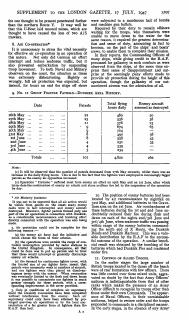
  9. No. ii GROUP FIGHTER PATROLS—DUNKIRK AREA HISTORY.


                  Date                            Patrols              Total flying          Enemy aircraft
                                                                       hours daily        assessed as destroyed
26th May ...                                            22                     480                   20
27th May ...                                            23                     •tt6                  08
                                                                                                     j°
28th May                                                II                     ^76
                                                                               o/ w                  2Q
                                                                                                     •*J
29th May ...                                             Q
                                                         y                     674
                                                                               Wr                    6<j
30th May ...                                             9                     7O4
                                                                               /"T-
3ist Mav                                                8                  .   /too
                                                                                f
                                                                                  ty*J
                                                                                                       u
                                                                                                     jog
 ist Tune ...                                           8                      s«8                   4.3
                                                                                                     TO
 2nd June                                               4                      231                   35
 3rd Tune ...                                           4                      33Q
 4th Tune ...                                            3                     234

                Totals                               101                    4,822                   262

  Notes :
     (1) It will be observed that the number of patrols decreased from 27th May onwards, whilst there was an
  increase in the daily flying hours. This is due to the fact that the fighters were employed in increasingly bigger
  patrols as the enemy air opposition increased.
     (2) Operation " Dynamo " suffered most from enemy air effort on 2Qth May and on ist June, after which
  latter date the combination of enemy air attack and shore artillery fire led to the suspension of the operation
  by day.

                                                                 10. The position of enemy batteries had been
   * Air Ministry footnote:                                   located by air reconnaissance by nightfall on
    It was not to <be expected that all air action would      3ist May, and additional batteries in the Grave-
be visible from .points on the coast; many enemy
raids were in fact intercepted and enemy aircraft             fines area on the ist June. Air Bombardment of
destroyed. Moreover, fighter patrols formed only one          these batteries during the ist and 2nd June un-
part of the air operations in connection with Dunkirk,        doubtedly reduced their fire during dusk and
as a considerable reconnaissance and bombing effort           dawn on each of the nights 2nd/3rd June and
directly connected with the operation was also being
made.                                                        3rd/4th June, when seaborne 'traffic was passing
   2. Air protection could not be complete for the           within range of the enemy batteries command-
following reasons: —                                         ing the south end of X Route, the Dunkirk
      (a) the enemy air force had the initiative and         Roads and Dunkirk Harbour. This was a valu-
   could choose the times of their attacks.                  able contribution by the R.A.F to the success-
      (6) the operations were outside the range of con-      ful outcome of the operation. A similar benefi-
  trolled interception provided by radar stations in         cial result was obtained by the bombing of the
  the United Kingdom. In consequence, all that               batteries which had Dunkirk Pier and roadstead
  could be done was to put up patrols and to trust           under fire.
   that these would intercept or generally discourage
  enemy air attacks.                                             11. CONTROL OF ALLIED TROOPS.
      (c) the demand for continuous fighter cover, with          In the earlier stages the large number of
  the limited size of our fighter force, meant that
  patrols were necessarily weak in numbers of aircraft,      British troops located in the dunes off the beach
   and our fighters were thus placed on disadvan-            were of rear formations with few officers. There
  tageous terms with the enemy. When evacuation              was little control over these mixed units, aggra-
  was eventually limited to the dusk and dawn hours          vated no doubt by the fact that Army Officers'
  it was possible to concentrate our fighters in much
  greater strength for these periods, with a corre-          uniform is indistinguishable from that of other
  sponding improvement in the cover provided.                ranks which makes the presence of an Army
  3. Only in conditions of complete air supremacy            Officer difficult to recognise by troops other than
could the Dunkirk evacuation have been completed             •those under their own Commands. The appear-
without interference from the enemy. Such air                ance of Naval Officers, in their unmistakable
supremacy could only have been attained by pro-              uniforms, helped to restore order and the troops
longed previous air operations or by the local con-
centration of a far greater force of fighters than the       responded to commands in a disciplined manner.
R.A.F. then had.                                             In the early stages, in the absence of any Army
                                                  A 2
Source: The National Archives, Kew, ADM 116 4649. Contains public sector information licensed under the Open Government Licence v3.0.

Details
Page 83
Operation "DYNAMO" Fatt Recommendations of Personnel.
M.Drifter SHIPMATES. Temporary Skipper Herbert Edward Ward, W.S. 3195.
Herbert Cuthbertson, Mate, LT/JX.1858584.
his conduct and leadership were at all times of the
In the absence of a Skipper during the operations
highest order.
Recommended for decoration.
H.M. Drifter YORKSHIRE LASS - Temporary Lieutenant Edward Henry
Godfrey Hope, R.N.V.R.
Stoker John J. Collins, LT/KX.105201.
Displayed great coolness under fire and willing-
ness to help others apart from his own duty. His
conduct at Dunkirk was exemplary.
Recommended for decoration.
Seaman Samuel William George Bauldry, LT/JX.181750. (Acting 2nd
Engineman.)
Was outstanding down in the engine room on
occasions when YORKSHIRE LASS was under fire. He was
warmly praised by his crew for his courage, and his
conduct at Calais and Dunkirk was magnificent,
Recommended for decoration.
Lieutenant Joseph Cox, R.N.R.
Lieutenant T. P. Graham, R.N.R.
Commended for service in action as Unit Officers
of Drifters. Both these officers completed several trips
to Dunkirk, and in addition did good work at Calais and
Boulogne. Their conduct throughout operations was
exemplary and they set a very good example to Skippers and
their crews.
Recommended for decoration.
Commander Reginald Wastell English, R.N.
Commander English was severely injured by explosion
of depth charges when swimming in the water after his ship
was sunk. Picked up by WESTELLA, he used his utmost
exertion to save the lives of both crews by getting out
boats when WESTELLA was sunk subsequently. Later, after
being rescued for the second time, by SAON, insisted on
the need for WESTELLA being sunk to prevent her falling into
the hands of the enemy and then collapsed, due to internal
injuries. He is now in hospital and his condition gives
cause for grave anxiety.

Details
Page 100.
Operation "DYNAMO" - Recommendations of Personnel.
CONSTANT NYMPH (continued).
performed courage and disregard of danger, and undoubtedly
gallant and meritorious service.
Recommended for decoration.
otor Boat LADY CABLE: - Acting Sub. -Lieutenant G. A., Cadell. R.N.
Recommendations.
(Retired).
FFICERS:
Acting Sub. Lieutenant G. A. Cadell, R.N.
troops from Dunkirk Inner Harbour off to tugs
On the night of June 2nd ferried about 200 French
WISHART. 24 Finally, when all ships were leaving, and embarked
any British remained. Then encountered a series see of
French soldiers, having searched the Quay to if
mishaps with his engines, and on the voyage home
himself at one time or another falling overboard.
attempted to salve W. D. craft HAIG, all his crew and
Finally broke down at mid-day on the 3rd, close to the
Coast, and was in grave peril of falling into hands
Southwest of Dunkirk. LADY CABLE drifted helplessly enemy
about the Channel for many hours before being rescued.
Sub. Lieutenant Cadell, suffering from a weak heart,
underwent considerable physical strain, and there is no
coolness and effic) ency.
doubt that he and his crew displayed remarkable courage,
Recommended for mention.
Cadet Rating G. R. Price.
Acted as first lieutenant to Sub. -Lieutenant Cadell,
whom he ably assisted. He had previously been in
command of the Motor Boat SKYLARK.
Recommended for early promotion,
Motor Yacht MASAYRU: - Skipper G. D. Olivier.
Recommendations.
OFFICER:
Skipper G. D. Olivier.
With a civilian crew of 3 and one Leading Seaman,
R. N. sailed from Sheerness 0400/31 in convoy. On
arriving off the beaches spent more than 48 hours on
ferrying work, and in salving craft; and in towing off
ships aground. Underwent the common experience of being
stormed by French troops and having to repel these
boarders in order to save his ship. When isolated,
attacked by 4 Messerschmitts with machine-guns for about
half an hour, and at other times was under sporadio gun-
fire. Ferried off a total of about 400 French troops.
This civilian displayed a complete disregard of danger
and showed a high order of seamanship.
Recommended for decoration.
Source: The National Archives, Kew, ADM 199 790. Contains public sector information licensed under the Open Government Licence v3.0.

Details
Dynams 61.
DOVER.
-
179
4th June, 1940
TO: COMMANDING OFFICER,
H.M.S."LYNX".
Sir,
I have the honour to submit the following report
in regard to the passage of R.A.F.Motor Boats No. 243 and
270, in which the former boat was sunk.
2.
The two boats left Dover under the command of
Commander Clouston R.N. in R.A.F.Motor Boat No. 243. The
complements of the two boats consisted of the R.A.F.
personnel and the Naval embarkation party on passage to
ers and two French
5491
Binld
ason to the British
Dyuamo 178
S off Grave Lines,
These attacked us
FROM: COMMANDING OFFICER, H.M.S. "LYNX".
My boat avoided the
I saw that Commander
DATE: 5th June, 1940
om a bomb, and was
TO : FLAG OFFICER COMMANDING DOVER.
S, I was fully
oid the attacking
ok round for the other
SINKING OF R.A.F.MOTOR BOAT NO. 243
id the whole crew were
on, and slowed down to
ouston ordered me to
at full speed to Dunkirk.
Sub.Lieutenant R.Wake's
report on the above incident is forwarded
3 shortly afterwards
tack, my boat was
herewith.
e-gun bullets, and my
ion. The speed of the
set a mean course for
out half an hour after
Love Dawson
he enemy aircraft left
rriving there at 2100,
r Boat No.243 to Rear-
CAPTAIN, R.N.
ers alongside were
ICE ADMIRAL
ommander Clouston and
at only Sub. Lieutenant
6- JUN 1940
armaham are the only
*
up. Aircraftsman
DOVER
nder Clouston dead in
picked up.
had remained to pick
boat, which would have
e top of the canopy,
as out of action and the
L have made our arrival
continued.

Details
Dynam 61.
DOVER.
179
5
4th June, 1940
TO: COMMANDING OFFICER,
H.M.S. "LYNX".
Sir,
270, in which the former boat was sunk.
in regard to the passage of Motor Boats No. 243 and
I have the honour to submit the following report
2.
The two boats left Dover under the command of
Commander Clouston R.N. in Motor Boat No.243. The
complements of the two boats consisted of the R.A.F.
personnel and the Naval embarkation party on passage to
Dunkirk, with two Naval French Officers and two French
Petty Officers who were acting as liason to the British
Party.
3.
At 1900, when about 6 miles off Grave Lines,
eight Junkers 87 planes were sighted. These attacked us
with machine-gunsand small bombs.
My
boat
avoided
the
first attack, but, on looking round, I saw that Commander
Clouston's boat had a "near miss" from a bomb, and was
heeling heavily to starboard.
4.
During the next ten minutes, I was fully
occupied in navigating my boat to avoid the attacking
planes. When I next had time to look round for the other
boat, only her bows were visible, and the whole crew were
in the water. I closed the position, and slowed down to
pick up survivors, but Commander Clouston ordered me to
leave them immediately and proceed at full speed to Dunkirk.
5.
I increased speed, and was shortly afterwards
attacked again, and, during this attack, my boat was
repeatedly hit by incendiary mandine-gun bullets, and my
starboard engine was put out of action. The speed of the
boat was reduced to six knots. I set a mean course for
Dunkirk, and shortly afterwards, about half an hour after
the commencement of the attacks, the enemy aircraft left
us.
6.
I proceeded to Dunkirk, arriving there at 2100,
and reported the loss of Motor Boat No.243 to Rear-
Admiral Wake Walker. Two Destpoyers alongside were
warned to keep a good lookout for Commander Clouston and
his crew, but I regret to report that only b.Lieutenant
Solomon R.N.V.R. and Aircraftsman Carmaham are the only
survivors known to have been picked up. Aircraftsman
Carmaham reported that he saw Commander Clouston dead in
the water some hours before he was picked up.
up 7. survivors, the extra load in the boat, which would have
In my opinion, if my boat had remained to pick
necessitated men being seated on the top of the canopy,
added to the fact that one engine was out of action and the
boat was making water slowly, would have made our arrival
at Dunkirk most unlikely.
continued

Details
Dyrams 61.
DOVER.
à
179
4th June, 1940
TO: COMMANDING OFFICER,
H.M.S. "LYNX".
Sir,
I have the honour to submit the following report
in regard to the passage of Motor Boats No. 243 and
270, in which the former boat was sunk.
2.
The two boats left Dover under the command of
Commander Clouston R.N. in Motor Boat No.243. The
complements of the two boats consisted of the R.A.F.
personnel and the Naval embarkation party on passage to
Dunkirk, with two Naval French Officers and two French
Petty Officers who were acting as liason to the British
Party.
3.
At 1900, when about 6 miles off Grave Lines,
eight Junkers 87 planes were sighted. These attacked us
with machine-gunsand small bombs. My boat avoided the
first attack, but, on looking round, I saw that Commander
Clouston's boat had a "near miss" from a bomb, and was
heeling heavily to starboard.
4.
During the next ten minutes, I was fully
occupied in navigating my boat to avoid the attacking
planes. When I next had time to look round for the other
boat, only her bows were visible, and the whole crew were
in the water. I closed the position, and slowed down to
pick up survivors, but Commander Clouston ordered me to
leave them immediately and proceed at full speed to Dunkirk.
5.
I increased speed, and was shortly afterwards
attacked again, and, during this attack, my boat was
repeatedly hit by incendiary mandine-gun bullets, and my
starboard engine was put out of action. The speed of the
boat was reduced to six knots. I set a mean course for
Dunkirk, and shortly afterwards, about half an hour after
the commencement of the attacks, the enemy aircraft left
us.
6. and reported the loss of F. Motor Boat No.243 to Rear-
I proceeded to Dunkirk, arriving there at 2100,
Admiral Wake Walker. Two Destpoyers alongside were
warned to keep a good lookout for Commander Clouston and
his crew, but I regret to report that only Sub.Lieutenant
Solomon R.N.V.R. and Aircraftsman Carmaham are the only
survivors known to have been picked up. Aircraftsman
Carmaham reported that he saw Commander Clouston dead in
the water some hours before he was picked up.
up 7. survivors, the extra load in the boat, which would have
In my opinion, if my boat had remained to pick
necessitated men being seated on the top of the canopy,
added to the fact that one engine was out of action arrival and the
boat was making water slowly, would have made our
at Dunkirk most unlikely.
continued.
Source: The National Archives, Kew, ADM 199 792. Contains public sector information licensed under the Open Government Licence v3.0.

Details
VERY SECRET
928
WAR REFUGEES
6
While nothing in this memorandum should be taken as indicating that
H.M. Government has any special reason to suppose that the possibilities
with which it deals are imminent, considerations of humanity and prudence
have led the Departments concerned to consider what steps would have to
be taken to deal with an influx of refugees from Belgium or Holland in
the event of a German invasion of those countries.
During the last war nearly 250,000 Belgian refugees were accommodated
here without insuperable difficulty, but it is estimated that at least
500,000 might be expected to escape on this occasion. ,In addition to this
great increase in numbers, the problem of accommodation has been very
greatly complicated by the danger of large scale air raids and the
necessities of existing evacuation schemes.
The French Government has indicated that although it would be prepared
to do all in its power to assist in the evacuation of refugees from Belgium,
it could not undertake to retain any substantial number owing to the grave
problems arising from the evacuation of the population of Northern France
and the presence in that country of the British Expeditionary Force as well
as the French Army.
For obvious reasons, any appeal to the public is impossible at present
but energetic steps are being taken to prepare emergency schemes for
accommodation in public buildings etc., in neutral areas. The resources of
reception areas are already fully taxed and it would be undesirable to send
large numbers of refugees - especially women and children - to evacuation
areas, where they might be expected to be subjected to severe air raids.
It is doubted, however, whether this course can be avoided if the total
should prove to be as large as is now feared.
H.M. Government is therefore anxious to explore all the possibilities
of accommodation outside Great Britain and semi-official approaches have
already been made to the Channel Islands, Isle of Man, and Northern Ireland.
The advantages to the unfortunate people concerned of being placed in an
area free from enemy attack will at once be apparent.
The purpose of this note is to bring the problem to the notice of
/the

Details
Statement of the operations of Commander
Dove's party at Dunkirk.
Prefatory Note.
The party consisted of Commander Dove, b.Lieutenant
Field, and Sub.Lieutenant Addis, R.N.V.R. The object was to erect
a lethal kite barrage round the port of Dunkirk. Commander Dove
sailed with "Boy Roy" and "Natsuki" on May 2004 with 200
sets of lethal kite gear. Sub,Lieut,Field and Sub.Lieut Addis
left Daver with H.M.D. "Gervais Rentaul". On instructions from
Captain A/P took command of the Drifter
(skipper Mr.Burgess,R.N.R)
Report.
Sub.Lieut Field and Addis, sailed from Dover 6345 Friday
May 25th with 9 tons high explosives for the demolition party, 4
tons of medical stores, 1 Medical officer Major Russell, 1 Army
liaison officer Captain Hill, and 3 signal ratings. After an
uneventful passage, we arrived off Dunkirk 0930 to find a large
scale air attack by the enemy in progress. We noted then, and for
the whole time we were in Dunkirk that in spite of the courage and
persistence of the shore A.A.units the great majority of their
salvoe were well astern of their targets. We immediately entered
the harbour and made fast alongside the South Quay.
Army Officers and signal ratings, we reported to Cdr.
Henderson B.N.L.O. who order "Gervais Rentaul" to keep clear of the
harbour to avoid the aerial bombardment which had recommenced. We
then reported to Cdr. Banks of the demolition party that we had
brought his explosives, and shortly afterwards made contact with
Cdr. Dove who had taken charge of a portion of a demolition party.
Cdr.Dove now signalled the G.R. to re-enter the harbour and took
in tow two sinking tugs which were threatening to block completely
the South Quay. If this had not been done at once it would have
been difficulty if not impossible for the hospital and personnel
ships to make fast to the South Quay. The, "Gervaise" was man-
eeuvred to a small lock on the south side to avoid the risk of her
being hit and exploding the ammunition in the fairway. Ammunition
medical stores were then unloaded and handed over to Cdr. Banks who
up to that time had not received any primersor detonators for the
depth charges.
Cdr.Dove then signalled in two hospital ships which were
in the offing and the work of loading these was just put in hand
inmediately. As there was no. labour dock available at any time during
our stay in Dunkirk Commander Dove himself and with help of his
officers organised and carried out the necessary work. Now the
South Quay was cleared it was possible for further hospital and
personnel ships to enter and load. During these operations Cdr.
Dove reached the conclusion that the situation in Dunkirk was so
grave that we should have neither the opportunity nor the facilitie
to erect a kite barrage round Dunkirk. Furthermore there was a re-
grettable lack of wind and no low or dive bombing until Monday 27th
At midday dr.Henderson told Cdr. Dove that there was no
water in Dunkirk and we therefore commandeered a car and bought
sufficient vichy and perier water from estaminets which were still
open in Malo form H.Q.staff. We made tour of inspection and found
that up to date the damage done to property and personnel was
surprisingly little, although the oil tanks on the south side of th
town were blazing flercely and threatening the railway and timber
yards. There was a light uir from S. to S.W. which blew a pall of
smoke over the harbour and made the scene appear far worse than
reality. During the afternoon and evening the work of loading shi
went on smoothly but there were already a large number of noncom-
batant forces crowded into the harbour besides an increasing number*
of ambulances lined up on the south quay. The night was quiet
except for one air-raid when German planes circledthe town for over
(ca hour before dropping a comparatively small mimber of bombs. Early
next morning May 26th, r.Burgess who had been instructed by Cdr.
Dove to anchor outside the harbour for safety, reported that magnet
mines had been laid near the entrance and that a French merchantmen
had been blown up.
dawn, the situation will become extremely grim'

Details
3
ried us four hours to do scale normally bombardment 20 minutes. This
ide to fly another work which takes (made in Germany)
which was entirely kite deserted from a except large floating for Bank's crane party. We
THE decided There so cases similar to key this that our
uninterrupted and large to wind which continued
Owing to return a contrary to H.Q. We found our the efforts proved of
IM
car presumably the result of about 2 miles and our
were of fifth many column activity. We made
way times on the way, especially on the We reported leading that H.Q. it
it was back to H.Q. on foot, a distance road to were bombed
several H.Q. the position seemed extremely from grave. the South Quay. Cdr. was
Henderson hardly informed us that G.H.Q. intended taking to be over evacuation bastion
At practicable to embark troops the
and the extreme shortage of supplies. We were and to sail as soon as
that all superfluous personnel would have therefore ordered owing by
to Dove to go aboard the "Gervaise Rentual" most of the
bombardment permitted. The air force personnel, onboard. We
demolition the party were, we were informed, already and QZS.60. were On
arrival also at the ship we found we had no charts and to the our
given a new route order via Zuydcoote Passage therefore made
way bastion. At the bastion we found that a number of soldiers, the obviously a
back as quickly as we could through the bombardment
unnerved by the relentless attack, were approaching H.Q. in
went out in the midst of the bombardment, without steel helmets, destroy- or fire
threatening manner with their rifles. Cdr.Dove and Cdr. Henderson
arms which had just entered harbour, arrived. The situation control and
and parleyed with them until a naval landing party from which a might
"
have er developed seriously was immediately brought under take we
informed that the evacuation of the town of Dunkirk was to
were forthwith. We were therefore given new orders by Cdr.Dove. found We
place able to collect a chart and return to the ship where we
were Cdr. Bankes. He told us to collect as many small craft as possible and
take them and the drifter round to the beaches on the north side of the
town to pick up soldiers. We tried to commandeer two Belgian tugs and
manage to secure two launches byt on investigation both were too badly
a picket boat but the French naval commander objected strongly. We did
damaged to be serviceable. One had its steering gear rendered useless one
by bombs, and the other, a diesel engine, had no fuel, and no
knew how to work it. We now had onboard four air force officers, 10
re
moment four drifters arrived in the entrance, two of which were in a
soldiers, the majority of the demolition party and Cdr. Bankes. At this
sinking condition owing to bombing and machine-gunning, These two the
"Bola Roy" and the "Paxton" were sunk by gun-fire from the "Gervaise
Bentual", clear of the fairway, after all personnel had been taken on-
board, the drifters "Playmates" and "Gervaise Rentual." The remaining
2 drifters were ordered by Cdr. Bankes to tie off the beaches and they
proceeded thereforthwith.
We were now helded from the South Quay and on crossing there
found Cdr. Dove who was the last person to leave the South Quay. We took
him aboard and landed him and Cdr. Bankes on the North Jetty, where they
met Captain Tenant, Cdr. Dove insisted on returning to the bastion to
the end of the pier, within hail for an hour. Captain Tenant then told
find out if there were anyone left there and instructed us, to be off
us to extend those orders until midnight. It was now about dark and
air activity was intense. Huge fires light up the town and later numer-
believed we heard artillery. After standing off for about 1 hour,
ous parachute flares were dropped by the enemy. For the first time we
gun us, we received enemy a morse message from the beach, to come alongside
in which time the enemy dropped magnetic mines and attempting to machine
the North Jetty, There we found Naval Commander whose name was not
ascertained, other Captain drifter and tell any personnel ships to come along-
from Tenant's party, who ordered us to make con-
side the North We spoke to the Queen of the Channel (?)
to this effect Jetty. drifters who were Lying some way to the north
and were difficult and to the locate. Another morse message asked us to use and
found all possible a despatch. to After this we ?) returned ship alongside to the North and fully Jetty loaded. were
We took personnel (Queen of Channel and children and some soldiers, and
hound aboard which written) was was destroyer, continuing "Unless and complete W/T dubies. fighter The protection gist of this can be message provided (which
only to proceed a home to Dover also an urgent despatch to H.M.S. "Wolf-
ordered aboard about 30 women after delivering women and children
before dawn, the situation will become extremely grim'

Details
Page 83
Operation "DYNAMO" - Recommendations of Personnel.
H.M.Drifter SHIPMATES.- - Temporary Skipper Herbert Edward Ward, W.S. 3195.
Herbert Cuthbertson, Mate, 1858584.
his and leadership were at all times operations of the
conduct In the absence of a Skipper during the
highest order.
DSM
:
Recommended for decoration.
Drifter YORKSHIRE LASS - Temporary Lieutenant Edward Henry
Godfrey Hope. R.N.V.R.
Stoker John J. Collins, LT/KX.105201.
Displayed great coolness under fire and willing-
ness to help others apart from his own duty. His
conduct at Dunkirk was exemplary.
D.S.M.
Recommended for decoration.
Seaman Samuel William George Bauldry, LT/JX.181750. (Acting 2nd
e n t
DSM
Engineman.)
Was outstanding down in the engine room on
occasions when YORKSHIRE LASS was under fire. He was
warmly praised by his crew for his courage, and his
conduct at Calais and Dunkirk was magnificent,
Recommended for decoration.
Lieutenant Joseph Cox, R.N.R.
DSC
Lieutenant T. P. Graham, R.N.R.
D.S.O.
DSC
Commended for service in action as Unit Officers
of Drifters. Both these officers completed several trips
to Dunkirk, and in addition did good work at Calais and
Boulogne. Their conduct throughout operations was
exemplary and they set a very good example to Skippers and
their crews.
ASO
Recommended for decoration.
Commander Reginald Wastell English. R.N. D.S.O
Commander English was severely injured by explosion
of depth charges when swimming in the water after his ship
was sunk. Picked up by WESTELLA, he used his utmost
exertion to save the lives of both crews by getting out
boats when WESTELLA was sunk subsequently. Later, after
being the for WESTELLA being sunk to prevent her falling internal into
rescued for the second time, by SAON, insisted on
the need of the enemy and then collapsed, due to
injuries. hands He is now in hospital and his condition gives
cause for grave anxiety.

Details
Page 100.
Operation "DYNAMO" - Recommendations of Personnel.
M.B. CONSTANT NYMPH (continued).
performed gallant and meritorious service.
courage and disregard of danger, and undoubtedly
Recommended for decoration.
Motor Boat LADY CABLE: - Acting Sub. -Lieutenant a. A. Cadell. R.N.
Recommendations.
(Retired).
OFFICERS:
X
Acting Sub. Lieutenant G. A. Cadell, R.N.
D.S
on the night of June 2nd ferried about 200 French
troops from Dunkirk Inner Harbour off to tugs and
WISHART. Finally, when all ships were leaving, embarked
24 French soldiers, having searched the Quay to see if
any British remained. Then encountered a series of
mishaps with his engines, and on the voyage home
attempted to salve W. D. craft HAIG, all his crew and
himself at one time or another falling overboard.
Finally broke down at mid-day on the 3rd, close to the
Coast, and was in grave peril of falling into enemy hands
Southwest of Dunkirk. LADY CABLE drifted helplessly
about the Channel for many hours before being rescued.
Sub. Lieutenant Cadell, suffering from a weak heart,
underwent considerable physical strain, and there is no
doubt that he and his crew displayed remarkable courage,
coolness and effic) ency.
M.
Recommended for mention.
Cadet Rating G. R. Price.
Acted as first lieutenant to Sub. -Lieutenant Cadell,
whom he ably assisted. He had previously been in
command of the Motor Boat SKYLARK.
turing
stered
ivors
Recommended for early promotion,
was
whom
Motor Yacht MASAYRU: - Skipper G. D. Olivier.
Recommendations.
OFFICER:
Skipper G. D. Olivier.
3
D.S.M.
With a civilian crew of 3 and one Leading Seaman,
R. N. sailed from Sheerness 0400/31 in convoy. On
arriving off the beaches spent more than 48 hours on
ferrying work, and in salving craft; and in towing off
ships aground. Underwent the common experience of being
stormed by French troops and having to repel these
boarders in order to save his ship. When isolated,
attacked by 4 Messerschmitts with machine-guns for about
half an hour, and at other times was under sporadic gun-
fire. Ferried off a total of about 400 French troops.
This civilian displayed a complete disregard of danger
and showed a high order of seamanship.
Recommended for decoration.

Details
Page 83
Operation "DYNAMO" - Recommendations of Personnel.
H.M.Drifter SHIPMATES. - Temporary Skipper Herbert Edward Ward, 3195.
Herbert Cuthbertson, Mate, LT/JX.1858584.
In the absence of a Skipper during the operations
his conduct and leadership were at all times of the
highest order.
Recommended for decoration.
H.M. Drifter YORKSHIRE LASS - Temporary Lieutenant Edward Henry
Godfrey Hope, R.N.V.R.
Stoker John J. Collins, LT/KX.105201.
Displayed great coolness under fire and willing-
ness to help others apart from his own duty. His
conduct at Dunkirk was exemplary.
Recommended for decoration.
Seaman Samuel William George Bauldry, LT/JX.181750. (Acting 2nd
Engineman.)
Was outstanding down in the engine room on
occasions when YORKSHIRE LASS was under fire. He was
warmly praised by his crew for his courage, and his
conduct at Calais and Dunkirk was magnificent,
Recommended for decoration.
Lieutenant Joseph Cox, R.N.R.
Lieutenant T. P. Graham, R.N.R.
Commended for service in action as Unit Officers
of Drifters. Both these officers completed several trips
to Dunkirk, and in addition did good work at Calais and
Boulogne. Their conduct throughout operations was
exemplary and they set a very good example to Skippers and
their crews.
Recommended for decoration.
Commander Reginald Wastell English. R.N.
Commander English was severely injured by explosion
of depth charges when swimming in the water after his ship
was sunk. Picked up by WESTELLA, he used his utmost
exertion to save the lives of both crews by getting out
boats when WESTELLA was sunk subsequently. Later, after
being the for WESTELLA being sunk to prevent her to falling internal into
rescued for the second time, by SAON, insisted on
the injuries. hands He is now in hospital and his
need of the enemy and then collapsed, condition due gives
cause for grave anxiety.

Details
Page 100.
Operation "DYNAMO" - Recommendations of Personnel.
CONSTANT NYMPH (continued).
performed gallant and meritorious service.
courage and disregard of danger, and undoubtedly
Recommended for decoration.
Motor Boat LADY CABLE: - Acting Sub. -Lieutenant G. A. Cadell. (Retired). R.N.
Recommendations.
OFFICERS:
Acting Sub. Lieutenant G. A. Cadell, R.N.
On the night of June 2nd ferried about 200 French
troops from Dunkirk Inner Harbour off to tugs and
WISHART. Finally, when all ships were leaving, embarked
24 French soldiers, having searched the Quay to see if
any British remained. Then encountered a series of
mishaps with his engines, and on the voyage home
attempted to salve W. D. craft HAIG, all his crew and
himself at one time or another falling overboard.
Finally broke down at mid-day on the 3rd, close to the
Coast, and was in grave peril of falling into enemy hands
Southwest of Dunkirk. LADY CABLE drifted helplessly
about the Channel for many hours before being rescued.
Sub. Lieutenant Cadell, suffering from a weak heart,
underwent considerable physical strain, and there is no
doubt that he and his crew displayed remarkable courage,
coolness and efficiency.
Recommended for mention.
Cadet Rating G. R. Price,
Acted as first lieutenant to Sub. -Lieutenant Cadell,
whom he ably assisted, He had previously been in
command of the Motor Boat SKYLARK.
Recommended for early promotion.
Motor Yacht MASAYRU: - Skipper G. D. Olivier.
Recommendations.
OFFICER:
Skipper G. D. Olivier.
R. N. sailed off the beaches spent more than and 48 in hours towing on
With a from Sheerness 0400/31 in convoy.
civilian crew of 3 and one Leading Seaman, On
arriving ships ferrying boarders half stormed attacked aground. by work, by in THE and Underwent troops in salving and the of having craft; common to 400 under When experience repel French sporadic isolated, these for danger troops. of about gun- being off
This fire. Forried off a total disregard of
and
Recommended for decoration.
Source: The National Archives, Kew, ADM 199 795. Contains public sector information licensed under the Open Government Licence v3.0.

Details
376
350
4.
1/6
after she was hit in the after Bodler Room and started to settle down.
Captain Berthon then anchored her and M.T.B. 102, which had just arrived,
came alongside. I embarked in her with my Staff, and after telling 2
tugs to stand by KEITH I went into Dunicirk to see General Alexander. Dive
Bombing and Maching Gun attacks were made on the N.T.B. on the way there.
35.
General Alexander was away from the H.Q., but I saw a Staff Officer
and discussed the situation. At that time I gathered that the plan was
to evacuate during the next night from the Western Beach only and Dunkirk.
The Rearguard were to withdraw at dawn and make their way to Dunkirk. As
this meant continuing the embarkation for some hours of daylight I had
grave fears of heavy losses after that morning's experience.
36.
As there was nothing more I could do at Dunicirk and all ships were
returning I decided to return to Dover to make contact.
M.A/S.B. 37. 10. At Dover I was able to discuss the plans for the night
I reached Dover at 1130 in N.T.B. 102 and left again at 1730 in
to
operations which was invaluable, and thereafter I returned each day for this
purpose.
0330 38. from the 18 miles of beach East of Dunicirit, for which large mmbers of
The plan for this night was, roughly, to embark between 2100 and
small craft were to be towed out. In addition Personnel Ships were to embark
from Dunkirk.
sailed early in M.A/S.B.10 and landed at Dusirink at 1900, visited
39. the S.N.O. and I the Ceneral, and gave them details of the plan. French I then learnt and
to my great relief that the Rearguard were being relieved by the
withdrawing during the night.
started to arrive and from then onwards I moved
40. between the At beaches 2100 ships and Dunkirk, continually senting ships which The were as loading
slowly off the beaches into Dunicirk to fill - there. plan
very originally made would not have made full use of Dunkink.
I went alongside the root of the East ydar in Donkirk there until to
41. off At 0200 of the Naval Ratings of the Shore Party, and There I lay was
0245 when I proceeded of the Harbour at this time and a Trawler was instead sunk. of As
bring some round all ships barthed in harbour.
considerable shelling clear morning I decided to get ships away by 0300 some of the
it was a very this put into effect I left for Dover: later hour.
0330, small craft and having however, seen continued their work off the beaches to &
42. Night - Sunday 2nd - Monday 3rd June.
it was understood that there was sere to 5000 embark British from still
Dunkirk ashore and over 30,000 some French local beach made any East-
At this stage French, and the plan arranged craft from the beach close
ward. entirely Actually except a strong for wind and heavy shelling on the
embarkation there impossible.
43. Minesweepers A very large and carrying Schoots capacity was outside. provided in Personnel in addition Ships, to Destroyers, Drifters and
Paddlers, Flotillas of boats working from Tugs
time also the French had collected from a large quays up mmber the harbour. of fishing
44. vessels, Trawlers, By this and small steamers which worked bombing
I arrived at Dunkirk in M.A/S.B. 10. at 2030, after a
45.
/attack
Source: The National Archives, Kew, ADM 234 360. Contains public sector information licensed under the Open Government Licence v3.0.

Details
PRELIMINARY EVENTS
CHAP. I
17TH MAY
French 9th Army front broken
By the early morning of the 17th May, the situation on the French 9th Army's
front had become grave. The French line was broken, and enemy armoured
and mobile forces had crossed the river Oise. East of St. Quentin, there was
a gap of at least 20 miles in which there appeared to be no organised resistance.¹
The enemy break-through was now offering an imminent threat to the British
rear G.H.Q. at Arras, to the communications over the Somme at Amiens and
Abbeville, and to the base areas. To meet this, every available man and
weapon were collected. A mobile bath unit, for example, took part in the
defence of St. Pol; General Construction Companies of the Royal Engineers,
and many units of the Royal Army Service Corps, set to work to place their
localities in a state of defence, and manned them until overwhelmed, relieved
or ordered to withdraw.
These numerous delaying actions, though small in themselves, all contributed
to gain the time required for the withdrawal of the main forces.2 A force was
also organised to guard against a more immediate threat to the B.E.F.'s right
flank; and, as a further precaution against the risk of being out-flanked on
the right, the withdrawal to the Dendre and thence to the Escaut was continued
without pause.³
18TH MAY
Allied rail communications severed
By the merning of the 18th May the Belgians had effected a junction with the
B.E.F. left flank at Alost, on the Dendre. From the B.E.F.'s right flank the
French line ran through Mons and Maubeuge.
During the day, the enemy, pounding westward, had penetrated as far as
Amiens in sufficient strength to sever rail communications with the Allies'
bases.
On the night of the 18th-19th May, the 1st, 2nd and 3rd Corps of the B.E.F.
completed their withdrawal to the line of the Escaut without interference, and
prepared to defend the line of that river. (The French 1st Army completed its
withdrawal by the following day and was in touch with the right of the British
1st Corps).
Meanwhile, inundations were being carried out southward by the French;
unfortunately however, without regard to the front of the B.E.F.,4 where it was
soon found that the level of water in the Escaut was becoming so low that the
river was fast ceasing to form a serious obstacle.
After a conference that night with General Billotte, Lord Gort formed the
opinion that there was an imminent danger of the forces in the north-eastern
area - that is the French forces next to the sea, the Belgian Army, the B.E.F.
and the bulk of the French 1st Army on its right - being irretrievably cut off
from the main French forces in the south.⁴ The event three days later showed
this opinion to have been fully justified.
I Lord Gort's Second Despatch, para. 24.
2 Lord Gort's Second Despatch, para. 25.
3 Lord Gort's Second Despatch, para. 26.
4 Lord Gort's Second Despatch, para. 30.
3

Details
CHAPTER IV
MONDAY, 27TH MAY
(See Plan 3)
The Dunkirk perimeter
the organisation of the Dunkirk the bridgehead. Canal de la Its perimeter was to extend from
On the morning of 27th May, Lieut.-General Sir Ronald Adam commenced
and thence by Furnes and Nieuport Gravelines to the Belgian coast. In fact, however,
Gravelines, south-eastward to Colme, along the canal to Bergues
perimeter, and were falling back to the line of the Mardyck Canal, from the
the French were already evacuating and the western part of the
to Spyker on the Canal de la Colme. The French were to be responsible sea, for
the defence of the western half of the perimeter as far as Bergues inclusive,
and the British for the eastern half. The position of the Belgian Army was
now so obscure that its inclusion in the bridgehead was not taken into account. I
The British sector of the Dunkirk perimeter had its right at Bergues, whence
it followed the canals to Furnes and Nieuport. Immediately north of this
line were the inundations ; to the north of the inundations was low-lying land,
and then the Dunkirk-Furnes Canal and the main lateral road from Furnes to
Dunkirk; finally, there was the narrow strip of dunes giving way to a wide
open beach running the whole length of the position and shelving very gradually
to the sea. There were no quays or piers whatever, except those at Dunkirk
itself. At intervals of from 3 to 4 miles along the shore (from east to west) lay
the seaside resorts of Coxyde, La Panne, Braye-Dunes, and Malo-les-Bains
(adjoining Dunkirk).
During the day troops and their transport began to withdraw into the
perimeter on the fronts of all three British Corps. Where the troops had received
the necessary orders, vehicles were disabled and abandoned in the assembly
areas; but owing to the shortage of troops for traffic control a great number
of British and French vehicles were able to enter the perimeter and the town
of Dunkirk², causing grave congestion on the roads. Beaches were organised
at La Panne, Bray-Dunes and Malo-les-Bains, one beach being allotted to each
of the 3 British Corps.³
Dunkirk had been bombed for some days, but the town and port received
their most serious damage on 27th May. At least 12 attacks were made on
Dunkirk and the sea approaches between 0825 and 20004. Lorry columns
had been set on fire in the town and a pall of black smoke from the burning oil
tanks hung continuously over the town and docks, impeding the air defence.
Dunkirk was therefore cleared of all troops and they were sent to the dunes
east of the town to await embarkation.³
The Belgain armistice
During the 27th May Lord Gort received a further telegram from the Secre-
tary of State for War which read, " want to make it quite clear that sole
2 I Lord Lord Gort's Second Despatch, para. 47.
4 3 R.A.F. Gort's Second Despatch, para. para. 50.
Lord Gort's Second Despatch, 49.
Narrative, p.320.
18

Details
MONDAY, 27TH MAY
CHAP. IV
meantime at 2025, the Vice-Admiral, Dover, received another signal sent only
a few minutes later :
" Port continuously bombed all day and on fire. Embarkation possible only
from beaches east of harbour A.B.C.D.¹ Send all ships and passenger ships
there to anchor. Am ordering Wolfhound to load there and sail. T.O.O.2005."
To the Vice-Admiral, Dover, the situation must have appeared critical
when, later that evening, he received a report from two military officers from
G.H.Q., that the plight of the B.E.F. was precarious and that the enemy might,
indeed, succeed in cutting it off from Dunkirk.²
All ships diverted to the beaches
Such was the grim picture presenting itself to the Vice-Admiral, Dover, that
night - the B.E.F. in grave and very real danger of being cut off altogether from
Dunkirk, and possibly only a bare 24 hours available for its evacuation. Admiral
Ramsay reacted to these dire tidings with characteristic drive and energy,
and a period of intense activity ensued. Every effort was concentrated on
sending as many craft as possible to the beaches without delay². Order
followed order in rapid succession. Personnel ships were diverted to the
beach, code letters A, B, C and D (i.e. Malo beach). Four paddle minesweepers³
were sailed from the Downs to La Panne beach. Destroyers were rushed to the
beaches and urged to embark as many British troops as possible, as this was
the last chance of saving them "; the Gallant, and Vivacious, then on patrol,
the Windsor, Vimy, Anthony, Impulsive, Sabre and the cruiser Calcutta, were
all ordered to proceed with the utmost despatch to the beach at Malo-les-Bains
and the beach at Zuydcoote, just east of it; the Grafton and Greyhound, on
patrol between Fairy Bank and Kwint Bank buoys, and the Wakeful, just
arrived at Dover from Plymouth, were hurried to the beach at La Panne.
The wording of some of the signals4 conveying these orders reflects the
desperation felt that night, a desperation which, in spite of the course of sub-
sequent events, was at the time only too well-founded. " Had the situation
appeared less critical," observes Admiral Ramsay, an organised flow of large
and small craft, working in reliefs, would have been arranged."⁵
Yet a further batch of vessels arrived off the beaches that evening; the
17 available flare-burning drifters of the Dover Auxiliary Patrol⁶ had sailed
for Dunkirk during the afternoon, and on arriving were diverted to the beaches
by the Wolfhound, in accordance with a signal from the Vice-Admiral, Dover⁷,
and anchored close inshore. The boats from the Wolfhound and Wolsey, and
I These letters refer to an arrangement, whereby at the commencement of Dynamo'
the Dunkirk beaches were described by a letter code referring to Map G.S.G.S. 4040,
Sheet 29, 1/50,000. The lengths of beach lying in each 1000 metre map square were
lettered, west to east, commencing with "A" at square 2686 in sequence to "0" at
square 3990. (Appx. N. 10). Under this arrangement, A.B.C.D. actually refers to the
beach at Malo-les-Bains.
This arrangement appears to have fallen into disuse on and after 29th May, when the
stretch of beach, one mile east of Dunkirk to one mile east of La Panne, was divided into
3 equal parts, referred to as La Panne, Bray and Malo, from east to west, with a mile gap
between each part. (Appendix O. 11).
2 D.R. page 3, para. 8.
3
The Sandown, Medway Queen, Brighton Belle and Gracie Fields.
4 See Appendices D. 3, D. 4, D. 5, D. 7, and D. 8.
5 D.R., p.3, para. 38.
6 They were the Netsukis, Lord Howard, Lord Howe, Golden Sunbeam, Midas, Golden
Gift, Girl Pamela, Paxton, Boy Roy, Eileen Emma, Girl Gladys, Forecast, Ut Prosim, York-
shire Lass, Young Mun, Shipmates and Torbay II.
7 Appendix D.6.
23

Details
SIGNALS
APPENDIX H
20. Gossamer to VICE-ADMIRAL, from DOVER La
6,000 British marching Panne through Bray on Dunkirk.
0235/1
21. Gossamer to VICE-ADMIRAL, DOVER west
We must have more boats of La Panne.
0243/1
22. VICE-ADMIRAL, DOVER to Gossamer
It is now impracticable to send more boats. You must do your utmost with 0334/1 yours.
23. Niger to VICE-ADMIRAL, DOVER, REAR-ADMIRAL, DOVER
Situation on beaches is critical. Third Division marching to Dunkirk. More
boats urgently required.
0345/1
24. Gossamer to VICE-ADMIRAL, DOVER
Thousands more (?moving) from La Panne westward. No boats.
0358/1
25. GENERAL WHITAKER to GENERAL DILL, WAR OFFICE
Absolutely essential provide many more small boats with motor boats to tow if
grave losses are to be avoided and remainder B.E.F. cleared. Matter utmost
urgency.
0430/1
26. REAR-ADMIRAL, DOVER to VICE-ADMIRAL, DOVER
All craft used for towing boats have returned in the night. They must be sent
back.
0611/1
27. Niger to VICE-ADMIRAL, DOVER
Number of towing and small boats are returning empty. Warn following ships
to stop them.
2150/1
20. VICE-ADMIRAL, DOVER to FORCE K AND MINESWEEPERS (R) Admiralty
Reported that number of towing and small boats are returning empty. Essential
to arrest this. Keep good lookout and force them back.
2201/1
20. VICE-ADMIRAL, DOVER to ADMIRALTY
Owing to severe conditions and enormous wastage on Dunkirk coast, small boat
flotillas, vital for beach work, can no longer be relied upon even in fair weather.
Information just received that at least two such flotillas have turned back tonight
Saturday.
2328/1
30. VICE-ADMIRAL, DOVER to FORCE K AND MINESWEEPERS (R) Admiralty
False information and orders to return are being given to our inshore units by 5th
Column scoots or other vessels. Endeavour to keep our small vessels to their duty
on the coast.
2335/1
Sunday, 2nd June
31. ADMIRALTY (D.N.I.) to VICE-ADMIRAL, DOVER
Your 2335/1 : Please supply any information regarding the ships suspected of
5th Column activities.
1834/2
Monday, 3rd June
32. VICE-ADMIRAL, DOVER to ADMIRALTY
Your 1834/2. Following is information to date :
On the morning of the 1st June it was reported that a number of small craft had
left Dunkirk beaches. An M.T.B. was sent out to round them up and send them
back. A signal was intercepted from Leda en route to Dunkirk saying that she had
met boats returning, and she was ordered to send them back.
171

Details
PLAN 2
Scale ofMiles
to
5
o
10
20
30
40
N
The Allied
withdrawal into
18th MAY
the Dunkirk
KENT
GSTEND
.
30ᵗMAY
BRUGES
ANTWERP
PANNE
perimeter on the
+
NIEUPORT
23rd MAY
30th May
May
+
4.
FURNES
MALINES
Yser
GAND
BASED ON MAPS IN LORD GORT'S DESPATCH
LINES
C
GRAVE
STATES
BERGUES
R.Lys
ALOST
R
WORMHOUTE
LOUVAIN
CHANNEL
YPRES
COURTRAI
Escant
R.Dyle
WATTE
MENIN
BRUSSELS
.
R
St. OMER
CASSEL
COMINES
Dandre
WAVRE
BOULDONE
.
ZEBROUCK
INS
ARMENTIERES
R.
R
AIRE
MERVILLE
ATH
LILLE
23rd:MAY
Meuse
23rd MAY
St. AMAND
NAMUR
.
BASSEE
CARVIN
.
18th MAY
R.
Sambre
St.POL
.
VALENCIENNES
DOUAI
BARRAS
Escaut
a
CAMBRAI
OULLENS
BEVILLE
B
ALBERT
R.Somme
PERONNE
him
AMIENS
StQUENTIN
French 10th Arm
MEZIERES
SEDAN
R.Oise
Mause
The Dunkirk Perimeter on 30th May.
Allied line on 18th Щау
French 3rd Army R.Aisne
Approximate British, French and Belgiantine on 23rd May
German progress shewn in blue
TSD/HS (ESG)
C.B.H.16675
Source: The National Archives, Kew, MT 40 66. Contains public sector information licensed under the Open Government Licence v3.0.

Details
79
1 ml
EN LINE STEAMERS
1940.
TRACT OF LETTER FROM CAPTAIN EDGAR JONES, S.S. "YEWDALE", SHEERNESS,
UNDER DATE 2nd JUNE, 1940.
128
There is a great deal of damage to this ship, caused by
shrapnel from bombs. These have penetrated through the ship's side
into holds, bunkers and engine room, also Mate's room has been badly
damaged shrapnel having penetrated through about 14" of steel at
doubling plate and has damaged cabin and Master's room. The Wheelhouse
is badly damaged and compass completely wrecked.
There are several burst pipes and defects in engine room.
The shrapnel that penetrated stokehold has also damaged boiler but we
do not think that marks on boiler are very deep.
We broughtabout 900 men across, 7 of whom were killed and
77 injured. Mate who was in Wheelhouse with Bo'sun and myself was
struck below the knee by shrapnel and is in grave danger of losing his
leg. I have not been able to find out what hospital he is in, but he
is neither at Ramsgate or Deal. I have written to his wife and
forwarded his wages.
We obtained some satisfaction in these raids however, as we
brought down one enemy bomber which we Saw plunging headlong into the
sea half a mile ahead of us. When we arrived at the spot we could see
nothing but oil.
dd
The great
TWIS
a bi., varge
were rowing off in their boat towards us. I picked them up, also boat
and crew of barge "DUCHESS" that had anchored in the Roads, and then the
next wave of bombers were overhead.
(Continued)

Details
ons
at
G.W.R.
49
20113
STATE
When G.W.Rly Docks Manager's Dep
to Newhaven via Dover Marine Section,
Fishguard Harbour.
SEAL
were
CDM.C/3077/S.
was 20th 181
June
1940.
On the B.25/272.
that was from
Dris
sts. 'St. David".
loss of
EVACUATION OF TROOPS FROM FLANDERS.
Dear Sir, and in
the
It has been reported to me that the "st. David"
under the command of Captain Joy on the 24th May was ordered
to Dunkirk, via Dover, to evacuate wounded from thatarea.
She arrived at that Port on the morning of the
25th and lay alongside receiving wounded until that evening,
During the whole of the time the town and quays were being
subjected to severe bombing.
On her way out, when passing along the Grave-
lines shore, she came under heavy gun fire, and one large calibre
shell fell within less than the Ship's length ahead of her.
at
The vessel was then manoeuvred out of the Channel
to avoid gun fure. Later on, air craft (apparently French)
escorted her until she was clear of danger.
About midnight she arrived at Newhaven, where all here
wounded were landed.
to
The next morning she proceeded to the Downs, and the
day after, the 28th May, received orders to proceed to Dunkirk
once again to evacuate more wounded.
difficult owing to the lack of the usual aids to navigation and
The weather was very misty, and navigation made very
the fact that many vessels had been sunk in the fair-ways since
her last leaving that Port. At 8.00'clock that evening she
entered Dünkirk, where she remaired until the next morning.
were subjected to terrific bombardment by air and land, and it
During the whole of the night, the town, quays, etc.
became necessary, owing to the lack of R.A.M.C. ashore, for the
board receiving the wounded and placing them in the cots etc.
carrying them down the quay as required, with the Medical Staff on
geamen, Firemen, Stewards etc. to load the wounded themselves,
we
This work was exceedingly difficult, as the whole
1g
was for in a bad condition, and there was not even any gangways available area
nd
constructed passing the stretcher cases on board, However, the Engineers
n e
whole a wide and useful gangway, which was used during the
SC
time of the embarkation.
et
Source: The National Archives, Kew, Unclassified 1. Contains public sector information licensed under the Open Government Licence v3.0.

Details
Dynams 61.
DOVER.
à
179
4th June, 1940
TO: COMMANDING OFFICER,
H.M.S."LYNX".
Sir,
I have the honour to submit the following report
in regard to the passage of R.A.F.Motor Boats No. 243 and
270, in which the former boat was sunk.
2.
The two boats left Dover under the command of
Commander Clouston R.N. in R.A.F.Motor Boat No. 243. The
complements of the two boats consisted of the R.A.F.
personnel and the Naval embarkation party on passage to
ers and two French
5491/14
Bin/d
ason to the British
Dyudmo 61 178
S off Grave Lines,
These attacked us
FROM: COMMANDING OFFICER, H.M.S. "LYNX".
My boat avoided the
I saw that Commander
DATE: 5th June, 1940
om a bomb, and was
TO : FLAG OFFICER COMMANDING DOVER.
S, I was fully
oid the attacking
ok round for the other
SINKING OF R.A.F.MOTOR BOAT NO. 243
id the whole crew were
on, and slowed down to
ouston ordered me to
at full speed to Dunkirk.
Sub. Lieutenant R.Wake's
report on the above incident is forwarded
3 shortly afterwards
tack, my boat was
herewith.
e-gun bullets, and my
ion. The speed of the
set a mean course for
out half an hour after
Love Wawson
he enemy aircraft left
rriving there at 2100,
r Boat No.243 to Rear-
CAPTAIN, R.N.
ers alongside were
10E ADMIRAL
ommander Clouston and
at only Sub. Lieutenant
6- JUN 1940
armaham are the only
*
A
up. Aircraftsman
DOVER
nder Clouston dead in
picked up.
had remained to pick
boat, which would have
e top of the canopy,
as out of action and the
L have made our arrival
continued.

Details
Dynam 61.
DOVER.
179
5
4th June, 1940
TO: COMMANDING OFFICER,
H.M.S. "LYNX".
Sir,
270, in which the former boat was sunk.
in regard to the passage of Motor Boats No. 243 and
I have the honour to submit the following report
2.
The two boats left Dover under the command of
Commander Clouston R.N. in Motor Boat No.243. The
complements of the two boats consisted of the R.A.F.
personnel and the Naval embarkation party on passage to
Dunkirk, with two Naval French Officers and two French
Petty Officers who were acting as liason to the British
Party.
3.
At 1900, when about 6 miles off Grave Lines,
eight Junkers 87 planes were sighted. These attacked us
with machine-gunsand small bombs.
My
boat
avoided
the
first attack, but, on looking round, I saw that Commander
Clouston's boat had a "near miss" from a bomb, and was
heeling heavily to starboard.
4.
During the next ten minutes, I was fully
occupied in navigating my boat to avoid the attacking
planes. When I next had time to look round for the other
boat, only her bows were visible, and the whole crew were
in the water. I closed the position, and slowed down to
pick up survivors, but Commander Clouston ordered me to
leave them immediately and proceed at full speed to Dunkirk.
5.
I increased speed, and was shortly afterwards
attacked again, and, during this attack, my boat was
repeatedly hit by incendiary mandine-gun bullets, and my
starboard engine was put out of action. The speed of the
boat was reduced to six knots. I set a mean course for
Dunkirk, and shortly afterwards, about half an hour after
the commencement of the attacks, the enemy aircraft left
us.
6.
I proceeded to Dunkirk, arriving there at 2100,
and reported the loss of Motor Boat No.243 to Rear-
Admiral Wake Walker. Two Destpoyers alongside were
warned to keep a good lookout for Commander Clouston and
his crew, but I regret to report that only b.Lieutenant
Solomon R.N.V.R. and Aircraftsman Carmaham are the only
survivors known to have been picked up. Aircraftsman
Carmaham reported that he saw Commander Clouston dead in
the water some hours before he was picked up.
up 7. survivors, the extra load in the boat, which would have
In my opinion, if my boat had remained to pick
necessitated men being seated on the top of the canopy,
added to the fact that one engine was out of action and the
boat was making water slowly, would have made our arrival
at Dunkirk most unlikely.
continued

Details
Dyram 61.
DOVER.
179
4th June, 1940
TO: COMMANDING OFFICER,
H.M.S. "LYNX".
Sir,
270, in which the former boat was sunk.
in regard to the passage of Motor Boats No. 243 and
I have the honour to submit the following report
2.
The two boats left Dover under the command of
Commander Clouston R.N. in R.A.F.Motor Boat No.243. The
complements of the two boats consisted of the R.A.F.
personnel and the Naval embarkation party on passage to
Dunkirk, with two Naval French Officers and two French
Party. Petty Officers who were acting as liason to the British
3.
At 1900, when about 6 miles off Grave Lines,
eight Junkers 87 planes were sighted. These attacked us
with machine-gunsand small bombs. My boat avoided the
first attack, but, on looking round, I saw that Commander
Clouston's boat had a "near miss" from a bomb, and was
heeling heavily to starboard.
4.
During the next ten minutes, I was fully
occupied in navigating my boat to avoid the attacking
planes. When I next had time to look round for the other
boat, only her bows were visible, and the whole crew were
in the water. I closed the position, and slowed down to
pick up survivors, but Commander Clouston ordered me to
leave them immediately and proceed at full speed to Dunkirk.
5.
I increased speed, and was shortly afterwards
attacked again, and, during this attack, my boat was
repeatedly hit by incendiary mandine-gun bullets, and my
starboard engine was put out of action. The speed of the
boat was reduced to six knots. I set a mean course for
Dunkirk, and shortly afterwards, about half an hour after
the commencement of the attacks, the enemy aircraft left
us.
6.
I proceeded to Dunkirk, arriving there at 2100,
and reported the loss of R.A.F.Motor Boat No.243 to Rear-
Admiral Wake Walker. Two Destpoyers alongside were
warned to keep a good lookout for Commander Clouston and
his crew, but I regret to report that unly Sub.Lieutenant
Solomon R.N.V.R. and Aircraftsman Carmaham are the only
survivors known to have been picked up. Aircraftsman
Carmaham reported that he saw Commander Clouston dead in
the water some hours before he was picked up.
7.
In my opinion, if my boat had remained to pick
up survivors, the extra load in the boat, which would have
necessitated men being seated on the top of the canopy,
added to the fact that one engine was out of action and the
boat was making water slowly, would have made our arrival
at Dunkirk most unlikely.
continued
Operation Dynamo Map — Movement Logs
Movements recorded for Grave during the evacuation period, as plotted on the Operation Dynamo map.
No reviewed movement log is currently published for this vessel.
Log in to suggest an evidence-backed edit or a new movement log.